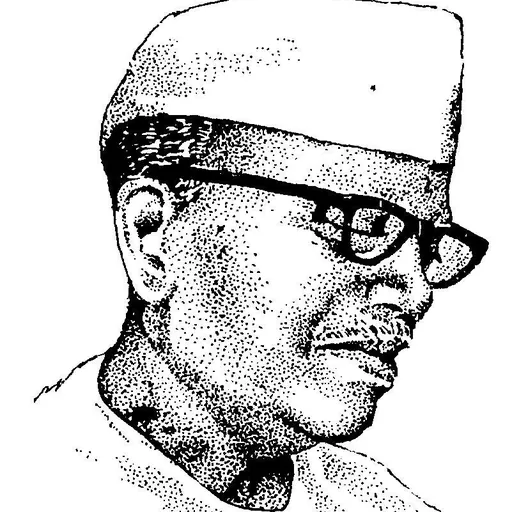
About Sakharam Pandurang Barve
Lived 1899 – 1972 (aged 72–73). Sakharam Pandurang Barve was an artist.
Sakharam Pandurang Barve (1899 – 30 May 1972) was an Indian artist, playwright, harmonium player, and independence activist. He contributed significantly to the musical theater tradition of Goa and Maharashtra and utilized his dramatic works to support the Goan independence movement.
Early life Sakharam Pandurang Barve was born in 1899 in Velguem, Surla. His father, Pandurang Barve, served as a priest at the local Shri Siddheshwar Temple. Barve was interested in drama and inlearning the harmonium since his childhood. He thus ran away from his home at the age of eight to his maternal uncle's residence in Bandora to learn to play the harmonium.
In Bandora, he was introduced to the classical vocalist Gayanacharya Vazebuwa. Barve demonstrated his dedication to the art by expressing his willingness to travel outside Goa to advance his musical skills. Recognizing the young boy's determination, Vazebuwa took him to Poona and secured him a position in the theatrical troupe managed by Rambhau Kundgolkar, famously known as Sawai Gandharva.
Career in music and theater While working in the theatrical company, Barve initially performed roles as a child dancer before gaining recognition as the resident harmonium player for the 'Nutan Sangeet Mandali'. After some years, he returned to Goa to establish his own independent drama company; however, the venture closed down within a few years. Following the demise of the noted theater personality Keshavrao Bhosle, individuals named Bapusahib Pendharkar and Nanasaheb Chapekar assumed control of the 'Lalit Kaladarsh' Sangeet Mandali. Barve joined this troupe as a harmonium player, though the company's activities eventually slowed down when it shifted focus toward the filmmaking industry.
Barve once again returned to Goa. With the assistance of theater enthusiasts Jagannath Phadte and Savlaram Tari from Volvoi, he established the 'Lalitprabha Sangeet Natak Mandali'. He assembled a troupe of prominent stage artists, including Master Dattaram, Manoharbua Shirgaonkar, Raghuvir Namshikar, and Bukimam Bandodkar, to present high-quality musical dramas. For this company, Barve authored and staged Sangeet Pranayi Keetak, a play written to protest against the prostitution trade. This production is recognized as the first regional drama staged on the Goan theater scene. To ensure the play connected deeply with ordinary Goans across regions with distinct variations in the Konkani language, Barve structurally incorporated individual characters representing the talukas of Tiswadi, Bardez, Antruz, and Pernem.
Later, Barve collaborated with Vasudeorao Sirsat to establish an institution named 'Natya Vikas', organizing theatrical performances across both Goa and Maharashtra. He thus became known as an accomplished harmonium player across both regions.
Literary contributions Barve authored several books and dramatic works focusing on music theory and mythology: Instructional books: He wrote Sangeet Sadhan and Sangeet Darshan, which serve as guidebooks for students learning music theory. Plays: He wrote mythological dramas such as Yogasansar and Punarjanma. His biographical plays titled Sant Tukaram and Nandkishor remained unpublished during his lifetime. Memoirs: Barve wrote a series of articles detailing his theatrical experiences titled Mazhya Natyasmriti (My Theater Memories) in the daily newspaper Gomantak. His son, Ramesh Barve, later compiled these articles into a book, which was published by the Gomantak Marathi Academy in 1992.
Goan independence movement During the colonial era, rumours reached the Portuguese authorities that Barve was using his traditional kirtan performances to propagate the policies of the Indian government. Consequently, an official named Agent Monteiro issued a warrant for his arrest. To evade detention, Barve fled Goa and resided in Sawantwadi until the region achieved independence.
During his period of exile in Sawantwadi, he authored a political play titled Jalta Gomantak for the underground nationalist organization Azad Gomantak Dal. The play delivered harsh criticisms against the ruling colonial administration and served as an effective propaganda medium for the Goan independence movement. The drama saw numerous stagings across the Konkan coastal tract and in Bombay, with Barve actively performing on stage in the production himself.
Accolades In 1990, the Government of Goa posthumously honoured Barve for his contributions as a freedom fighter. The official felicitation took place at Azad Maidan in Panaji on the occasion of Goa Revolution Day.
Don’t just read it —
keep it.
Full-length biographies made to live with: read them, listen on the way to work, watch them tonight.
- E-book
- Audio
- Video
Instant download · yours to keep · every purchase keeps this site free
Important facts
People in Sakharam Pandurang Barve's life
Named in this biography and alive at the same time



Related people
Same field, nearest in time




Contemporaries
People whose lives overlapped Sakharam Pandurang Barve's


Frequently asked questions
Who was Sakharam Pandurang Barve?
Indian musician and playwright (1899–1972)
When was Sakharam Pandurang Barve born?
Sakharam Pandurang Barve was born in 1899.
When did Sakharam Pandurang Barve die?
Sakharam Pandurang Barve died on 30 May 1972.
What was Sakharam Pandurang Barve's occupation?
Sakharam Pandurang Barve was an artist.
Sources & further reading
· Wikipedia: Sakharam Pandurang Barve
· DBpedia: Sakharam Pandurang Barve
Cite this page
APA: Biography.guide. (2026). Sakharam Pandurang Barve. https://biography.guide/sakharam-pandurang-barve/
MLA: "Sakharam Pandurang Barve." Biography.guide, https://biography.guide/sakharam-pandurang-barve/.
Chicago: "Sakharam Pandurang Barve." Biography.guide. https://biography.guide/sakharam-pandurang-barve/.
Data last updated: 2026-09-20 · Spot an error? Report a correction.
Portrait: Wikimedia Commons · author & licence
Page generated 2026-09-27 04:58 UTC