
Sakakibara Kenkichi
Japanese martial artist
About Sakakibara Kenkichi
Lived 1830 – 1894 (aged 63). Sakakibara Kenkichi was a Japanese martial artist and swordfighter.
was a Japanese samurai and martial artist. He was the fourteenth headmaster of the Jikishinkage school of sword fighting. Through his Jikishinkage contacts he rose to a position of some political influence; he taught swordsmanship at a government military academy and also served in the personal guard of Japan's last two shōguns.
After the fall of the Tokugawa shogunate Sakakibara was instrumental in preserving traditional Japanese sword techniques in the early Meiji Era. Despite his eventual opposition to the practice of sword fighting for sport, his work during this period laid the foundations for the modern sport of kendo. In his later years he taught a number of noted martial artists, and was honoured by the All Japan Kendo Federation after his death.
Early life Sakakibara was born on the fifth day of the eleventh month of Bunsei (December 19, 1830) into the Sakakibara clan; his given name at birth was . His family lived in the village of Otsuwa near modern-day Tokyo. He was later to become the fourteenth headmaster of the school. As a talented swordsman, he once duelled with Yamaoka Tesshū; the two men faced off for over forty minutes without moving, before sheathing their swords with neither striking a blow.
Edo period
In 1856 Sakakibara was appointed as a professor at the , a shogunate-sponsored military academy. He received this post through the auspices of his teacher Otani, who had himself been granted a teaching position there. In this role, Sakakibara was noticed by the shōgun Tokugawa Iemochi, who appointed Sakakibara as his bodyguard and fencing instructor.
By 1863, Sakakibara was a head keeper at Edo Castle and received a stipend of 300 ryō per year. He resigned from this post in 1866, after Iemochi's death and started a dojo in Kurumazaka (a neighbourhood of Edo, now part of modern Ueno).
Meiji period Despite his connections to the shogunate, at the Battle of Ueno in 1868 Sakakibara did not participate in the fighting between the pro-shogunate and Imperial forces, considering it to be his duty to guard the Kan'ei-ji temple. He did, in fact, rescue the Imperial Prince Kitashirakawa Yoshihisa (who was at the time the abbot of Kan'ei-ji) from the Shōgitai, physically carrying him away from the combat. He was, however, part of the group of fencers who created the forms for the , the style of sword fighting created in 1868 for use by the police, and he worked briefly as a prison guard at the police headquarters. Other martial artists, witnessing the success of the Gekken Kaisha, followed suit,
As part of his public performances Sakakibara occasionally demonstrated a tameshigiri technique called , which involved slicing through a steel helmet with a single stroke of the sword.
Despite the success of the gekiken kogyo performances, in his later years Sakakibara regretted their development. In his view, the rules and strictures of gekiken were perverting kenjutsu into new forms that were no longer relevant to battlefield combat. He disdained the point-scoring swordsmanship of other kendoka of his era, ignoring light touches by his opponents in order to deliver his own powerful strikes.
Later life In his later years Sakakibara returned to coach and train in his dojo in Kurumazaka, after trying his hand unsuccessfully at running a theatre and an (bar). Those who trained at the Kurumazaka dojo included Naitō Takaharu, who was to become head of the Dai Nippon Butoku Kai, and foreigners such as Austrian ambassador and fencing expert Heinrich von Siebold, and German Erwin Bälz, physician to the Japanese Imperial Family. Takeda Sōkaku, the founder of Daitō-ryū Aiki-jūjutsu, also studied with Sakakibara at Kurumazaka.
On New Year's Day of 1894, Sakakibara passed on the Jikishinkage headmastership to his disciple Jirokichi Yamada. Sakakibara died of heart failure due to beriberi on September 11 the same year, at the age of 63. He was entombed at Saiō-ji temple Yotsuya, Tokyo and given the posthumous Buddhist name .
Don’t just read it —
keep it.
Full-length biographies made to live with: read them, listen on the way to work, watch them tonight.
- E-book
- Audio
- Video
Instant download · yours to keep · every purchase keeps this site free
Important facts
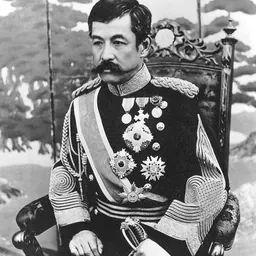
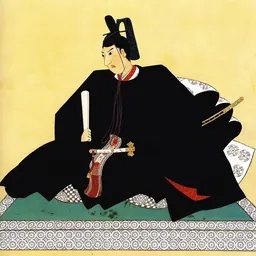
People in Sakakibara Kenkichi's life
Named in this biography and alive at the same time





Related people
Same field, nearest in time



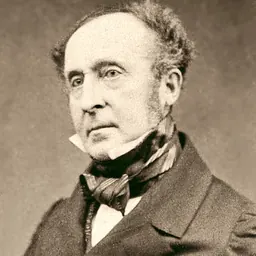
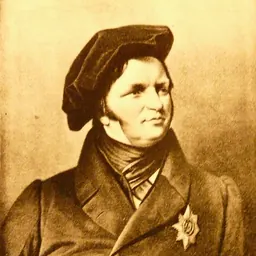
Contemporaries
People whose lives overlapped Sakakibara Kenkichi's


Frequently asked questions
Who was Sakakibara Kenkichi?
Japanese martial artist (1830–1894)
When was Sakakibara Kenkichi born?
Sakakibara Kenkichi was born on 19 December 1830 in Edo.
When did Sakakibara Kenkichi die?
Sakakibara Kenkichi died on 11 September 1894 in Shitaya-ku.
What was Sakakibara Kenkichi's occupation?
Sakakibara Kenkichi was a martial artist and swordfighter.
What nationality was Sakakibara Kenkichi?
Sakakibara Kenkichi was Japanese.
Sources & further reading
· Wikipedia: Sakakibara Kenkichi
· DBpedia: Sakakibara Kenkichi
Cite this page
APA: Biography.guide. (2026). Sakakibara Kenkichi. https://biography.guide/sakakibara-kenkichi/
MLA: "Sakakibara Kenkichi." Biography.guide, https://biography.guide/sakakibara-kenkichi/.
Chicago: "Sakakibara Kenkichi." Biography.guide. https://biography.guide/sakakibara-kenkichi/.
Data last updated: 2026-09-20 · Spot an error? Report a correction.
Page generated 2026-09-27 05:31 UTC