
Saïd Arif
Algerian terrorist who was killed in May 2015
About Saïd Arif
Lived 1965 – 2015 (aged 49–50). Saïd Arif was an Algerian jihadist.
Saïd Arif , also known by several noms de guerre, (Names used by Arif according to sanctions documents include Omar Gharib (lit.) "foreigner Omar," or "stranger Omar"), Slimane Chabani, Souleiman, Abou Souleiman, Abderahmane, and Abdallah al-Jazairi (lit. Abdallah the Algerian). He associated with Al-Qaeda in Afghanistan, Georgia and Syria and was allegedly linked to terrorist cells in France and Germany. He was the eldest of six children born to an affluent family of moderate religious views. Arif's father had fought against the French in the Algerian War of Independence before becoming a policeman, and later taking a job at an oil refinery. His mother's name was Saliha Boukhari.
Arif applied himself at high school and got good grades. He then joined the officer training programme of the Algerian armed forces. He applied to be a fighter pilot, and passed some of the required tests, but was found ineligible due to a minor defect in his vision. In January 1992 the Algerian Civil War begun. Arif deserted his lieutenant's commission and sought asylum in Germany. However, he does not subsequently seem to have had a European travel document under his real name, so it is not clear if he ever regularised his status.
Some secondary sources describe Arif as a former member of the Groupe Islamique Armé (GIA), one of the two main Islamist insurgent groups that fought the Algerian army during the civil war.
Indeed, according to his wife, Arif subsequently had various associations with current or former members of the GIA. However, like other primary sources, she does not say he was a member. According to her he was "not interested in religion" before he left Algeria, never to return. In Germany, he smoked and listened to Pink Floyd; pursuits he would later consider religiously forbidden.
In the mid-1990s, Arif moved to London, and there fell under the influence of Abu Qatada, a Salafi-jihadist preacher who edited a pro-GIA newsletter.
Transnational Salafi-jihadism In the second half of the 1990s, Arif took his first trip to train with Al-Qaeda in Afghanistan. On one such trip, he met Osama bin Laden. In Afghanistan he trained with explosives and learned to forge passports.
According to one source, Arif later claimed that in early 2000 he participated in an Al-Qaeda meeting in Kabul. Musab al-Zarqawi and Abu Doha, another Algerian, were said to have talked at the lunch meeting, while Arif talked to members of Zarqawi's group, Jama'at al-Tawhid wal-Jihad. Speaking to Human Rights Watch, Abu Atiya later claimed that he "didn’t have much to do" with the men who had come from Europe to the camp, and had never confessed to involvement in any plot to carry out attacks in Europe, contrary to court documents filed in France.
It is not clear when Arif left Pankisi. But according to Sundberg, Arif travelled from Georgia to Syria via Iran. Arif was joined in Damascus by his wife, who departed Sweden in late May 2003. In Sundberg's, account Arif had wanted to move somewhere "where there was not too long a journey to the fronts of jihad." Her understanding was that Syria's "long border with Iraq was good for Saïd's plans."
Syria, extradition to France and Chechen Network Trial
Arif was arrested in Damascus on 12 July 2003, (At certain points, accounts of Arif's story differ in their particulars.) Mohammed Hafez states that following the arrest of the Frankfurt cell, Arif fled to Pakistan to avoid arrest himself, and travelled to the Caucasus only after the fall of the Taliban. He later described the conditions of his detention:
I was held on premises of the Syrian secret service for one year in inhuman conditions. I was in an individual cell 1 meter by 1.9 meters, with a ceiling of 2 meters, in total darkness. I slept on the dirty floor, without access to medical care. I couldn’t talk or had no notion of time, and I was hit time and again. During the winter I did not have heating or hot water . . . that year in detention in Damascus, I was tortured with a television cable, and they had put me in a tire, which affected my spinal column. Getting slapped was the least of the abuse I suffered . . . I was forced to admit facts I didn’t know, ignoring, up until the last day of my detention, that there was an international inquiry commission and without the assistance of a lawyer. He was placed on trial as part of the Chechen Network case, alongside 26 other defendants.
Arif was convicted on 14 June 2006, and sentenced to nine years with a two-thirds "security period" alongside Benchellali and other associates of the Chechen Network. Arif was sentenced to nine years. where he later claimed to have been searching for his children.
He was caught, then incarcerated at the Seysses Remand Centre near Toulouse. This time, he was given lodgings at a hostel in Brioude.
While there, Arif gave an interview to the Tunisian newspaper Le Renouveau, and the local prosecutor summoned Arif to appear before a court on 14 May 2013, on charges of condoning and inciting crime. The hostel owner nonetheless described Arif's decision to empty the car of his wife's personal belongings before stealing it as "classy." Al-Sharaa - then still operating under his nom de guerre, Abu Mohammed al-Jolani - was trying to orientate Al-Nusra toward a domestic Syrian identity and vision, and distance it from associations with transnational jihadism, and the sometimes-wild behaviour of the foreign fighters. But he also wanted a pole to attract foreign fighters who might otherwise join the Islamic State.
Don’t just read it —
keep it.
Full-length biographies made to live with: read them, listen on the way to work, watch them tonight.
- E-book
- Audio
- Video
Instant download · yours to keep · every purchase keeps this site free
Important facts
People in Saïd Arif's life
Named in this biography and alive at the same time
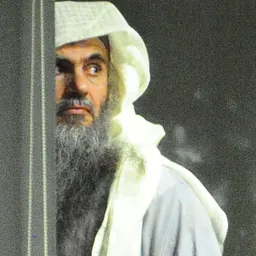





Related people
Same field, nearest in time


Contemporaries
People whose lives overlapped Saïd Arif's


Frequently asked questions
Who was Saïd Arif?
Algerian terrorist who was killed in May 2015
When was Saïd Arif born?
Saïd Arif was born in 1965 in Oran.
When did Saïd Arif die?
Saïd Arif died in 2015 in Syria.
What was Saïd Arif's occupation?
Saïd Arif was a jihadist.
What nationality was Saïd Arif?
Saïd Arif was Algerian.
Sources & further reading
Cite this page
APA: Biography.guide. (2026). Saïd Arif. https://biography.guide/said-arif/
MLA: "Saïd Arif." Biography.guide, https://biography.guide/said-arif/.
Chicago: "Saïd Arif." Biography.guide. https://biography.guide/said-arif/.
Data last updated: 2026-09-20 · Spot an error? Report a correction.
Page generated 2026-09-27 05:08 UTC