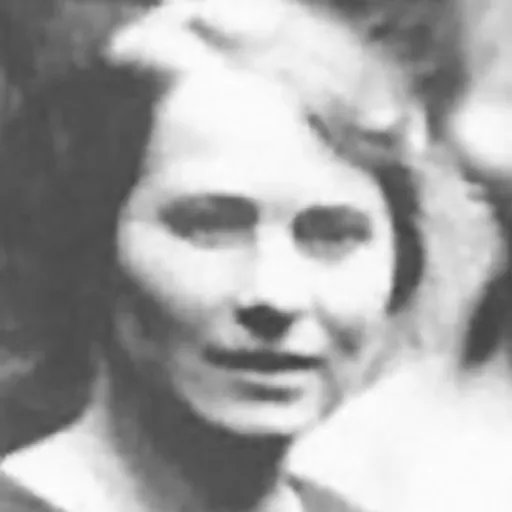
Sabina Spielrein
Russian physician and one of the first female psychoanalysts
About Sabina Spielrein
Lived 1885 – 1942 (aged 56). Sabina Spielrein was a Russian psychiatrist, psychoanalyst, essayist and physician, known for Child psychotherapy, Death instinct and Psycholinguistics.
Sabina Nikolayevna Spielrein (, ; – 11 August 1942) was a Russian physician and one of the first female psychoanalysts.
She was first the patient of Carl Gustav Jung, then the student of Jung, then eventually the colleague of Carl Gustav Jung. She also had an intimate relationship with Jung during 1908–1910, as is documented in their correspondence from the time and her diaries. Spielrein also met, corresponded with, and had a collegial relationship with Sigmund Freud. Spielrein also worked with and psychoanalysed Swiss developmental psychologist Jean Piaget.
Spielrein worked as a psychiatrist, psychoanalyst, teacher and paediatrician in Switzerland and Russia. In her thirty-year professional career, she published over 35 papers in three languages (German, French and Russian), covering psychoanalysis, developmental psychology, psycholinguistics and educational psychology. Among her works in the field of psychoanalysis is the essay titled "Die Destruktion als Ursache des Werdens"written in German in 1912, published in English as "Destruction as the Cause of Coming Into Being". Spielrein was a pioneer of psychoanalysis and one of the first to introduce the concept of the Todestrieb (in Freudian analysis called the death drive; sometimes referred to as the "death instinct" in layman's terms).
Spielrein was one of the first psychoanalysts to conduct a case study on early concepts of schizophrenia, and to have a dissertation appear in a psychoanalytic journal.
Spielrein is increasingly recognized as an important and innovative thinker who was marginalized in history because of her unusual eclecticism, refusal to join factions, feminist approach to psychology. but throughout her life and on official documents she used the name Sabina Nikolayevna. Some commentators believe she may have been sexually abused by someone in the family. She attended a Froebel school followed by the Yekaterinskaya Gymnasium in Rostov, where she excelled in science, music and languages.
Hospital admission, 1904–1905 Following the sudden death of her only sister Emilia from typhoid, Spielrein's mental health started to deteriorate, and at the age of 18 she suffered a breakdown with severe hysteria including tics, grimaces, and uncontrollable laughing and crying. Later, he referred to her twice in letters to Freud as his first analytic case, although in his publications he referred to two later patients in these terms. Politically, Spielrein identified with socialism, although some of her Russian student contemporaries were followers of the Socialist Revolutionary Party or of Zionism.
Supervised first by Bleuler and then by Jung, Spielrein completed her medical school dissertation, a close study of the language of a patient with schizophrenia. It was published in the Jahrbuch für psychoanalytische und psychopathologische Forschungen, which Jung edited. She was one of the first people to conduct a case study on schizophrenia and have it published in a psychoanalytic journal. It was the first doctorate to appear in a psychoanalytic journal. Her dissertation contributed greatly to the understanding of the language of people with schizophrenia. It focused more attention on the mental illness and highlighted the need for more research. It was also the first dissertation written by a woman that was psychoanalytically oriented. She left Zürich the day after graduation, having resolved to establish an independent career as a psychoanalyst elsewhere. In the summer of 1908, as she entered her fourth year at medical school, she and Jung began to have increasingly intimate encounters, which she described in her diaries as "poetry". There are differing views as to whether they had sexual intercourse. This is supported by Spielrein's statement in a letter to her mother: "So far we have stayed at the level of poetry that is not dangerous." Zvi Lothane, a Freudian psychoanalyst and scholar of psychoanalytic history, makes the most robust and well-supported case against a consummated sexual relationship between the pair. Lothane summarizes his conclusions:
During the ensuing months, Jung wrote to Freud about the relationship, at first accusing Spielrein of having tried unsuccessfully to seduce him, and then admitting that he had become romantically involved with her. He sent a series of letters to Spielrein's mother, writing "no one can prevent two friends from doing as they wish...the likelihood is that something more may enter the relationship". In Spielrein's private diary entry dated 11 September 1910—just four months before graduating from medical school, and leaving both Jung and Zürich—she mused again upon her fantasy of bearing Jung's son. Sabina saw in reality how totally impossible it was, how it would ruin her chance of finding another love and destroy her scientific and professional ambitions:
Written shortly before her departure from Zürich, these words seemingly imply that whatever the nature of their physical "poetry", Jung and Spielrein had not engaged in sexual intercourse.
Some commentators have seen Jung's conduct as a professional boundary violation, while others have seen it as an unintended and forgivable consequence of early experimentation with psychoanalytic techniques. The historian and Freudian psychoanalyst Bruno Bettelheim commented on her treatment and the apparently beneficial result, noting that, "However questionable Jung's behaviour was from a moral point of view...somehow it met the prime obligation of the therapist towards his patient: to cure her". By contrast, Peter Loewenberg (among others) has argued that it was in breach of professional ethics, and that it "jeopardized his position at the Burghölzli and led to his rupture with Bleuler and his departure from the University of Zurich".
At the time, Freud was tolerant of what happened between Jung and Spielrein, and regarded it as an example of countertransference. Later, he confessed to Spielrein that it had played a part in the schism between him and Jung: "His behavior was too bad. My opinion changed a great deal from the time I received that first letter from you". Before this episode, Freud apparently believed that a doctor could numb his emotions when analyzing patients. When Jung came to Freud about his relationship with Spielrein, Freud changed his ideas about the relationship between doctor and patient. Spielrein seems to have regarded her experiences with Jung as overall more beneficial than otherwise. She continued to yearn for him for several years afterwards, and wrote to Freud that she found it harder to forgive Jung for leaving the psychoanalytic movement than for "that business with me". However, in the unpublished transcript of Jung's comments recorded by Aniela Jaffé in 1957, Jung made it clear this woman was Maria Moltzer and not Spielrein. Nonetheless, Lance Owens has documented that the relationship with Spielrein was indeed crucial to Jung's evolving understanding of what he much later termed the anima.
Career, 1912–1920 – the "Destruction" paper
After graduation, Spielrein moved to Munich, Germany, to study art history, while also working on a paper on the connection between sex and death. In October she moved to Vienna, Austria, where she was elected a member of the Vienna Psychoanalytic Society (she was the second female member of this society, and the youngest woman). Spielrein delivered her paper to the Society on 27 November, 1912 as "Destruction as the Cause of Coming into Being", publishing an amended version the following year in the Jahrbuch. Freud explicitly mentioned her paper in a famous footnote to Beyond the Pleasure Principle, acknowledging that it started the train of thought which led him to conceptualize the death drive: "A considerable part of this speculation has been anticipated in [her] work". Spielrein's concept, however, was different from Freud's, in that she saw destructiveness as serving the reproductive instinct rather than one in its own right. Spielrein met with Freud on a number of occasions in 1912, and continued to correspond with him until 1923. She attempted in her correspondence with both Freud and Jung to reconcile the two men. In the "Destruction" paper, and throughout her subsequent career, she drew on ideas from many different disciplines and schools of thought. At age 26, she was one of the youngest women to publish in psychoanalysis.
In 1912, Spielrein married the Russian Jewish physician Pavel Nahumovitch Sheftel. They moved to Berlin, where Spielrein worked alongside Karl Abraham. Spielrein had her first daughter, Irma-Renata (known as Renata), in 1913. While in Berlin, Spielrein published nine further papers. One of these was an account of children's beliefs about sex and reproduction, in which she included recollections of her own early fantasies about this. Entitled 'Contribution to the Understanding of a Child's Soul', it shows her in more Freudian mode than her previous papers. In another paper, entitled 'The Mother-in-Law', she gave a sympathetic account of the role of mothers-in-law and the relationship between them and their daughters-in-law. The Dutch psychoanalyst Van Waning has commented on this paper: "Women's studies – in the year 1913!". Another paper from the time recounts her treatment of a child with a phobia of animals, and is one of the first known reports of child psychotherapy
At the outbreak of World War I, she returned to Switzerland, living briefly in Zürich again before relocating to Lausanne, where she and Renata remained for the rest of the war. Her husband joined his regiment in Kiev , and they were not reunited for more than a decade. The war years were times of privation for Spielrein: she did some work as a surgeon and in an eye clinic, but also received contributions from her parents when they could get these to her. However, Otto Fenichel singled out for special mention her 1923 article on voyeurism, where "Sabina Spielrein described a peeping perversion in which the patient tried to overcome an early repression of genital and manual erotogeneity, provoked by an intense castration fear". Overall, her work during this period is thought to have had considerable influence on Piaget's thought, and possibly on Klein's.
In 1923, discouraged by her lack of success in building up a private practice in Geneva, and with Freud's support, she decided to travel to Moscow to support the development of psychoanalysis there. Use of discipline was avoided and children were allowed maximum freedom of movement. Sexual exploration and curiosity was also permitted. Spielrein's involvement included supervision of the teachers, and she may have supported them in a protest about their poor work conditions, a protest that led to their dismissal. The paper also made it clear that she was up-to-date with developments in the west, and included sympathetic comments on the approach of Sandor Ferenczi, who was advocating a more emotionally engaged role for the therapist. She also spoke of the importance of clinical supervision for psychological work with children, and described an approach to short-term therapy that could be used when resources did not allow for extensive treatment.
Her niece Menikha described her from the 1930s as "a very well mannered, friendly and gentle person. At the same time, she was tough as far as her convictions were concerned." Her husband died in 1936. In 1937 her brothers Isaac, Jan and Emil Spielrein were arrested; they were executed in 1937 and 1938 during the Great Purge. by an SS death squad, Einsatzgruppe D, in Zmievskaya Balka, or "Snake Ravine" near Rostov-on-Don, together with 27,000 mostly Jewish victims. Although most of the members of the Spielrein family were murdered in the Holocaust, the wives and children of her brothers all survived.
Legacy Despite her closeness to the central figures of both psychoanalysis and developmental psychology in the first part of the twentieth century, Spielrein was more or less forgotten in Western Europe after her departure for Moscow in 1923. Her tragic murder in the Holocaust contributed to the dearth of the knowledge of her contributions to psychoanalysis. The 1974 publication of the correspondence between Freud and Jung, second for the role of her relationship with Jung in inspiring Freud's concepts of transference and countertransference.
In recent years, Spielrein has been increasingly recognized as a significant thinker in her own right, influencing not only Jung, Freud, and Melanie Klein, but also later psychologists, including Jean Piaget, Alexander Luria, and Lev Vygotsky. Spielrein's work has also been influential in research on gender roles, love, intuition, the unconscious, dream interpretation, sexuality and sexual urges, libido, sublimation, transference, linguistics, and childhood language development.
Alexander Etkind's research in Russia in the 1990s shows that Spielrein did not "disappear" after leaving Western Europe, but continued as an active clinician and researcher.
Followers of feminist and relational psychoanalysis are also beginning to claim her as an important progenitor. The 2015 congress of the American Psychoanalytic Association marked a milestone in reclaiming Spielrein and her thought, when the opening plenary lecture by Adrienne Harris, "The Clinical and Theoretical Contributions of Sabina Spielrein", credited her with pioneering relational psychoanalysis.
Through her work on child analysis, Spielrein differentiated between autistic (or primary) languages and social languages (like song, words, etc.). She also developed an exciting theory in the context of child development explaining the meaning of a mother's breast.
In November 2015, the Memorial Museum Sabina Shpilereyn [sic] was opened in the Spielrein Mansion, her childhood home in Rostov.
Biographical publications Two main biographies in English exist on Sabina Spielrein's life. A more straightforward English-language biography of Spielrein was written by Angela M. Sells, Sabina Spielrein: The Woman and the Myth, which was published by SUNY Press in 2017.
An earlier biography of Sabina Spielrein (written in English, and with the support of the Spielrein family), John Launer's Sex Versus Survival: The Life and Ideas of Sabina Spielrein, published in 2014, is considered a more intimate take on her life, and focuses on Launer's interpretation and close readings of Spielrein's hospital notes, diaries, and correspondence. It calls into question many of the received accounts about Spielrein. Launer challenges the presumption that Jung psychoanalyzed Spielrein in any systematic way, reciprocated her feelings for long, saw her as his 'anima', or regarded her as a more significant figure than his other female partners of the time. Instead, Launer sees her historical importance as someone who made an early attempt to harmonize psychoanalysis and developmental psychology within an overarching biological framework, anticipating modern ideas from attachment theory and evolutionary psychology.
In popular culture A BBC Radio play 'In a Strange Country' by Carolyn James, based on the letters of Freud and Jung and the diaries of Sabina Spielrein was broadcast in 2001 BBC genome
A documentary, Ich hieß Sabina Spielrein (My Name Was Sabina Spielrein), was made in 2002 by the Hungarian-born Swedish director Elisabeth Marton and was released in the United States in late 2005. The documentary was released in the U.S. by Facets Video, a subsidiary of Facets Multi-Media. A 2002 biopic The Soul Keeper (Prendimi l'Anima), directed by Roberto Faenza, with Emilia Fox as Spielrein and Iain Glen as Carl Gustav Jung. Spielrein figures prominently in two contemporary British plays: Sabina (1998) by Snoo Wilson and The Talking Cure (2003) by Christopher Hampton (based on John Kerr's book A Most Dangerous Method) in which Ralph Fiennes played Jung, and Jodhi May played Spielrein. Both plays were preceded by the Off Broadway production of Sabina (1996) by Willy Holtzman. Hampton adapted his own play for a feature film called A Dangerous Method (2011), produced by Jeremy Thomas, directed by David Cronenberg, and starring Keira Knightley as Spielrein, Michael Fassbender as Jung and Viggo Mortensen as Freud.
Conferences In 2021, the International Association for Spielrein Studies organized the webinar "Sabina Spielrein: History and Contemporary Relevance". In 2022, it organized an international conference, "Sabina Spielrein and Early Female Pioneers of Psychoanalysis".
Works A complete bibliography of all Spielrein's published writings (including details of English translations) is available at the website of the International Association for Spielrein Studies. Spielrein's papers in German from are available online at Collection of the International Psychoanalytic University, Berlin. (COTIPUB)
English translations: 1) 2) (Abstract) 3) 4) Spielrein, Sabina. Sämtliche Schriften. Giessen: Psychosozial-Verlag, 2008. (All of Spielrein's writings. In German. No English language edition.)
Don’t just read it —
keep it.
Full-length biographies made to live with: read them, listen on the way to work, watch them tonight.
- E-book
- Audio
- Video
Instant download · yours to keep · every purchase keeps this site free
Important facts
People in Sabina Spielrein's life
Named in this biography and alive at the same time





Related people
Same field, nearest in time

Contemporaries
People whose lives overlapped Sabina Spielrein's



Frequently asked questions
Who was Sabina Spielrein?
Russian physician and one of the first female psychoanalysts (1885–1942)
When was Sabina Spielrein born?
Sabina Spielrein was born on 7 November 1885 in Rostov-on-Don.
When did Sabina Spielrein die?
Sabina Spielrein died on 11 August 1942 in Zmievskaya Balka.
What was Sabina Spielrein's occupation?
Sabina Spielrein was a psychiatrist, psychoanalyst, essayist and physician.
What was Sabina Spielrein known for?
Sabina Spielrein was known for Child psychotherapy, Death instinct and Psycholinguistics.
What nationality was Sabina Spielrein?
Sabina Spielrein was Russian.
Sources & further reading
Cite this page
APA: Biography.guide. (2026). Sabina Spielrein. https://biography.guide/sabina-spielrein/
MLA: "Sabina Spielrein." Biography.guide, https://biography.guide/sabina-spielrein/.
Chicago: "Sabina Spielrein." Biography.guide. https://biography.guide/sabina-spielrein/.
Data last updated: 2026-09-20 · Spot an error? Report a correction.
Portrait: Wikimedia Commons · author & licence
Page generated 2026-09-27 04:58 UTC