
About S. H. Kapadia
Lived 1947 – 2016 (aged 68). S. H. Kapadia was an Indian judge.
Sarosh Homi Kapadia (29 September 1947 – 4 January 2016) was the 38th Chief Justice of India. He was the first chief justice born after the partition of India (Dominion of India).
Career
S. H. Kapadia was born in Bombay in 1947. He graduated from Government Law College, Mumbai which is the oldest law college in Asia. Kapadia started his career as a class IV employee. He later became a law clerk in a lawyer's office in Mumbai. He joined Gagrat & Co., a law firm, as a clerk and later went on to work with Feroze Damania, a highly respected "firebrand" labour lawyer. He later joined as an advocate in the Bombay High Court on 10 September 1974.
Kapadia was appointed an additional judge of the Bombay High Court on 8 October 1991, and on 23 March 1993 his appointment was made permanent. On 5 August 2003, he became the Chief Justice of the Uttarakhand High Court. On 18 December 2003, he was appointed a judge of the Supreme Court. he was the chairman of the General Council of the Gujarat National Law University and the Visitor of the National Law School of India University. Over the course of his time on the Supreme Court, Kapadia authored 305 judgments and sat on 1,074 benches.
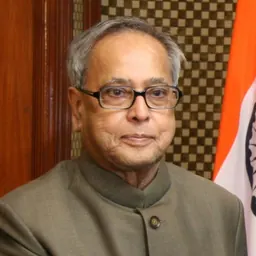
As Chief Justice of India, Kapadia administered oath of office to the 13th President of India, Pranab Mukherjee.
Personal life
Kapadia was married to Shahnaz and has a son who is a chartered accountant and a daughter. Kapadia was a devout Zoroastrian. He was also interested in economics, public finance, theoretical physics, and Hindu and Buddhist philosophies.
Notable judgments
Quashing of the appointment of Central Vigilance Commissioner
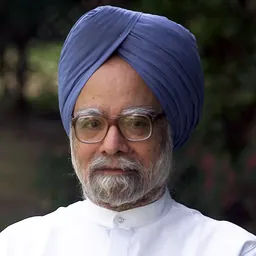
On 3 March 2011, a three-member bench headed by Kapadia, quashed the appointment of Chief Vigilance Commissioner, Polayil Joseph Thomas, made by the High Power Committee comprising Prime Minister Manmohan Singh, Home Minister P. Chidambaram and Leader of the Opposition Sushma Swaraj (dissenting). The judgment caused severe embarrassment for the government and made Manmohan Singh admit the error in appointment. While the judgement was welcomed by most media pundits, some experts have expressed their concerns of miscarriage of justice. Former IAS officer, S. M. Murshed writes, 'the ratio decidendi of the Hon’ble Supreme Court is a bit difficult to comprehend, for, in the last analysis, the entire case against Thomas rested on a solitary, misconceived FIR which was filed as an afterthought and which should never have been filed. Given the facts, Manmohan Singh did no substantive wrong and he did not commit any error (in appointing Thomas).'
Dissenting judgement in Lalu Prasad Yadav's bail cancellation case
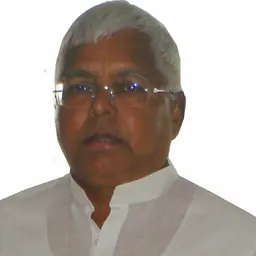
Kapadia was part of the three-member Supreme Court bench that decided a PIL filed by two NDA leaders seeking the cancellation of bail of Rashtriya Janata Dal chief Lalu Prasad and his wife and former Bihar Chief Minister Rabri Devi for their interference in the judicial process in the disproportionate assets (DA) and Income Tax cases against them.
Vodafone judgment
The Vodafone judgment was among the most high-profile of Kapadia's tenure.
Others
Kapadia delivered a landmark judgement relating to succession of property on 30 April 2005 in which he ruled out the possibility of conducting the DNA test.
Quotes
"I am proud to be an Indian. India is the only country where a member of the minority Parsi community with a population of 1,67,000, like myself, can aspire to attain the post of the Chief Justice of India. These things do not happen in our neighbouring countries." Chief Justice Kapadia speaking at the Independence Day celebrations in the Supreme Court. "I come from a poor family. I started my career as a class IV employee and the only asset I possess is integrity" "Right to life, we have said, includes environmental protection, right to live with dignity. Now we have included right to sleep, where are we going? It is not a criticism. Is it capable of being enforced? When you expand the right, the judge must explore the enforceability." Chief Justice Kapadia during a lecture on "Jurisprudence of Constitutional Structure". "A day might come when the rule of law will stand reduced to a rope of sand." Justice Kapadia reacting to a flood of Public Interest Litigations (PIL) being filed in the Supreme Court against corruption and non performing government authorities.
Don’t just read it —
keep it.
Full-length biographies made to live with: read them, listen on the way to work, watch them tonight.
- E-book
- Audio
- Video
Instant download · yours to keep · every purchase keeps this site free
Important facts
People in S. H. Kapadia's life
Named in this biography and alive at the same time



Related people
Same field, nearest in time

Contemporaries
People whose lives overlapped S. H. Kapadia's




Frequently asked questions
Who was S. H. Kapadia?
38th Chief Justice of India (1947–2016)
When was S. H. Kapadia born?
S. H. Kapadia was born on 29 September 1947 in Mumbai.
When did S. H. Kapadia die?
S. H. Kapadia died on 4 January 2016 in Mumbai.
What was S. H. Kapadia's occupation?
S. H. Kapadia was a judge.
What nationality was S. H. Kapadia?
S. H. Kapadia was Indian.
Sources & further reading
Cite this page
APA: Biography.guide. (2026). S. H. Kapadia. https://biography.guide/s-h-kapadia/
MLA: "S. H. Kapadia." Biography.guide, https://biography.guide/s-h-kapadia/.
Chicago: "S. H. Kapadia." Biography.guide. https://biography.guide/s-h-kapadia/.
Data last updated: 2026-09-25 · Spot an error? Report a correction.
Page generated 2026-09-27 05:12 UTC