
About Ryū Murakami
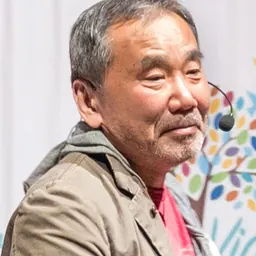
Born 1952. Ryū Murakami is a Japanese writer, screenwriter, novelist, film director, essayist and science fiction writer.
is a Japanese novelist, essayist and filmmaker. His novels explore human nature through themes of disillusion, drug use, surrealism, murder and war, set against the dark backdrop of Japan. His best known novels are Almost Transparent Blue, Audition, Coin Locker Babies, and In the Miso Soup.
Biography Murakami was born in Sasebo, Nagasaki on 19 February 1952. The name Ryūnosuke was taken from the protagonist in Daibosatsu-tōge, a work of fiction by .
Murakami attended school in Sasebo. While a student in senior high, he joined in forming a rock band called Coelacanth, as the drummer. In the summer of his third year in senior high, Murakami and his fellow students barricaded the rooftop of his high school and he was placed under house arrest for three months. During this time, he had an encounter with hippie culture, which had a strong influence on him.
After graduating from high school in 1970, Murakami formed another rock band and produced some 8-millimeter indie films. He enrolled in the silkscreen department at Gendaishichosha School of Art in Tokyo, but dropped out in the first year. In October 1972, he moved to Fussa, Tokyo and was accepted for the sculpture program at Musashino Art University. He married his wife, a keyboard player, in the 1970s and their son was born in 1980. In the early 1990s, Murakami devoted himself to disseminating Cuban music in Japan and established a label, Murakami's, within Sony Music.
Murakami started the e-magazine JMM (Japan Mail Media) in 1999 and still serves as its chief editor. Since 2006, he has also hosted a talk show on business and finance called Kanburia Kyuden, broadcast on TV Tokyo. The co-host is Eiko Koike. In the same year, he began a video streaming service, RVR (Ryu's Video Report). In 2010, he established a company, , to sell and produce eBooks.
Works
Murakami's first work was the short novel Almost Transparent Blue, written while he was still a university student. It deals with promiscuity and drug use among disaffected youth. Critically acclaimed as a new style of literature, it won the Gunzo Prize for New Writers in 1976, despite some objections on the grounds of decadence. Later the same year, it won the Akutagawa Prize, going on to become a bestseller. Next came the autobiographical novel 69, and then Ai to Gensō no Fascism (1987), revolving around the struggle to reform Japan's survival-of-the-fittest society with a secret "Hunting Society". His work Topaz (1988) concerns a sado-masochistic woman's radical expression of her sexuality.
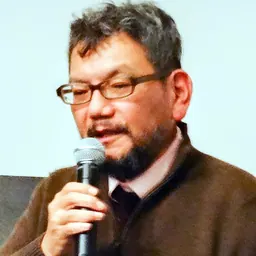
Murakami's The World in Five Minutes From Now (1994) is written as a point of view in a parallel universe version of Japan, and was nominated for the 30th Tanizaki Prize. In 1996 he continued his autobiography 69, and released the Murakami Ryū Movie and Novel Collection. He also won the Taiko Hirabayashi Prize. The same year, he wrote the novel Topaz II about a female high school student engaged in "compensated dating", which later was adapted as the live-action film Love & Pop by anime director Hideaki Anno. His Popular Hits of the Showa Era concerns the escalating firepower in a battle between five teenage male and five middle-aged female social rejects. Literary scholar Barbara Greene suggests that the text reveals how "the invisible violence of post-Bubble Japan's social order is made explicit through a low-stakes, yet hyperviolent, guerilla war undertaken by a set of ludicrous and narcissistic characters whose increasingly deadly attacks are met with public indifference. Within the consumer-capitalist social order, personal satisfaction is the paramount goal..."
In 1997 came the psychological thriller novel In the Miso Soup, set in Tokyo's Kabuki-cho red-light district, which won him the Yomiuri Prize for Fiction that year. Parasites (Kyōsei chū, 2000) is about a young hikikomori fascinated by war. It won him the 36th Tanizaki Prize. The same year Exodus From Hopeless Japan (Kibō no Kuni no Exodus) told of junior high school students who lose their desire to be involved in normal Japanese society and instead create a new one over the internet.
In 2011, Utau Kujira won the .
Selected bibliography Novels Year Japanese Title English Title Notes 1976 Almost Transparent Blue English translation by Nancy Andrew 1977 War Begins Beyond the Sea French translation by Claude Okamoto 1980 Coin Locker Babies English translation by Stephen Snyder, republished by Pushkin Press, 2013 1983 All Right, My Friend 1985 Melancholy of Tennis Boy 1987 69 Shikusuti Nain 69 English translation by Ralph F. McCarthy, published by Pushkin Press, 2013 Fascism of Love and Fantasy 1989 Raffles Hotel 1991 Cocksucker Blues Superconduction Nightclub 1992 Ibiza Nagasaki Holland Village 1993 Ecstasy Fijian Midget 368Y Par4 the 2nd shot The seashore of the music 1994 Popular Hits of the Showa Era: A Novel English translation by Ralph F. McCarthy. Published by Pushkin Press, 2013 The World in Five Minutes From Now Piercing English translation by Ralph F. McCarthy. Published in English January 2007. 1995 KYOKO Kyoko French translation by Corinne Atlan 1996 Hūga Virus: The World in Five Minutes From Now II Melancholia French translation by Sylvain Cardonnel Love & Pop: Topaz II 1997 Audition English translation by Ralph McCarthy. Spanish translation by J.C. Cortés. Strange Days In the Miso Soup English translation by Ralph F. McCarthy. Published in English 2005. French translation ("Miso Soup") by Corinne Atlan. Published in French January 2003. 1998 Lines French translation ("Lignes") by Sylvain Cardonnel, Czech translation ("Čáry") by Jan Levora. 2000 Parasites French translation by Sylvain Cardonnel Exodus of the country of hope 2001 Thanatos THE MASK CLUB The Mask Club The Last Family 2005 From the Fatherland, with Love Translated into English by Ralph McCarthy, Charles De Wolf and Ginny Tapley Takemori, published by Pushkin Press, 2013 2010 A Singing Whale 2011 My Love is Beneath You 2015 Old Terrorist
Short story collections Year Japanese Title English Title Notes 1984 Tropical Sad reissued under the new title of "Summer in the city" in 1988. 1986 POST, Room with Pop Art Run! Takahashi a series of novels about one baseball player New York City Marathon 1988 Topaz The collection of the Ryū Murakami dish novels 1991 Love is always strange 1995 The collection of the Ryū Murakami movie novels 1996 Monica - Dream of a musician, story of a novelist Joint work with Ryuichi Sakamoto 1997 Swan 1998 Truth of a cup of wine 2003 renamed to in the paperback edition 2007 The privileged mistress gastronomy: The collection of Ryū Murakami dish & sensuality novels 2012 Hello Life from 55 years old2016 Tokyo Decadence: 15 Stories A collection of stories from several of Murakami's story collections, translated by Ralph McCarthy. Spanish translation by J.C. Cortés
English short stories Year Japanese Title English Title Notes 2004 It's Been Just a Year and a Half Now Since I Went with My Boss to That Bar short story published in Zoetrope: All-Story (Vol. 8, No. 4, 2004). English translation by Ralph McCarthy. 2005 I am a Novelist short story published in The New Yorker (Jan. 3, 2005). English translation by Ralph McCarthy 2009 At the Airport short story in Zoetrope All-Story (Vol. 13, No. 2, 2009). English translation by Ralph McCarthy. 2010 No Matter How Many Times I Read Your Confession, There's One Thing I Just Don't Understand: Why Didn't You Kill the Woman? Zoetrope All-Story (Vol. 14, No. 4, 2010). 2011 Penlight Zoetrope All-Story (Vol. 15, No. 3, 2011). English translation by Ralph McCarthy.
Non-fiction and essays Year Japanese Title English Title Notes 1985 American Dream 1987 Every Man is a Consumable Vol.1–11 (1987–2010) 1991 All the Ryū Murakami essays 1976-1981 All the Ryū Murakami essays 1982-1986 All the Ryū Murakami essays 1987-1991 1992 1993 To you who don't want to exist as "an ordinary girl." 1996 Tokyo Story after you go away 1998 Murder in a lonely country Physical Intensity Vol.1-5 (1998–2002) 1999 From the Lonely country to far-off world soccer 2000 The love that anyone can do 2001 Useless Woman 2002 I studied economics so as not to be deceived: Ryū Murakami weekly report Involuntary celibacy From macro, Japanese economy to micro, yourself: Ryū Murakami weekly report 2003 SEX is better than Suicide: Ryū Murakami's theory of love and woman 2006 Am I spoiling myself? 27 years old, female office worker The collection of Ryū Murakami literary essays 2007 Unexpectedly, I'm a shopping lover 2008 Still I want to love, want to be happy, and also want money 2009 Encouragement of having no hobby 2010 Old and middle age who run away, youths with few wants 2012 Debris is buried under the cherry tree.
Interviews and letters Year Japanese Title English Title Notes 1977 Kenji Nakagami vs Ryū Murakami: Our ship unmoors in a stagnant fog with Kenji Nakagami 1981
Wōku donto ran Murakami Ryū vs Murakami Haruki Walk, Don't Run: Ryū Murakami vs Haruki Murakami with Haruki Murakami 1985 EV.Cafe ultra-Darwinism with Ryuichi Sakamoto 1992 See you, my friend Ryū Murakami = Ryuichi Sakamoto letters 1994 Ryū Murakami + Noi Sawaragi Latest Discussion: God is in the details with Noi Sawaragi 1999 Ryū Murakami interview collection: The Unbearable Salsa of Being 2006 Dialogue to stare at "individual": Ryū Murakami X Joichi Ito
Picture book Year Japanese Title English Title Notes 1983 Picture book: All Right, My Friend Illustrator: Katsu Yoshida 1989 Illustrator: Sumako Yasui 1996 Wonderful Jennifer Illustrator: Yoko Yamamoto 1999 What were we able to buy with that money?: Bubble Fantasy Illustrator: Yuka Hamano 2000 The Straight Story picture book of the movie (director: David Lynch) of the same title, Illustrator: Yuka Hamano 2001 The old man goes to the mountain for money-making. The investment occasionally produces hope. Illustrator: Yuka Hamano 2003 Hello Work for 13 years old Illustrator: Yuka Hamano Postman Illustrator: Yuka Hamano Shield Illustrator: Yuka Hamano
Filmography Year Japanese Title English Title Role Director 1979 限りなく透明に近いブルーKagirinaku tōmei ni chikai burū Almost Transparent Blue Novel, Scriptwriter, Director Ryū Murakami 1983 だいじょうぶマイ・フレンドDaijōbu mai furendo All Right, My Friend Novel, Scriptwriter, Director Ryū Murakami 1989 ラッフルズホテルRaffuruzu Hoteru Raffles Hotel Novel, Director Ryū Murakami 1992 トパーズTopāzu Topaz a.k.a. Tokyo Decadence Novel, Scriptwriter, Director Ryū Murakami 1996 ラブ&ポップRabu & Poppu Love & Pop Novel Hideaki Anno 1999 オーディションŌdishon Audition Novel Takashi Miike 2000 KYOKO Because of You Novel, Scriptwriter, Director Ryū Murakami 2001 走れ!イチローHashire! Ichirō Run! Ichiro Novel Kazuki Ōmori 2003 昭和歌謡大全集Shōwa kayō daizenshū Karaoke Terror: The Complete Japanese Showa Songbook Novel Tetsuo Shinohara 2004 シクスティナインShikusutinain 69 Novel Lee Sang-il 2006 ポプラル!Popuraru! Popular! Executive Producer Jen Paz2018ピアッシング PiasshinguPiercingNovelNicolas Pesce
Don’t just read it —
keep it.
Full-length biographies made to live with: read them, listen on the way to work, watch them tonight.
- E-book
- Audio
- Video
Instant download · yours to keep · every purchase keeps this site free
Important facts
People in Ryū Murakami's life
Named in this biography and alive at the same time





Related people
Same field, nearest in time



Contemporaries
People whose lives overlapped Ryū Murakami's
Frequently asked questions
Who is Ryū Murakami?
Japanese writer and filmmaker
When was Ryū Murakami born?
Ryū Murakami was born on 19 February 1952 in Sasebo.
What is Ryū Murakami's occupation?
Ryū Murakami is a writer, screenwriter, novelist, film director, essayist and science fiction writer.
What nationality is Ryū Murakami?
Ryū Murakami is Japanese.
Sources & further reading
Cite this page
APA: Biography.guide. (2026). Ryū Murakami. https://biography.guide/ryu-murakami/
MLA: "Ryū Murakami." Biography.guide, https://biography.guide/ryu-murakami/.
Chicago: "Ryū Murakami." Biography.guide. https://biography.guide/ryu-murakami/.
Data last updated: 2026-09-20 · Spot an error? Report a correction.
Page generated 2026-09-27 05:31 UTC