
About Rutherford Alcock
Lived 1809 – 1897 (aged 87–88). Rutherford Alcock was a British diplomat, physician and botanical collector.
Sir John Rutherford Alcock, KCB (25 May 1809 2 November 1897) was the first British diplomatic representative to live in Japan.
Early life Alcock was born in St James's, Middlesex, the son of the physician, Dr. Thomas Alcock, who practised at Ealing, near London, and his wife, Mary. He was able to work on restoring peace and order and in doing so, he earned a promotion to the consulate at Shanghai. Alcock made it a special part of his duties to superintend the established Chinese government and lay out the British settlement, which had developed into such an important feature of British commercial life in China. This included initially hosting a small church in his home, which his sister in law described as "...an immense rambling Chinese House containing fifty two Rooms / surrounded by courtyards, and divided by Galleries and Passages in all directions". Alcock played an important political role in Japan in the 1850s and 1860s, alongside fellow Western diplomats Dirk de Graeff van Polsbroek, Townsend Harris, Max von Brandt and Gustave Duchesne, Prince de Bellecourt. Although these men were bound by personal friendship, national rivalries and differences in dealing with the Japanese led to conflict and antagonism. However, the chaotic and ungovernable circumstances of the first few years forced them to cooperate.
Alcock opened the second British legation in Japan within the grounds of Tōzen-ji in Takanawa, Edo (now Tokyo), the first being at Hiogo (Kobe), under Sir Harry Parkes and the vice-consul Frank Gerard Myberg (also known as Francis Gerard Mijburg and Frans Gerard Mijberg, died 18 January 1868 buried at Kobe). He saw
In those days, foreign residents in Japan faced some danger, with noticeable Japanese hostility to foreigners (sonnō jōi). In 1860, Alcock's native interpreter was murdered at the gate of the legation, and in the following year the legation was stormed by a group of ronin from the fiefdom of Mito-han, whose attack was repulsed by Alcock and his staff.
In September 1860 he became the first non-Japanese to climb Mount Fuji.
From March 1862 to March 1864, Alcock was on leave in England.
Service in China (1865–69) Shortly after these events he returned to England on leave in March 1862, and was replaced in Japan by Colonel Neale. Alcock had already been made a Companion of the Bath (CB) (1860). In 1862 he was made a Knight Commander of the same order (KCB), and in 1863 received an honorary Doctorate of Laws from Oxford University.
In 1864, he returned to Japan, and after a year's further residence he was transferred to Peking, where he represented the British government until 1869, when he retired.
Later years
Although no longer in official life, he remained active. He was for some years president of the Royal Geographical Society, and he served on many commissions. The official Japanese section at the 1862 International Exhibition in London was prepared by Sir Rutherford and included his own collection. This is considered one of the most important events in the history of Japanese art in the West and a founding date for English Japonism in the decorative arts, the Anglo-Japanese style. From 1882-93 he was chairman of the British North Borneo Chartered Company.
He was twice married, first in May 1841 to Henrietta Mary Bacon (daughter of Charles Bacon), who died in 1853, and second (on 8 July 1862) to Lucy Lowder (née Windsor) widow of the Rev. John Lowder. Lucy died on 13 March 1899.
Alcock was the author of several works, and was one of the first to awaken in England an interest in Japanese art. He tried hard to learn the language and even wrote a textbook. His best-known book is The Capital of the Tycoon [= shogun], which appeared in 1863, whilst the Mikado's Seat was at Kyoto. He died in London on 2 November 1897, and is buried adjacent to Sir Lewis Pelly in St Katharine's Churchyard at Merstham in Surrey.
Selected works In a statistical overview derived from writings by and about Rutherford Alcock, OCLC/WorldCat encompasses roughly 70+ works in 100+ publications in 5 languages and 1,000+ library holdings.
Notes on the Medical History and Statistics of the British Legion of Spain; Comprising the Results of Gunshot Wounds, in Relation to Important Questions in Surgery (1838) Life's Problems: Essays; Moral, Social, and Psychological (1857) Elements of Japanese Grammar, for the Use of Beginners (1861) Catalogue of Works of Industry and Art, Sent from Japan by Rutherford Alcock (1862) The Capital of the Tycoon: a Narrative of a Three Years' Residence in Japan (1863), a volume of memoirs covering his service in Japan, but only until March 1862 though he remained in that post until 1865. Correspondence with Sir Rutherford Alcock Respecting Missionaries at Hankow, and State of Affairs at Various Ports in China (1869) Despatch from Sir Rutherford Alcock Respecting a Supplementary Convention to the Treaty of Tien-Tsin, Signed by Him on October 23, 1869 by China (1870) Chinese Statesmen and State Papers (1871) Art and Art Industries in Japan (1878) Handbook of British North Borneo: Compiled from Reports Received from Governor Treacher and from other Officers in the British North Borneo Company's Service by Colonial and Indian Exhibition (1886)
Don’t just read it —
keep it.
Full-length biographies made to live with: read them, listen on the way to work, watch them tonight.
- E-book
- Audio
- Video
Instant download · yours to keep · every purchase keeps this site free
Important facts
People in Rutherford Alcock's life
Named in this biography and alive at the same time

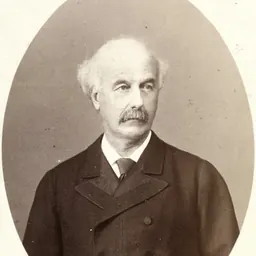



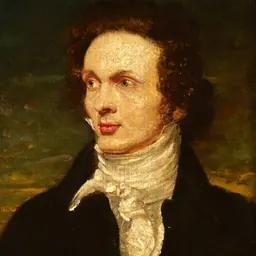
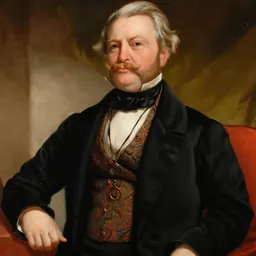

Related people
Same field, nearest in time



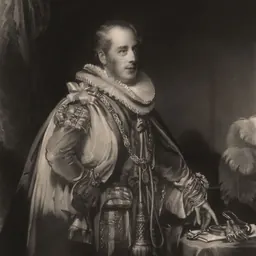
Contemporaries
People whose lives overlapped Rutherford Alcock's




Frequently asked questions
Who was Rutherford Alcock?
British diplomat (1809–1897)
When was Rutherford Alcock born?
Rutherford Alcock was born in 1809 in London.
When did Rutherford Alcock die?
Rutherford Alcock died on 2 November 1897 in London.
What was Rutherford Alcock's occupation?
Rutherford Alcock was a diplomat, physician and botanical collector.
What nationality was Rutherford Alcock?
Rutherford Alcock was British.
Sources & further reading
· Wikipedia: Rutherford Alcock
Cite this page
APA: Biography.guide. (2026). Rutherford Alcock. https://biography.guide/rutherford-alcock/
MLA: "Rutherford Alcock." Biography.guide, https://biography.guide/rutherford-alcock/.
Chicago: "Rutherford Alcock." Biography.guide. https://biography.guide/rutherford-alcock/.
Data last updated: 2026-09-20 · Spot an error? Report a correction.
Page generated 2026-09-27 05:33 UTC