
About Rutger Fuchs
Lived 1682 – 1753 (aged 71). Rutger Fuchs was a Swedish military personnel, politician and military officer.
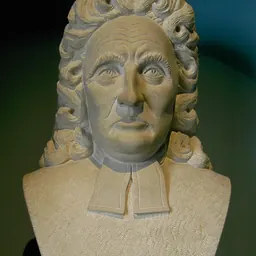
Friherre Rutger Fuchs (2 April 1682 – 10 April 1753) was a Swedish army officer and politician who served as Governor of Stockholm from 1739 until his death in 1753. A soldier during the Great Northern War, Fuchs is best remembered for his role during the Battle of Stäket in 1719 where he stalled a Russian landing force intending to raid Stockholm.
Biography Rutger Fuchs was born on 2 April 1682 in Malmö. His parents were Christian Fuchs and Susanna Eleonora Leijonsten.
In 1699, at the age of seventeen, Fuchs joined the army as a volunteer in the Swedish Life Regiment of Foot. The following year, he served as an ensign in the Västgöta Three-Männing Regiment. He was promoted to lieutenant in 1702 and then to the rank of captain in 1704. That same year Fuchs was a part of a Västgöta battalion that was sent to help relieve the city of Narva, which was once again besieged by the Russians. The relief force failed to reach Narva and had to travel by sea to Reval. Fuchs participated in Admiral Cornelius Anckarstjerna's failed attack on Kotlin Island – which was planned to be used as a staging point for an attack on Saint Petersburg – and was wounded. The battalion returned to Sweden in 1707, though Fuchs would remain in Livonia until 1708.
In 1709, he helped reorganise the Dalarna Regiment following its loss at Poltava and was given the rank of major the very next year. At the onset of Magnus Stenbock's expedition to Pomerania and Mecklenburg in late 1712, Fuchs was promoted to lieutenant colonel after the previous officer who held that rank died. Though Fuchs killed his opponent, the fight left him badly wounded and he was taken to Wismar to recover. He also sustained a severe injury to one of his legs which forced him to walk on crutches for a year.
After recovering from his injuries, Fuchs was stationed in the province of Uppland from 1714 to 1715 in order to safeguard the coast from Russians attacks. He then participated in the 1716 invasion of Norway. Fuchs served with distinction during the campaign, and was promoted to colonel and given command of the Södermanlands Regiment after its previous commander, C. R. von Schlippenbach, was mortally wounded during an assault on the Fredriksten Fortress. For his actions during the battle, Fuchs was raised to the rank of major general and given the title of Friherre (Baron).
In 1727, an offer to become a councilor was given to Fuchs, but he declined it as he believed he lacked the knowledge required for such a position. Fuchs was initially a supporter of Arvid Horn and his party, the Caps; however, during the 1738–1739 Diet, he joined the Caps' political opponents the Hats, who advocated for war with Russia in order to regain Sweden's lost territories. Later in 1739, Fuchs was made Governor of Stockholm. In 1740, after realising that Sweden's army was in a poor condition to fight the Russians, Fuchs defected to the Caps and openly opposed the Hats' war policy. Following Sweden's defeat in its 1741–1743 war with Russia, Fuchs was one of the men who sentenced Charles Emil Lewenhaupt to death, which caused further outrage against him from the Hats.
In 1751, he was awarded the Order of the Seraphim. Fuchs died on 10 April 1753 in Stockholm.
Marriages Fuchs married three times. He married his first wife Margaretha (Margareta) Eleonore Stackelberg (1676 – before 1715) in 1706. The couple had six children together, however, all of their children would die in infancy. In February 1715, he married his second wife Margareta Gyllenpistol; the two would remain together until Margareta's death in 1748. Fuchs would marry his last wife Countess Sigrid Margareta Mörner, daughter of the field marshal and councilor , in May 1750.
Don’t just read it —
keep it.
Full-length biographies made to live with: read them, listen on the way to work, watch them tonight.
- E-book
- Audio
- Video
Instant download · yours to keep · every purchase keeps this site free
Important facts
People in Rutger Fuchs's life
Named in this biography and alive at the same time


Related people
Same field, nearest in time



Contemporaries
People whose lives overlapped Rutger Fuchs's


Frequently asked questions
Who was Rutger Fuchs?
Swedish military personnel
When was Rutger Fuchs born?
Rutger Fuchs was born on 2 April 1682 in Malmö.
When did Rutger Fuchs die?
Rutger Fuchs died on 10 April 1753 in Stockholm.
What was Rutger Fuchs's occupation?
Rutger Fuchs was a military personnel, politician and military officer.
What nationality was Rutger Fuchs?
Rutger Fuchs was Swedish.
Sources & further reading
Cite this page
APA: Biography.guide. (2026). Rutger Fuchs. https://biography.guide/rutger-fuchs/
MLA: "Rutger Fuchs." Biography.guide, https://biography.guide/rutger-fuchs/.
Chicago: "Rutger Fuchs." Biography.guide. https://biography.guide/rutger-fuchs/.
Data last updated: 2026-09-20 · Spot an error? Report a correction.
Page generated 2026-09-27 05:30 UTC