
About Rush Hawkins
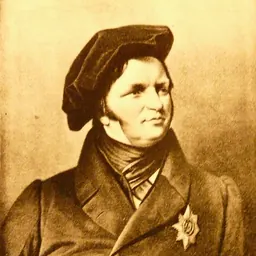
Lived 1831 – 1920 (aged 89). Rush Hawkins was an American military officer and politician.
Rush Christopher Hawkins (September 14, 1831 – October 25, 1920) was a lawyer, Union colonel in the American Civil War, politician, book collector, and art patron. He was mustered out of the Union Army in 1863 but served in the New York Militia in 1865. In 1866, in consideration of his prior service, he was nominated and confirmed for appointment to the grade of brevet brigadier general of volunteers to rank from March 13, 1865.
Early life Hawkins was born in Pomfret, Vermont to Lorenzo Dow Hawkins and Maria Louisa (Hutchinson) Hawkins. At age 15, Hawkins enlisted in the 2nd United States Dragoons for service in the Mexican–American War. After the war, he settled in New York City where he studied law.
Hawkins married Annmary Brown in 1860; she died in January 1903 of pneumonia.
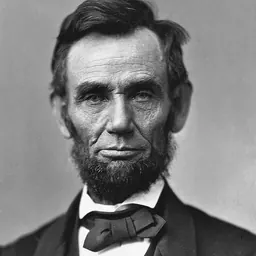
Civil War In 1861, Hawkins helped raise the 9th New York Infantry, a Zouave-styled regiment, popularly known as "Hawkins Zouaves" for service in the Civil War. Hawkins was appointed colonel of the regiment on May 4, 1861, and served with distinction in North Carolina early in the war. He was part of Benjamin F. Butler's expedition to capture Fort Hatteras in 1861. Expecting to win a promotion to brigadier general for his service at Fort Hatteras he was instead relieved of command for insubordination. On October 8, 1861, a disgruntled Hawkins wrote "brigadier generals are made of such queer stuff nowadays, that I should not esteem it any great honor to be made one." Hawkins would in fact receive a brevet promotion to brigadier general in 1866 to rank from March 13, 1865. Despite his belligerence an early dispatch of Hawkins' caught the attention of President Abraham Lincoln. Hawkins was invited to the White House to confer with the President and General-in-Chief George B. McClellan. There he was instrumental in convincing the Union high command of the possibility of a combined operation against Pamlico Sound in North Carolina.
The idea became the objective of Ambrose Burnside's North Carolina Expedition. Hawkins was again conspicuous at the battles of Roanoke Island and New Bern in 1862.
After recovering Hawkins returned to Virginia with his regiment and briefly commanded the 1st Brigade, 3rd Division in the newly formed IX Corps. He was not present with the brigade during the Maryland Campaign but resumed command during the battle of Fredericksburg. After Fredericksburg, the 3rd Division, commanded by George W. Getty, was transferred to the VII Corps in southeast Virginia. Hawkins led his brigade (now the 1st Brigade, 2nd Division, VII Corps) during the siege of Suffolk. Just two days before the siege was lifted, Hawkins turned over command of his brigade and on May 20, 1863, was mustered out of the volunteer service with his old regiment. He remained active in the New York Militia receiving a brevet promotion to brigadier general of New York Militia in 1865.
Hawkins recruited Margaret Bingham Stillwell as curator at the Annmary Brown Memorial where she worked from 1917-1953.
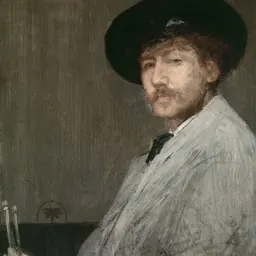
Hawkins and his wife were also avid art collectors and created an excellent collection of 19th century American art. Hawkins was appointed Assistant to the Commissioner General for the United States Commission to the 1889 Universal Exposition in Paris, France. Hawkins was "Commissaire Expert des Beaux Arts" and was responsible for selecting and organizing American art works for the exhibition. Hawkins feuded with James McNeill Whistler, who removed all of his work in protest and later wrote The Gentle Art of Making Enemies (1890), which in-part details his experiences with Hawkins.
While attempting to cross the street in front of his home at 42 5th Avenue in New York City, Hawkins was struck by a motorist and died from his injuries on October 25, 1920. He is buried with his wife in a crypt at the Annmary Brown Memorial on the Brown University campus in Providence, Rhode Island. In his will he left most of his estate to the Society for the Prevention of Cruelty to Animals.
Don’t just read it —
keep it.
Full-length biographies made to live with: read them, listen on the way to work, watch them tonight.
- E-book
- Audio
- Video
Instant download · yours to keep · every purchase keeps this site free
Important facts
People in Rush Hawkins's life
Named in this biography and alive at the same time


Related people
Same field, nearest in time

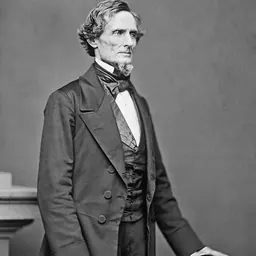
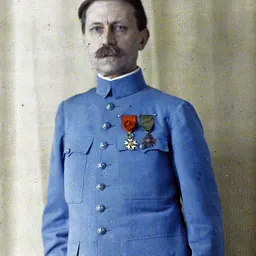


Contemporaries
People whose lives overlapped Rush Hawkins's



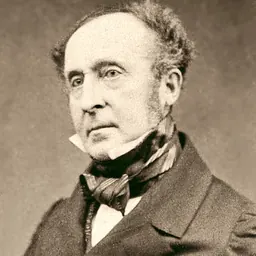
Frequently asked questions
Who was Rush Hawkins?
Union Army general (1831-1920)
When was Rush Hawkins born?
Rush Hawkins was born on 14 September 1831 in Pomfret.
When did Rush Hawkins die?
Rush Hawkins died on 25 October 1920 in New York City.
What was Rush Hawkins's occupation?
Rush Hawkins was a military officer and politician.
What nationality was Rush Hawkins?
Rush Hawkins was American.
Sources & further reading
Cite this page
APA: Biography.guide. (2026). Rush Hawkins. https://biography.guide/rush-hawkins/
MLA: "Rush Hawkins." Biography.guide, https://biography.guide/rush-hawkins/.
Chicago: "Rush Hawkins." Biography.guide. https://biography.guide/rush-hawkins/.
Data last updated: 2026-09-20 · Spot an error? Report a correction.
Page generated 2026-09-27 05:24 UTC