
About Rupert Bruce-Mitford
Lived 1914 – 1994 (aged 79). Rupert Bruce-Mitford was a British archaeologist, curator, art historian, medievalist, translator and university teacher.
Rupert Leo Scott Bruce-Mitford (14 June 1914 – 10 March 1994) was a British archaeologist and scholar. He spent the majority of his career at the British Museum, primarily as the keeper of the Department of British and Medieval Antiquities, and was particularly known for his work on the Sutton Hoo ship-burial. Described as the guiding spirit of such research, he oversaw the production of the monumental three-volume work The Sutton Hoo Ship-Burial, termed by the president of the Society of Antiquaries as "one of the great books of the century".
Though Bruce-Mitford was born in London, his preceding two generations had lived largely abroad: his maternal grandparents as early settlers of British Columbia, his paternal grandparents as missionaries in India, and his parents as schoolteachers in Japan. When Bruce-Mitford was five, his father died. His mother was left to raise four sons, of whom Bruce-Mitford was the youngest, on a tiny salary; the stresses were substantial, and he was fostered for a time after his mother had a breakdown. He attended preparatory school with the support of a relative, enrolled at the charity school Christ's Hospital five years later, and, in 1933, earned a Baring Scholarship in History to attend Hertford College, Oxford. Recommending him for a museum curatorship in 1936, the University Appointments Board noted that he "has an exceptional gift for research, a sphere in which he could do work of outstanding merit". Bruce-Mitford studied the cross over the ensuing two years—including four days spent in a bank vault in Zurich—assembled a file an inch and a half thick, and successfully persuaded the treasury to allocate £195,000 for its purchase. But as unsavoury rumours swirled around the owner, Ante Topić Mimara, and doubts persisted that the unprovenanced cross might be Nazi loot, Mimara steadfastly refused to disclose how he had obtained possession. With the museum unwilling to pay without this information and Mimara unwilling to disclose it, the museum's option expired at midnight on 31 January 1963. The Metropolitan Museum of Art had been waiting in the wings; its curator Thomas Hoving, untroubled by the issues with the cross and owner, stayed up over dinner with Mimara and purchased it immediately.
Don’t just read it —
keep it.
Full-length biographies made to live with: read them, listen on the way to work, watch them tonight.
- E-book
- Audio
- Video
Instant download · yours to keep · every purchase keeps this site free
Important facts
People in Rupert Bruce-Mitford's life
Named in this biography and alive at the same time


Related people
Same field, nearest in time
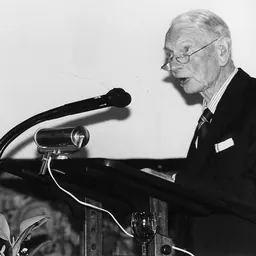
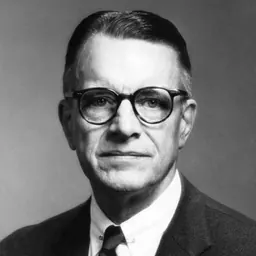

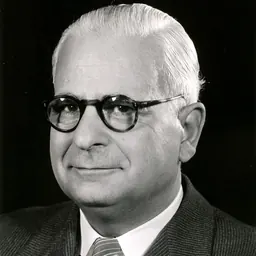

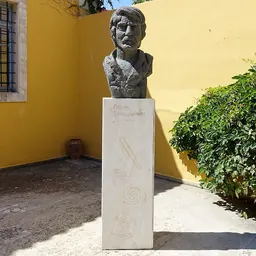
Contemporaries
People whose lives overlapped Rupert Bruce-Mitford's


Frequently asked questions
Who was Rupert Bruce-Mitford?
British archaeologist (1914-1994)
When was Rupert Bruce-Mitford born?
Rupert Bruce-Mitford was born on 14 June 1914 in Streatham.
When did Rupert Bruce-Mitford die?
Rupert Bruce-Mitford died on 10 March 1994 in Oxford.
What was Rupert Bruce-Mitford's occupation?
Rupert Bruce-Mitford was an archaeologist, curator, art historian, medievalist, translator and university teacher.
What nationality was Rupert Bruce-Mitford?
Rupert Bruce-Mitford was British.
Sources & further reading
· Wikipedia: Rupert Bruce-Mitford
· DBpedia: Rupert Bruce-Mitford
Cite this page
APA: Biography.guide. (2026). Rupert Bruce-Mitford. https://biography.guide/rupert-bruce-mitford/
MLA: "Rupert Bruce-Mitford." Biography.guide, https://biography.guide/rupert-bruce-mitford/.
Chicago: "Rupert Bruce-Mitford." Biography.guide. https://biography.guide/rupert-bruce-mitford/.
Data last updated: 2026-09-20 · Spot an error? Report a correction.
Page generated 2026-09-27 05:13 UTC