
About Rudolph Rummel
Lived 1932 – 2014 (aged 81). Rudolph Rummel was an American political scientist, historian, university teacher and statistician.
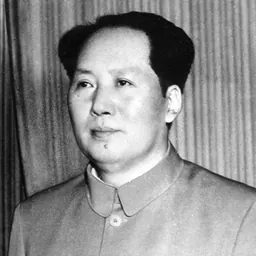
Rudolph Joseph Rummel (October 21, 1932 – March 2, 2014) was an American political scientist, a statistician and professor at Indiana University, Yale University, and University of Hawaiʻi at Mānoa. He spent his career studying data on collective violence and war with a view toward helping their resolution or elimination. Contrasting genocide, Rummel coined the term democide for murder by government, such as the genocide of indigenous peoples and colonialism, Nazi Germany, the Stalinist purges, Mao Zedong's Cultural Revolution, and other authoritarian, totalitarian, or undemocratic regimes, coming to the conclusion that democratic regimes result in the least democides.
Rummel estimated that a total of 212 million people were killed by all governments during the 20th century, of which 148 million were killed by Communist governments from 1917 to 1987. To give some perspective on these numbers, Rummel stated that all domestic and foreign wars during the 20th century killed in combat around 41 million. His figures for Communist governments have been criticized for the methodology which he used to arrive at them, and they have also been criticized for being higher than the figures which have been given by most scholars. In his last book, Rummel increased his estimate to over 272 million innocent, non-combatant civilians who were murdered by their own governments during the 20th century. Rummel stated that his 272 million death estimate was his lower, more prudent figure, stating that it "could be over 400,000,000." Rummel came to the conclusion that a democracy is the form of government which is least likely to kill its citizens because democracies do not tend to wage wars against each other.
Rummel was the author of twenty-four scholarly books, and he published his major results between 1975 and 1981 in Understanding Conflict and War (1975). He spent the next fifteen years refining the underlying theory and testing it empirically on new data, against the empirical results of others, and on case studies. He summed up his research in Power Kills (1997). His other works include Lethal Politics: Soviet Genocides and Mass Murders 1917–1987 (1990), China's Bloody Century: Genocide and Mass Murder Since 1900 (1991), Democide: Nazi Genocide and Mass Murder (1992), Death by Government: Genocide and Mass Murder Since 1900 (1994), and Statistics of Democide (1997). Extracts, figures, and tables from the books, including his sources and details regarding the calculations, are available online on his website. Rummel also authored Applied Factor Analysis (1970) and Understanding Correlation (1976).
Early life, education, and death Rummel was born in 1932 in Cleveland, Ohio, to a family of German descent. A child of the Great Depression and World War II, he attended local public schools. Rummel received his Bachelor of Arts and Master of Arts from the University of Hawaiʻi in 1959 and 1961, respectively, and his PhD in political science from Northwestern University in 1963.
Democide
Rummel coined democide, which he defined as "the murder of any person or people by a government, including genocide, politicide, and mass murder." Rummel further stated to "use the civil definition of murder, where someone can be guilty of murder if they are responsible in a reckless and wanton way for the loss of life, as in incarcerating people in camps where they may soon die of malnutrition, unattended disease, and forced labor, or deporting them into wastelands where they may die rapidly from exposure and disease." and found a correlation with authoritarianism and totalitarianism, which he considered to be a significant causative factor in democides. Rummel posited that there is a relation between political power and democide. Political mass murder grows increasingly common as political power becomes unconstrained. At the other end of the scale, where power is diffuse, checked, and balanced, political violence is a rarity. For Rummel, "he more power a regime has, the more likely people will be killed. This is a major reason for promoting freedom." He wrote that "concentrated political power is the most dangerous thing on earth." This correlation is considered by Rummel to be more important than reliability of estimates.
Democracy and peace After Dean Babst, Rummel was one of the early researchers on the democratic peace theory. Rummel found that there were 205 wars between non-democracies, 166 wars between non-democracies and democracies, and no wars between democracies during the period between 1816 and 2005. The definition of democracy used by Rummel is "where those who hold power are elected in competitive elections with a secret ballot and wide franchise (loosely understood as including at least 2/3 of adult males); where there is freedom of speech, religion, and organization; and a constitutional framework of law to which the government is subordinate and that guarantees equal rights." In addition, it should be "well-established", stating that "enough time has passed since its inception for peace-sufficient democratic procedures to become accepted and democratic culture to settle in. Around three years seems to be enough for this."
Mortacide While democide requires governmental intention, Rummel was also interested in analyzing the effects of regimes that unintentionally, yet culpably, cause the deaths of their citizens through negligence, incompetence or sheer indifference. An example is a regime in which corruption has become so pervasive and destructive of a people's welfare that it threatens their daily lives and reduces their life expectancy. Rummel termed deaths of citizens under such regimes as mortacide, and posited that democracies have the fewest of such deaths.
Famine, economic growth, and happiness Rummel included famine in democide, if he deemed it the result of a deliberate policy, as he did for the Holodomor. Rummel stated that there have been no famines in democracies, deliberate or not, an argument first advanced by Amartya Sen, He stated that research shows average happiness in a nation increases with more democracy. According to Rummel, the continuing increase in the number of democracies worldwide would lead to an end to wars and democide. He believed that goal might be achieved by the mid-21st century.
Political views Rummel started out as a democratic socialist but later became an anti-communist, a libertarian, and an advocate of economic liberalism. Apart from being an outspoken critic of communism and Communist states, (Rummel considered communism to be a significant causative factor in democides.) Rummel was a strong supporter of spreading liberal democracy, although he did not support invading another country solely to replace a dictatorship. Rummel posited that there is less foreign violence when states are more libertarian.
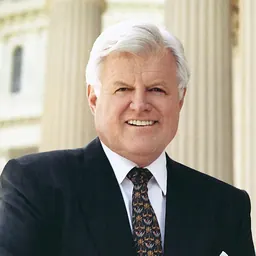
Rummel was critical of past American foreign policy such as the Philippine War of 1899–1902, involvement in the 1900 Battle of Peking, and the strategic bombing of civilians during World War II, and he also believed that the United States under the Democratic Party US president Woodrow Wilson was a domestic tyranny. Rummel strongly supported the war on terror and the Iraq War initiated by the Republican George W. Bush administration, arguing that "the media [was] biased against freeing Iraqi from tyranny." Rummel also proposed that an intergovernmental organization of all democracies outside of the United Nations deals with issues about which the United Nations cannot or would not act, in particular to further the promotion of peace, human security, human rights, and democracy through what he termed "an Alliance of Democracies [which] can do much better." Rummel thought that Democratic United States senator Ted Kennedy's opposition to the Vietnam War led to the state killings in Cambodia and Vietnam during the 1970s. Following the death of Kennedy, Rummel condemned the media reaction as too benign, and stated that "the post-war blood of millions is on Kennedy's hands."
Rummel was critical of Barack Obama and the Democratic Party, alleging that they were seeking to establish an authoritarian, one-party state. He believed that global warming was "a scam for power" and opposed Obama's carbon-trading scheme. Rummel thought that Obama killed off a democratic peace that Democrat Bill Clinton and Republican George W. Bush had been pursuing. Rummel posited that there was a leftist bias in some parts of the academic world that selectively focused on problems in nations with high political and economic freedom and ignored much worse problems in other nations. Related to this, he also criticized the tenure system.
Reception Democratic peace theory
The democratic peace theory is one of the great controversies in political science and one of the main challenges to realism in international relations. More than a hundred different researchers have published multiple articles in this field according to an incomplete bibliography until 2000, and from 2000 to August 2009. Some critics respond that there have been exceptions to the theory. While it is generally statistically true that democides happen more in authoritarian than democratic regimes, there have been a few exceptions for democratic regimes, and some authoritarian regimes have not engaged in the megamurder category of democide. Rummel discussed some of these exceptions in his FAQ, Rummel's first work on democratic peace received little attention. His results were incorporated in a "gigantic philosophical scheme" of 33 propositions in a five-volume work. It was reviewed in 1992 as having "immoderate pretensions", and demonstrated Rummel's "unrelenting" economic liberalism and "extreme" views on defense policy. Nils Petter Gleditsch said that these elements may have distracted readers from Rummel's more conventionally acceptable propositions.
Rummel's version of the democratic peace theory has some distinctive features disputed by some other researchers who support the existence and explanatory power of the theory. Rummel's early research found that democracies are less warlike, even against non-democracies; other researchers hold only that democracies are far less warlike with one another. Rummel held that democracies properly defined never go to war with each other, and added that this is an "absolute or (point) claim." Other researchers such as Stuart A. Bremer found that it is a chance or stochastic matter; in this sense, Rummel's version of the democratic peace theory was deterministic.
Rummel did not always apply his definition of democracy to governments under discussion, and he did not always clarify when he did not apply it. The opening paragraphs of an appendix from his book Power Kills
Factor analysis
Critical reviews of Rummel's estimates have focused on two aspects, namely his choice of data sources and his statistical approach. Historical sources Rummel based his estimates upon can rarely serve as sources of reliable figures. wrote in Rethinking the Holocaust: "Rummel has been criticized for exaggerating the losses. Even if the criticisms were valid, a figure lower by 10 or 20 or even 30 percent would make absolutely no difference to the general conclusions that Rummel draws." According to Sara M. Butler: "Rummel claims that 350,000 Jews were killed in the Spanish Inquisition, which is 1.7 times higher than the actual Jewish population of Spain at that time."
Jonathan Smele referred to Rummel's Lethal Politics: Soviet Genocide and Mass Murder since 1917 as "A poorly researched, obsessively anti-Soviet polemical general survey."
In historian William Rubinstein's opinion, almost all of Rummel's estimated numbers were false.
Awards and nominations In 1999, Rummel was awarded the Susan Strange Award of the International Studies Association. This award recognizes a person "whose singular intellect, assertiveness, and insight most challenge conventional wisdom and intellectual and organizational complacency in the international studies community." In 2003, Rummel was given The Lifetime Achievement Award from the Conflict Processes Organized Section of the American Political Science Association for "scholarly contributions that have fundamentally improved the study of conflict processes."
Rummel used to publicly claim that he was a finalist for the Nobel Peace Prize, based on an Associated Press report reprinted in his local paper about an alleged Nobel short list of 117 names. Rummel was nominated multiple times for the Nobel Peace Prize by Per Ahlmark but no shortlist has been made public.
Never Again series Rummel wrote the Never Again series of alternative-history novels. According to the series' website, Never Again is "a what-if, alternative history" in which "two lovers are sent back in time to 1906 with modern weapons and 38 billion 1906 dollars" in order to prevent the rise of totalitarianism and the outbreak of world wars. (Rummel wrote: "What if there were a solution to war and genocide?) What if a secret society sent back to 1906 two lovers, Joy Phim, a gorgeous warrior, and John Banks, a pacifist professor of history, and gave them the incredible wealth and weapons necessary to create a peaceful alternative universe—one that never experienced the horrors of world war, the Holocaust, and the other atrocities of the twentieth century? And what if, at great personal cost, they succeed too well and create a peaceful world of complacent democracies?
In Book 2, the clock is turned back to their arrival in 1906. They receive a message from the future of the universe they will create – Islamic fundamentalists have attacked the unarmed democracies with nuclear weapons and enslaved them. It is now up to these lovers to prevent this horrible future.
Books Dimensions of Nations, SAGE Publications, 1972 Wilkenfeld, J., ed. Conflict Behavior & Linkage Politics (contributor), David McKay, 1973 Peace Endangered: Reality of Détente, SAGE Publications, 1976 Understanding Conflict and War, John Wiley & Sons, 1976 Conflict in Perspective (Understanding Conflict and War), SAGE Publications, 1977 Field Theory Evolving, SAGE Publications, 1977 Der gefährdete Frieden. Die militärische Überlegenheit der UdSSR ("Endangered Peace. The Military Superiority of the USSR"), München, 1977 National Attitudes and Behaviors (with G. Omen, S. W. Rhee, and P. Sybinsky), SAGE Publications, 1979 In the Minds of Men. Principles Toward Understanding and Waging Peace, Sogang University Press, 1984 Applied Factor Analysis, Northwestern University Press, 1988 Lethal Politics: Soviet Genocide and Mass Murder since 1917, Transaction Publishers, 1990 China's Bloody Century: Genocide and Mass Murder Since 1900, Transaction Publishers, 1991 The Conflict Helix: Principles & Practices of Interpersonal, Social & International Conflict & Cooperation, Transaction Publishers, 1991 Democide: Nazi Genocide and Mass Murder, Transaction Publishers, 1992 Death by Government, Transaction Publishers, 1997 Statistics of Democide: Genocide and Mass Murder Since 1900, Lit Verlag, 1999 Power Kills: Democracy as a Method of Nonviolence, Transaction Publishers, 2002 Never Again (series) War and Democide, Llumina Press, 2004 Nuclear Holocaust, Llumina Press, 2004 Reset, Llumina Press, 2004 Red Terror, Llumina Press, 2004 Genocide, Llumina Press, 2005 Never Again?, Llumina Press, 2005 Never Again: Ending War, Democide, & Famine Through Democratic Freedom, nonfiction supplement, Llumina Press, 2005 The Blue Book of Freedom: Ending Famine, Poverty, Democide, and War, Cumberland House Publishing, 2007
Scholarly articles Rummel had approximately 100 publications in peer-reviewed journals, including: International Journal on World Peace, October–December 1986, III (4), contributor Journal of International Relations, Spring 1978, 3 (1), contributor Reason, July 1977, 9 (3), "The Problem of Defense", contributor
Don’t just read it —
keep it.
Full-length biographies made to live with: read them, listen on the way to work, watch them tonight.
- E-book
- Audio
- Video
Instant download · yours to keep · every purchase keeps this site free
Important facts
People in Rudolph Rummel's life
Named in this biography and alive at the same time






Related people
Same field, nearest in time



Contemporaries
People whose lives overlapped Rudolph Rummel's


Frequently asked questions
Who was Rudolph Rummel?
American academic (1932–2014)
When was Rudolph Rummel born?
Rudolph Rummel was born on 21 October 1932 in Cleveland.
When did Rudolph Rummel die?
Rudolph Rummel died on 2 March 2014 in Kaneohe.
What was Rudolph Rummel's occupation?
Rudolph Rummel was a political scientist, historian, university teacher and statistician.
What nationality was Rudolph Rummel?
Rudolph Rummel was American.
Sources & further reading
Cite this page
APA: Biography.guide. (2026). Rudolph Rummel. https://biography.guide/rudolph-rummel/
MLA: "Rudolph Rummel." Biography.guide, https://biography.guide/rudolph-rummel/.
Chicago: "Rudolph Rummel." Biography.guide. https://biography.guide/rudolph-rummel/.
Data last updated: 2026-09-20 · Spot an error? Report a correction.
Page generated 2026-09-27 05:27 UTC