
About Rudolf Nadolny
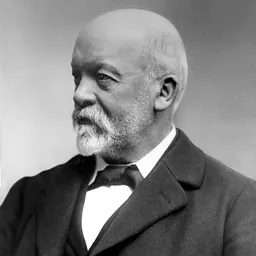
Lived 1873 – 1953 (aged 79). Rudolf Nadolny was a German diplomat, jurist and chairperson.
Rudolf Nadolny (12 July 1873 – 18 May 1953) was a military intelligence officer under German Foreign Office cover. During the First World War, he worked in a branch of the German General Staff that experimented in biological warfare. He was the German Ambassador to Turkey (1924-1933) and the Soviet Union (1933-1934) and the head of the German delegation at the World Disarmament Conference (1932-1933). He sought to pursue close relations between the Weimar Republic and the Soviet Union. Nadolny left the diplomatic service in opposition to Hitler's policy towards the Soviets.
Early life and career Nadolny was born in Groß Stürlack, East Prussia (now Sterławki Wielkie, Poland) to Heinrich (1847–1944) and Agnes Nadolny, née Trinker (1847–1910). His father's family had been landowners in East Prussia since the 14th century. His mother's ancestors were Protestant exiles from Salzburg.
Nadolny passed his Abitur at the gymnasium (school) of Rastenburg in 1892 and studied law at the University of Königsberg. Nadolny joined the German diplomatic service in 1902 and was deployed in St. Petersburg in 1903 to 1907 in which he witnessed the Russian Revolution of 1905 and the Russo-Japanese War. Nadolny was then sent to Persia, Bosnia and Albania.
First World War During the First World War, Nadolny led a political section of the German General Staff, the so-called Sektion Politik Berlin des Generalstabs. The group was responsible for acts of sabotage by using explosives and biological warfare. In 1915, Nadolny shipped cultures of anthrax and glanders, a horse disease that is also deadly to humans, to the German embassy in Romania to use them to target animals traded with the Russian Empire. The operation lasted until August 1916. Bacteria used by Nadolny were prepared in Berlin, and from there, Nadolny sent out the biological agents to Spain, the United States, Argentina and Romania where Dilger engaged in one of the first acts of state sponsored bioterrorism in the 20th century,
In July 1916, he became the German chargé d'affaires in Persia but returned to Germany in November 1917 to serve as the acting head of the Eastern Department of the German Foreign Office. As such, Nadolny took part in the negotiations that led to the Treaty of Brest-Litovsk. and he attacked the Czechoslovak national leader Jan Masaryk for criticising the "Prussian Spirit". Nadolny claimed claiming that Czechs were only relatives of Prussians.
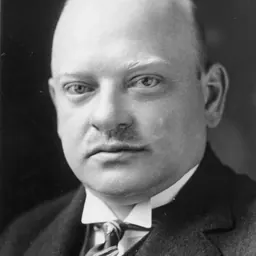
In November 1928, after the death of Ulrich von Brockdorff-Rantzau, the German ambassador in Moscow, Nadolny applied for this post, but his efforts were vetoed by Gustav Stresemann, who appointed Herbert von Dirksen instead. From February 1932 to October 1933, Nadolny was the head of the German delegation at the World Disarmament Conference in Geneva. In the spring of 1932, when General Kurt von Schleicher brought down the government of Heinrich Brüning and had his friend Franz von Papen appointed chancellor, Nadolny was of the three men to be interviewed by Scheicher as a possible foreign minister for the Papen government. The other two men interviewed to be Foreign Minister were Baron Leopold von Hoesch, the German ambassador to France, and Baron Konstantin von Neurath, the German ambassador to the United Kingdom.
Nadolny argued against the 1934 German–Polish Non-Aggression Pact because of its influence on German–Soviet relations and urged "decent treatment" of Soviet ambassador Maxim Litvinov "even if he is Jewish". In a conference with Hitler, Nadolny pointed out that in his view close ties with the Soviets were of essential interest, but Hitler rejected any compromise with Bolshevism. However, even Nadolny admitted that a totally-friendly relationship with Russia was impossible. The meeting, which was described as a "stormy one", ended with Hitler declaring the conversation finished; Nadolny answered that "the conversation had just begun".
On another occasion, he addressed Hitler as "Herr Reichskanzler", as opposed to the common "Mein Führer", and he refused to use the Nazi salute. Nadolny resigned on 16 June 1934 and worked as an administrator of an estate.
Second World War During the Second World War, he served as a captain and later major at the High Command of the Wehrmacht and on the staff of Admiral Wilhelm Canaris.
Postwar In 1945 Nadolny, who had no compromising Nazi Party affiliation, became the president of the German Red Cross and was active in the Society for German reunification and the "German Unity Association. With the growing tensions between the Western Allies and the Soviets, Nadolny was sometimes seen as a Soviet agent and was generally mistrusted.
During the Blockade of Berlin in 1948 to 1949, Nadolny moved to West Germany. He died in 1953 in Düsseldorf.
Family Nadolny married Änny Matthiessen (1882–1977) in 1905. Burkard Nadolny (1905–68) was their son and Sten Nadolny their grandson.
Don’t just read it —
keep it.
Full-length biographies made to live with: read them, listen on the way to work, watch them tonight.
- E-book
- Audio
- Video
Instant download · yours to keep · every purchase keeps this site free
Important facts
People in Rudolf Nadolny's life
Named in this biography and alive at the same time



Related people
Same field, nearest in time

Contemporaries
People whose lives overlapped Rudolf Nadolny's

Frequently asked questions
Who was Rudolf Nadolny?
German diplomat (1873-1953)
When was Rudolf Nadolny born?
Rudolf Nadolny was born on 12 July 1873 in Sterławki Wielkie.
When did Rudolf Nadolny die?
Rudolf Nadolny died on 18 May 1953 in Düsseldorf.
What was Rudolf Nadolny's occupation?
Rudolf Nadolny was a diplomat, jurist and chairperson.
What nationality was Rudolf Nadolny?
Rudolf Nadolny was German.
Sources & further reading
Cite this page
APA: Biography.guide. (2026). Rudolf Nadolny. https://biography.guide/rudolf-nadolny/
MLA: "Rudolf Nadolny." Biography.guide, https://biography.guide/rudolf-nadolny/.
Chicago: "Rudolf Nadolny." Biography.guide. https://biography.guide/rudolf-nadolny/.
Data last updated: 2026-09-22 · Spot an error? Report a correction.
Page generated 2026-09-27 05:33 UTC