
About Rudolf Lindau
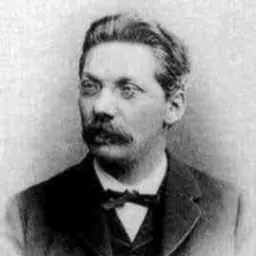
Lived 1888 – 1977 (aged 89). Rudolf Lindau was a German politician, historian, university teacher, laborer, journalist and member of parliament.
Paul Rudolf Lindau (28 March 1888 – 18 October 1977) was a German politician and historian. Between 1946 and 1950 he served as the first director of the newly established "Karl Marx" Party Academy in the Soviet occupation zone (after 1949 the German Democratic Republic).
Sources may also refer to him under one of the pseudonyms under which he operated and wrote in the 1930s, Paul Graetz / Rudolf Grätz.
Life Rudolf Lindau was born in Riddagshausen, a small village which was at that time a short distance outside and to the east of Braunschweig in northern Germany. His father was a saddler. Rudolf Lindau's first job was in a bakery after which he took work in a foundry, before he moved into the transport sector, first joining a trades union in 1904. At around this time he relocated to Hamburg. In 1906 or 1907 he joined the Social Democratic Party (SPD). Politically, he was positioned on the left wing of the party, providing secretarial support to the academic Heinrich Laufenberg's with the latter's creation of the "History of the Workers' Movement in Hamburg, Altona and the surrounding region" ("Geschichte der Arbeiterbewegung in Hamburg, Altona und Umgegend"). From 1911 he was employed as a junior editor by the "Hamburger Echo", an SPD supporting newspaper.
During the war there was a splintering of SPD support in Germany, chiefly over the issue of the party leadership's support for the war. At the end of 1918 the Communist Party was formed from the socialist and pacifist strands that had broken away, and Lindau became a leading Communist Party official from the outset, at a regional level in Hamburg and Saxony and also at a national level.
Rudolf Lindau spent the twelve Nazi years in the Soviet Union. During this time, war broke out again. In the case of the war between Germany and the Soviet Union this occurred in June 1941, following repudiation from the German side of the non-aggression pact that the two dictatorships had concluded nearly two years earlier. During his time in Moscow Lindau taught at the Party Academy and, later, at the Anti-Fascist School set up for the re-education of German prisoners of war. He also worked in the Soviet sponsored National Committee for a Free Germany (NKFD / Nationalkomitee Freies Deutschland). Additionally, at the Krasnogorsk-based "Academy for Leninism" at, a short distance outside Moscow, he got to know Walter Ulbricht who by 1949 would have emerged as the leader of a new kind of German state.
The war ended in May 1945 and Lindau returned to what remained of Germany, ending up not back in Hamburg, but a couple of hundred kilometers further to the east, in what was now designated the Soviet occupation zone. Communist Party membership was no longer illegal, and he lost little time in becoming involved with The Party. In April 1946, following the contentious merger that created what would become the occupation zone's ruling SED (party), he was one of many thousand Communist Party members who lost no time in signing their memberships across to the new party. The SED was formed by merging the German Communist Party and, within the occupation zone, the more moderate Social Democratic party: in the first couple of years the authorities took care to present a semblance of parity between former members of the two constituent elements of the SED. In 1947 Lindau was appointed co-director of the new party's newly established "Karl Marx" Party Academy. His fellow co-director was a former SPD man called Paul Lenzner (1884-1955). In September or October 1950 both Rudolf Lindau and Paul Lenzner were removed from the Party Academy directorship, to be replaced by a single director, Hanna Wolf. By this time the Soviet administered occupation zone had been reinvented, formally in October 1949, as the Soviet sponsored German Democratic Republic.
On leaving his post at the Party Academy Lindau became an expert researcher at the Institute for Marxism–Leninism of the Party Central Committee.
Don’t just read it —
keep it.
Full-length biographies made to live with: read them, listen on the way to work, watch them tonight.
- E-book
- Audio
- Video
Instant download · yours to keep · every purchase keeps this site free
Important facts
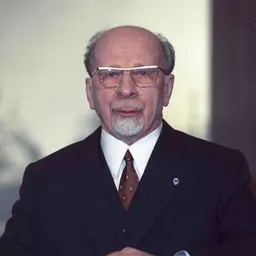
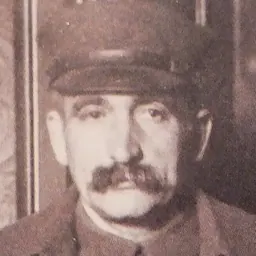
People in Rudolf Lindau's life
Named in this biography and alive at the same time



Related people
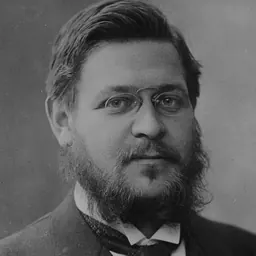
Same field, nearest in time



Contemporaries
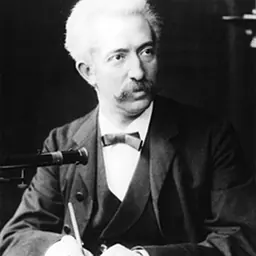
People whose lives overlapped Rudolf Lindau's



Frequently asked questions
Who was Rudolf Lindau?
German politician and historian (1888-1977)
When was Rudolf Lindau born?
Rudolf Lindau was born on 28 March 1888 in Riddagshausen.
When did Rudolf Lindau die?
Rudolf Lindau died on 18 October 1977 in Berlin.
What was Rudolf Lindau's occupation?
Rudolf Lindau was a politician, historian, university teacher, laborer, journalist and member of parliament.
What nationality was Rudolf Lindau?
Rudolf Lindau was German.
Sources & further reading
· DBpedia: Rudolf Lindau (politician)
Cite this page
APA: Biography.guide. (2026). Rudolf Lindau. https://biography.guide/rudolf-lindau-politician/
MLA: "Rudolf Lindau." Biography.guide, https://biography.guide/rudolf-lindau-politician/.
Chicago: "Rudolf Lindau." Biography.guide. https://biography.guide/rudolf-lindau-politician/.
Data last updated: 2026-09-20 · Spot an error? Report a correction.
Page generated 2026-09-27 05:23 UTC