
Rudolf Kassner
Austrian writer, essayist, translator and cultural philosopher
About Rudolf Kassner
Lived 1873 – 1959 (aged 85). Rudolf Kassner was an Austrian and Czech writer, philosopher, essayist and translator.
Rudolf Kassner (11 September 1873 in Velké Pavlovice – 1 April 1959 in Sierre, Switzerland) was an Austrian writer, essayist, translator and cultural philosopher. Although stricken as an infant with poliomyelitis, Kassner traveled widely to northern Africa, the Sahara, India, Russia, Spain, and throughout Europe. His translations of William Blake introduced this English romantic poet to German-speaking audiences. His literary career covered six decades, including a period of isolation during the Nazi years in Vienna. His writings on physiognomy reflect his effort to understand the problems of modernity and Man's subsequent disconnectedness from time and place. His later autobiographical writings suggest a brilliant literary mind attempting to make sense of a chaotic post-nuclear world. He was nominated for the Nobel prize for literature thirteen times.
Biography Before his birth, Rudolf Kassner's family emigrated to Moravia (at the time part of Austro-Hungary) from Silesia. His father, Oskar Kassner, was a landowner and factory owner, descended from government officials and businessmen. His maternal ancestors were peasants. Kassner regarded himself as a German-Slavic mixture, having inherited German Blut (German: blood) from his mother and a Slavic Geist (German: spirit) from his father (Das physiognomische Weltbild, 116ff.).
Student life In 1892, Kassner enrolled at the University of Vienna where he set out to study German philology, Latin, and Philosophy. He spent the last two semesters, in 1895 and 1896, in Berlin, where he attended the lectures of the nationalist historian Heinrich von Treitschke. Kassner, too, was an enthusiastic theater-goer. This formed the basis for later reflections on acting and the role of the actor, important for Kassner's physiognomic worldview, the return from the world of numbers to the kingdom of images. Hans Paeschke has stressed the importance of Kassner's understanding of Gestaltung for this "physiognomy against physiognomy".
In 1896, Kassner returned to Vienna and completed his studies with a doctoral dissertation on Der ewige Jude in der Dichtung (The Eternal Jew in Poetry), which he completed in 1897.
Don’t just read it —
keep it.
Full-length biographies made to live with: read them, listen on the way to work, watch them tonight.
- E-book
- Audio
- Video
Instant download · yours to keep · every purchase keeps this site free
Important facts
People in Rudolf Kassner's life
Named in this biography and alive at the same time
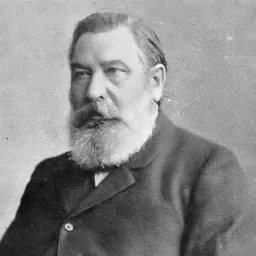

Related people
Same field, nearest in time





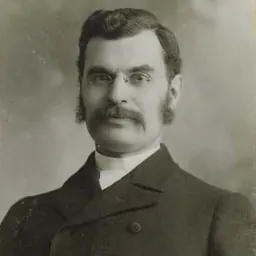
Contemporaries
People whose lives overlapped Rudolf Kassner's

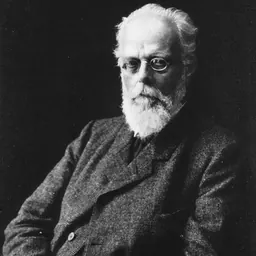
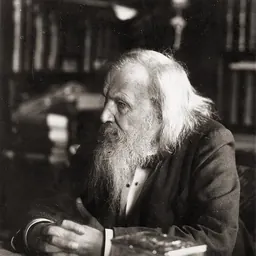

Frequently asked questions
Who was Rudolf Kassner?
Austrian writer, essayist, translator and cultural philosopher (1873–1959)
When was Rudolf Kassner born?
Rudolf Kassner was born on 11 November 1873 in Velké Pavlovice.
When did Rudolf Kassner die?
Rudolf Kassner died on 1 April 1959 in Sierre.
What was Rudolf Kassner's occupation?
Rudolf Kassner was a writer, philosopher, essayist and translator.
What nationality was Rudolf Kassner?
Rudolf Kassner was Austrian and Czech.
Sources & further reading
Cite this page
APA: Biography.guide. (2026). Rudolf Kassner. https://biography.guide/rudolf-kassner/
MLA: "Rudolf Kassner." Biography.guide, https://biography.guide/rudolf-kassner/.
Chicago: "Rudolf Kassner." Biography.guide. https://biography.guide/rudolf-kassner/.
Data last updated: 2026-09-22 · Spot an error? Report a correction.
Page generated 2026-09-27 05:23 UTC