
About Rudolf Herzog
Lived 1871 – 1953 (aged 81–82). Rudolf Herzog was a philologist.
Rudolf Ludwig Friedrich Herzog (1871–1953) was a German archaeologist, classical philologist, and historian of medicine.
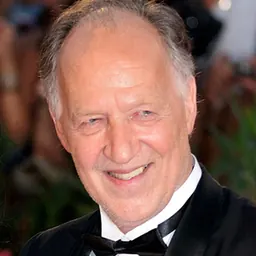
He was professor of Ancient Greek at various German universities. On October 9 of 1902, he discovered the Asclepieion of Kos with help of the Greek historian Iacob Zarraftis, and started excavating it at the dawn of the twentieth century, from 1902 to 1904 or 1905. His son was the soldier Dietrich Herzog (1910–1989) and his grandson is the filmmaker Werner Herzog, who made a cinematic reference to Rudolf in his opera prima Lebenszeichen (Signs of Life).
Life and career He was born in Tübingen on August 31, 1871 From 1900 to 1907, he conducted excavations of the Asklepieion on Kos, which he had discovered. From July 17, 1909, until the end of the winter semester of 1913-1914, he was a full professor and chair of Greek philology in Basel , succeeding Ferdinand Sommer. In 1914, he accepted a professorship at the University of Giessen as full professor of classical philology, succeeding Alfred Körte; his colleague there was Karl Kalbfleisch. In 1928, he was elected rector of the University of Giessen for one year and appointed chancellor in 1933. He retired in 1936. thumb On November 1, 1931 he had joined the Nazi Party, with membership number 692797.
In 1933 he received an honorary doctorate from the Medical Faculty of the University of Rostock and became a full member of the Bavarian Academy of Sciences and Humanities in 1941. As a member of the German Grammar School Association , he was its last chairman until 1945.
He died on March 11, 1953, in Großhesselohe.
Selected works Koische Forschungen und Funde. Dieterich, Leipzig 1899 (Reprint Olms, Hildesheim 1983, ISBN 3-487-07063-4). Aus der Geschichte des Bankwesens im Altertum: Tesserae nummulariae A. Töpelmann, Gießen 1919. Die Stellung der Philologie in der Universität A. Töpelmann, Gießen 1929 (Speech at the anniversary celebration of the Hessian Ludwig University on June 1, 1929). Die Wunderheilungen von Epidaurus. Ein Beitrag zur Geschichte der Medizin und der Religion (Philologus. Supplement Volume 22.3). Dieterich, Leipzig 1931. Asylieurkunden aus Kos (coauthored with Günther Klaffenbach). Akademie-Verlag, Berlin 1952 (Proceedings of the German Academy of Sciences in Berlin. Class for Languages, Literature and Art. Year 1952, No. 1).
Don’t just read it —
keep it.
Full-length biographies made to live with: read them, listen on the way to work, watch them tonight.
- E-book
- Audio
- Video
Instant download · yours to keep · every purchase keeps this site free
Important facts
People in Rudolf Herzog's life
Named in this biography and alive at the same time



Related people
Same field, nearest in time

Contemporaries
People whose lives overlapped Rudolf Herzog's


Frequently asked questions
Who was Rudolf Herzog?
German archaeologist (1871–1953)
When was Rudolf Herzog born?
Rudolf Herzog was born in 1871.
When did Rudolf Herzog die?
Rudolf Herzog died in 1953.
What was Rudolf Herzog's occupation?
Rudolf Herzog was a philologist.
Sources & further reading
· DBpedia: Rudolf Herzog (archeologist)
Cite this page
APA: Biography.guide. (2026). Rudolf Herzog. https://biography.guide/rudolf-herzog/
MLA: "Rudolf Herzog." Biography.guide, https://biography.guide/rudolf-herzog/.
Chicago: "Rudolf Herzog." Biography.guide. https://biography.guide/rudolf-herzog/.
Data last updated: 2026-09-20 · Spot an error? Report a correction.
Page generated 2026-09-27 05:07 UTC