
About Rudolf Hamburger
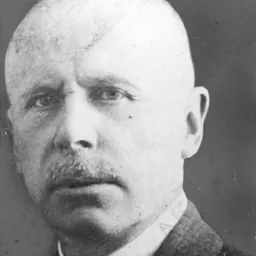
Lived 1903 – 1980 (aged 77). Rudolf Hamburger was a German architect, resistance fighter, spy, political prisoner and gRU (Soviet Union).
Rudolf Albert Hamburger (3 May 1903 – 1 December 1980) was a German Bauhaus-inspired architect. Many of his most important commissions were undertaken in Shanghai where he lived and worked between 1930 and 1936. Late in 1930, his wife Ursula Kuczynski was recruited to work for Soviet intelligence; he supported her espionage related activities in various practical ways until their divorce in 1939, after which he became involved with spying for the Soviets on his own account.
By 1943 he had ended up in Tehran where British forces were present in large numbers. Imprisoned successively by American forces and British forces, when he managed to get away he made for the Soviet Union in order to seek asylum. Three days after arriving in Moscow he was arrested. He spent the next ten years in a succession of labour camps, and after a further two years in "internal exile" was able to leave the Soviet Union in 1955. He moved to Dresden and resumed his architectural career.
Rudolf Hamburger is known to students of espionage as the first husband of Ursula Kuczynski, celebrated in some quarters as "Stalin's best female spy" ("Stalins beste Spionin").
Life Provenance and early years Rudolf Hamburger was born at Landeshut, a small town on the southern edge of Lower Silesia. He was the second of his parents' three recorded children, all of them boys. In 1890 his father, Max Hamburger (1868–1952), had inherited from an uncle one of the several textile mills in the town. The administration offices and storage facilities were adjacent to the family home. Max Hamburger was for many years chairman of the local chamber of commerce and, unusually for his class, a committed activist in liberal politics. In 1908, inspired by the "Krupp settlement" in Essen, the firm had built a model housing estate ("Siedlung") for the workers. Hamburger would describe his upbringing as Liberal Jewish. He was encouraged, as a child, to play with the children of the workers at the factory and, to the extent that he was politically engaged, he shared his father's progressive tendencies.
Student years Rudolf Hamburger was taught to sketch by Friederich Iwan, a local artist, while he was still a boy. He successfully completed his schooling and moved to Munich to study architecture in 1922. The assassination of the Foreign Minister, Walther Rathenau, that year came as a particular blow. Rathenau had been a close personal friend of his father's: the shocking event and the rising tide of right-wing extremism, which was particularly hard to miss in Munich, demonstrated the fragility of the new liberal-democratic political order. Contemporary architects by whom he was particularly influenced during his two years in the Bavarian capital included Theodor Fischer (1863–1938), Gabriel von Seidl and German Bestelmeyer (1874–1942). He moved to Dresden in 1924 where he studied for around a year, and met Richard Paulick, a fellow trainee architect who became a close friend. Their careers would frequently become entwined during the decades that followed.
On his release Hamburger moved to a small Ukrainian city where he lodged with a farmer's wife identified as "Galja". It can be inferred that the city was Millerovo, which today is part of Russia, and an important railway junction along the route between Rostov-on-Don and Moscow, close to the frontier dividing Russia from Ukraine. He was employed there in the Buildings Department of the Ministry of Food. Later in 1953 he was moved to Kamensk, 80 km (50 miles) to the south along the main railway line towards Rostov, where he was installed as a construction site manager for the Ministry of Coal. Later, in April 1955, the ministry appointed him to a position as an architect. In 1957, by which time he had returned to the German Democratic Republic, he published a memoir of his time at Kamensk in a volume published to celebrate the "40th Anniversary Celebration of the Great October Revolution". His contribution appeared with others from East German architects who had visited the Soviet Union only as tourists. Naturally there was no question of Hamburger's piece expressly mentioning his labour camp experience, but his contribution was set apart from the others by some interesting insights and nuances. He did refer to his experiences of the vast industrial buildings erected in the Donets basin and implicitly referred back to some of the things he had seen as a prisoner. He wrote about the dreadful work conditions when ambient temperatures fell below -30 °C, and expressed fulsome respect for the women's brigades used in the earthworks. Nevertheless, after he retired Rudolf Hamburger began to compile an autobiographical volume detailing his experiences between 1930 and 1955. He was, as he himself insisted, not a natural author, but he nevertheless had a compelling series of tales to tell. The detailed nature of what he wrote has led some to suggest that he had managed to keep and then to smuggle out notes of his experiences in Shanghai, Tehran, and then in the Soviet labour camps. Whether or not he had kept contemporaneous notes, the detailed nature of what he wrote down – not withstanding certain minor inconsistencies regarding dates – indicates that he was blessed with a formidable memory. Although there could be no question of publishing such a volume in East Germany, he did attempt to arrange for its publication in West Germany, but by the 1970s the fashion for "labour camp literature" was already passing, and a western publisher was not found at that time.
Ursula Kuczynski (Ruth Werner) had also performed her espionage activities under conditions of great secrecy till 1950, but after the trial of Klaus Fuchs it became impossible to pretend that she had not been a spy. She had, indeed, been an exceptionally effective spy. The book was a great commercial success. Several hundred thousand copies were sold. The East German authorities invited Rudolf Hamburger to exploit his new-found fame (if only as a bit-part player in his wife's success) by producing a volume of his own, but what was envisaged was a piece of propaganda controlled by the government, and Hamburger rejected the offer with an uncharacteristic absence of courtesy. He was nevertheless furious that Ursula's book concentrated on Ursula's espionage success. He felt that it unjustifiably played down his own contribution to their espionage partnership between 1930 and 1940. It may very well be that after this he redoubled his own work on an autobiographical work of his own, although there seemed very little prospect that it could ever be published.
Rudolf Hamburger died at Dresden on 1 December 1980. His body was buried in a place of honour in the city's Heidefriedhof (cemetery), close to the graves of Hans and Lea Grundig.
Don’t just read it —
keep it.
Full-length biographies made to live with: read them, listen on the way to work, watch them tonight.
- E-book
- Audio
- Video
Instant download · yours to keep · every purchase keeps this site free
Important facts
Family & relationships
People in Rudolf Hamburger's life
Named in this biography and alive at the same time




Related people
Same field, nearest in time
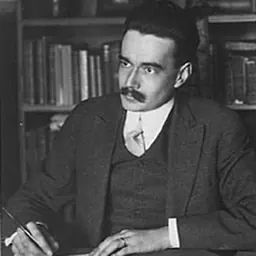
Contemporaries
People whose lives overlapped Rudolf Hamburger's

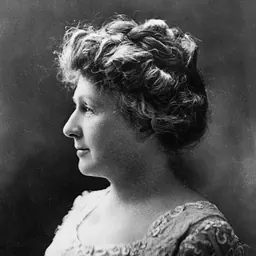
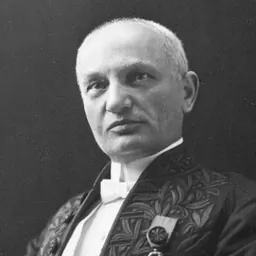
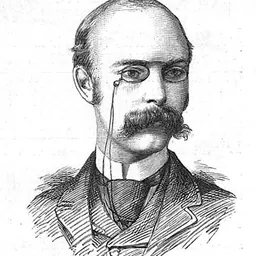
Frequently asked questions
Who was Rudolf Hamburger?
German architect (1903–1980)
When was Rudolf Hamburger born?
Rudolf Hamburger was born on 5 March 1903 in Kamienna Góra.
When did Rudolf Hamburger die?
Rudolf Hamburger died on 1 December 1980 in Dresden.
What was Rudolf Hamburger's occupation?
Rudolf Hamburger was an architect, resistance fighter, spy, political prisoner and gRU (Soviet Union).
What nationality was Rudolf Hamburger?
Rudolf Hamburger was German.
Sources & further reading
Cite this page
APA: Biography.guide. (2026). Rudolf Hamburger. https://biography.guide/rudolf-hamburger/
MLA: "Rudolf Hamburger." Biography.guide, https://biography.guide/rudolf-hamburger/.
Chicago: "Rudolf Hamburger." Biography.guide. https://biography.guide/rudolf-hamburger/.
Data last updated: 2026-09-22 · Spot an error? Report a correction.
Page generated 2026-09-27 05:15 UTC