
About German Bestelmeyer
Lived 1874 – 1942 (aged 67–68). German Bestelmeyer was an architect, lecturer, university teacher and politician.
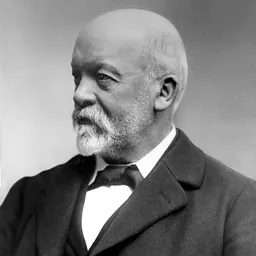
German Bestelmeyer (8 June 1874 – 30 June 1942) was a German architect, university lecturer, and proponent of Nazi architecture. Most of his work was in South Germany.
Education Bestelmeyer was born in Nuremberg, the son of a military doctor. He studied architecture from 1893 to 1897 at the Technical University of Munich under Friedrich von Thiersch and at the Academy of Fine Arts Vienna under Friedrich von Schmidt.
Early career Bestelmeyer worked as a building inspector and planner in Nuremberg, Regensburg, and at the Ludwig-Maximilians-Universität München, where he designed an extension to the main building that was built between 1906 and 1910.
Professorships In 1910, he was appointed to a professorship at Technische Universität Dresden. The following year he transferred to the Dresden Academy of Fine Arts, and in 1915 to the Berlin University of the Arts. In 1919, he also became a professor at Technische Universität Berlin. In 1922, he returned to Munich as a professor at the Technical University of Munich, and from 1934 until his death in 1942 he was President of the Academy of Fine Arts, Munich.
Style and influence Bestelmeyer was an outspoken advocate of traditionalist völkisch architecture. He was a member of the Munich School to which Paul Troost also belonged. In 1928, with Paul Schultze-Naumburg, Paul Schmitthenner and others, he founded "The Block", a group of architects in opposition to the modernist group Der Ring.
Bestelmeyer was singled out for praise in 1931 by Schultze-Naumburg and in 1934, shortly after Adolf Hitler's rise to power, wrote an article in which he endorsed Alexander von Senger's criticism of Le Corbusier, described 1920s architecture as having become "soulless", and rejected flat roofs as unsuited to the climate in Germany. He became a Reich Cultural Senator in 1935.
Nazi architecture Bestelmeyer brought von Senger to the Bavarian Academy and designed buildings such as the Luftwaffe office building on the Prinzregentenstraße in Munich, which were much praised at the time. However, he also designed a number of mostly Protestant churches, some of which met with official approval, and Hitler chose his design for the Mangfall Bridge, a girder bridge on two massive concrete pylons carrying one of the new Reichsautobahns, which was influential in its simple modernity and size.
Funeral Bestelmeyer died in 1942 at the resort of Bad Wiessee. On Hitler's orders, his body was brought back to Munich and after lying in state in the Academy of Fine Arts, transferred for the state funeral to the light-court of the Ludwig-Maximilians-Universität München which he had designed, with 300 members of the Hitler Youth in attendance.
Selected works
Extension to Main Building of the Ludwig-Maximilians-Universität München (1906–09) Adolphus Busch Hall at Harvard University, then the Germanic Museum (1910) Schlosshotel im Grunewald in Berlin-Grunewald (1911–14), built as a villa for Walter von Pannwitz Renovation and extension of Germanisches Nationalmuseum in Nuremberg (1914–19) Administration building, Life Insurance Bank "Arminia" in Munich (1914–16) Altes Stadthaus in Bonn (1922) Reichsschuldenverwaltung Building in Berlin (1921–23) Extension Building of Technical University of Munich (1923–26) Kroch High-rise on Augustusplatz in Leipzig (1927/28) Protestant Christuskirche (Church of Christ) in Neuburg an der Donau (1927–30) Protestant Auferstehungskirche (Church of the Resurrection) in Munich-Westend (1930–31) Research Building and Congress Center of the Deutsches Museum in Munich (1928–35) Mangfall Bridge near Weyarn (1934–36) Luftwaffe Gau Command on Prinzregentenstraße in Munich (1935–36; now Bavarian Ministry of Economics) Protestant Stephanuskirche (St. Stephen's Church) in Munich Neuhausen-Nymphenburg (1936–38)
Don’t just read it —
keep it.
Full-length biographies made to live with: read them, listen on the way to work, watch them tonight.
- E-book
- Audio
- Video
Instant download · yours to keep · every purchase keeps this site free
Important facts
People in German Bestelmeyer's life
Named in this biography and alive at the same time



Related people
Same field, nearest in time


Contemporaries
People whose lives overlapped German Bestelmeyer's

Frequently asked questions
Who was German Bestelmeyer?
German architect (1874-1942)
When was German Bestelmeyer born?
German Bestelmeyer was born in 1874 in Nuremberg.
When did German Bestelmeyer die?
German Bestelmeyer died in 1942 in Bad Wiessee.
What was German Bestelmeyer's occupation?
German Bestelmeyer was an architect, lecturer, university teacher and politician.
What nationality was German Bestelmeyer?
German Bestelmeyer's recorded nationality: German Reich.
Sources & further reading
· Wikipedia: German Bestelmeyer
Cite this page
APA: Biography.guide. (2026). German Bestelmeyer. https://biography.guide/german-bestelmeyer/
MLA: "German Bestelmeyer." Biography.guide, https://biography.guide/german-bestelmeyer/.
Chicago: "German Bestelmeyer." Biography.guide. https://biography.guide/german-bestelmeyer/.
Data last updated: 2026-09-25 · Spot an error? Report a correction.
Page generated 2026-09-27 05:13 UTC