
About Richard Paulick
Lived 1903 – 1979 (aged 75). Richard Paulick was a German architect and architecture.
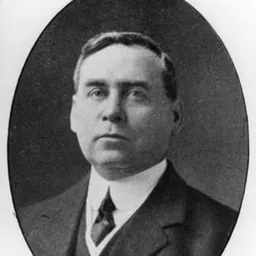
Richard Paulick (7 November 1903 – 4 March 1979) was a German architect with political connections. He enjoyed a productive period in the Shanghai International Settlement between 1933 and 1949. He has been described as the "father of East-German Plattenbau", almost invariably grey unpainted and uncladded apartment blocks, using large standardised concrete slabs prefabricated off-site. The construction techniques used for large-scale low-cost residential developments on the edge of East German cities during the 1950s, 1960s and 1970s were widely used elsewhere in Europe, not least to expand or to "redevelop" cities in England, Scotland and West Germany during the 1960s and 1970s.
Paulick had a significant public profile in the German Democratic Republic (GDR) and his postulation was implemented in the new towns of Hoyerswerda, Schwedt, and Halle-Neustadt. In the eyes of admirers, Paulick was able to bring an element of "humanisation" to the economics-driven, low-cost, high-density, post-war reconstruction of East Germany.
Life Provenance and early years
Richard Paulick was born in Roßlau, a small manufacturing town near Dessau some 40 km / 25 miles north of Leipzig. His father, also named Richard Paulick (1876-1952), was a trades unionist employed, as a young man, at the Royal Porcelain Factory in Berlin. His father wrote for the Anhalter Volksblatt, a local newspaper, and later became increasingly engaged as a local politician in the Free State of Anhalt (Free State of Anhalt). He had a younger brother, Rudolf Paulick, born in 1908, who would also become an architect.
Between 1910 and 1923 Paulick attended the "Fridericianum", a primary and secondary school in Dessau. After successfully having completed the necessary examinations, he was ready for university, where he was keen to study art history. He was persuaded by his father to study architecture, however. With this in mind, he enrolled at the Technische Hochschule Dresden, where the architecture teaching was under the powerful influence of Hans Poelzig, who taught there. Paulick later switched to the Technische Universität Berlin, where he was taught by Martin Dülfer and Oswin Hempel. Six months after starting work at Bauhaus Dessau, he enrolled again at the Technische Hochschule Berlin, where he studied between August 1925 and June 1927, now accepted into the "master class" of Hans Poelzig. It was during 1933 that the Hitler government took power, and Germany was transformed from a democracy to a one-party dictatorship. The SAP, along with other political parties, was outlawed. Paulick's record of non-Hitlerite political activism and the continuing inactivity in the German construction sector both pointed towards the potential advantages of emigration.
Deprived of German citizenship in 1938, Paulick was officially a stateless person between 1938 and 1950. This does not seem to have been a significant disadvantage to him while he worked in Shanghai International Settlement. By 1945 Paulick had also established his reputation in connection with urban planning, and in 1945 he took charge of the Shanghai city planning department. In 1946 he accepted a complementary role as buildings advisor to the All-China railway operator. As part of the "Sector C", project he included a 126 m2 penthouse flat which he subsequently occupied, and which a more recent tenant, his granddaughter, have struggled to preserve in its well-judged original condition, in opposition to pressures for improvements drawing on more recent structural precepts.
A larger and more contentious element in Paulick's "Sector C" plan was his 1951 design for a vast high-rise government office block surrounded by a great square, with a combined 30,000 m2 foot-print, reminiscent of the super-human Stalinist structures appearing in Moscow and Warsaw and in other central European capitals at the time, to be built on what later became the Marx-Engels Forum. One reason for the opposition the project attracted was that it involved tearing down the Hohenzollern Palace (subsequently painstakingly rebuilt). Had the development gone ahead, the combined square and office block would have been even larger than the Red Square in Moscow. That could be one reason why Paulick's monster government office block was never built, and after Erich Honecker inherited the party leadership (and thereby leadership of the country) from Walter Ulbricht the site was used for the "Republic Palace" a 1970s design which, in 1990 after German reunification, had proved to be as unloved as Paulick's unbuilt 1950s proposal.
Rebuilding Berlin: New towns Through the later 1950s and the 1960s, Paulick played a key role in the rebuilding of the historical central quarters of Berlin. High on the lists of his contributions cited by commentators is his work in the rebuilding of the Berlin State Opera which had been destroyed by war-time bombing, most recently, thoroughly completely on 3 February 1945. He was also involved in the rebuilding of Dresden. He led the (loosely, "Blueprints and Experimentation Section") at the East German Building Academy in Berlin. His didactic role led to him being talked of as a "professor" in some quarters, and in 1957 he consolidated his position as an insider within the East German political establishment – somewhat belatedly by some criteria – by joining the Socialist Unity Party of Germany. During the later 1950s he was appointed "chief architect" and, in that capacity, given charge of a number of other important new town developments (proudly promoted at the time as "socialist cities") needed to provide accommodation and infrastructure for workers employed in new labour-intensive industries, including those at Schwedt, where the government had decided to create extensive oil refining capacity, and at Halle-Neustadt, which formed the focus of a new chemicals industry.
In 1974 Richard Paulick, now aged 70, retired. Some commentators infer that his retirement was unexpectedly abrupt. He was stripped of all his public offices. Ambitious plans for further developments in Hoyerswerda were never to be fully implemented. Erich Honecker, as head of state, would be celebrated for the remarkable achievement of East Germany's post-war reconstruction until the East German state was terminated in 1989/90. In 1974, with the country's population pressures reduced by the backwash from the slaughter of war and two decades of industrial-scale emigration, alongside the economic noose of impending national bankruptcy, the East German building boom was over. When Richard Paulick died in East Berlin on 4 March 1979, he was already widely forgotten, and his disappearance went largely unreported in the (party controlled) media. More recently, with housing shortages returning towards the top the public agenda, there has been a renewed interest in his achievements and, indeed, in his methods. 1930–1931: "DEWOG" Heidestraße residential development, Dessau 1951: , Berlin (demolished 1971, following the identification of serious structural degradation) 1951: Proposal for a large government office building surrounded by an impressive city square, in central Berlin on the side of what has subsequently become known as the Marx-Engels Forum (never built). 1952–1953: development residential apartment blocks C-Nord and C-Süd in the Stalin-Allee (in 1961 renamed Karl-Marx-Allee), Friedrichshain 1968–1970: Reconstruction and extension of the adjacent Crown Prince's Palace, Berlin
Recognition (selection)
Don’t just read it —
keep it.
Full-length biographies made to live with: read them, listen on the way to work, watch them tonight.
- E-book
- Audio
- Video
Instant download · yours to keep · every purchase keeps this site free
Important facts
People in Richard Paulick's life
Named in this biography and alive at the same time



Related people
Same field, nearest in time
Contemporaries
People whose lives overlapped Richard Paulick's

Frequently asked questions
Who was Richard Paulick?
German architect (1903–1979)
When was Richard Paulick born?
Richard Paulick was born on 7 November 1903 in Roßlau (Elbe).
When did Richard Paulick die?
Richard Paulick died on 4 March 1979 in Berlin.
What was Richard Paulick's occupation?
Richard Paulick was an architect and architecture.
What nationality was Richard Paulick?
Richard Paulick was German.
Sources & further reading
Cite this page
APA: Biography.guide. (2026). Richard Paulick. https://biography.guide/richard-paulick/
MLA: "Richard Paulick." Biography.guide, https://biography.guide/richard-paulick/.
Chicago: "Richard Paulick." Biography.guide. https://biography.guide/richard-paulick/.
Data last updated: 2026-09-22 · Spot an error? Report a correction.
Page generated 2026-09-27 05:34 UTC