
About Rudolf, Crown Prince of Austria
Lived 1858 – 1889 (aged 30). Rudolf, Crown Prince of Austria was an Austrian military officer, naturalist and politician.
Rudolf, Crown Prince of Austria (Rudolf Franz Karl Josef; 21 August 1858 – 30 January 1889) was the only son and third child of Emperor Franz Joseph I and Empress Elisabeth of Austria. He was heir apparent to the imperial throne of the Austro-Hungarian Empire from birth. In 1889, he died in a suicide pact with his mistress Baroness Mary Vetsera at the Mayerling hunting lodge. The ensuing scandal made international headlines.
Background
Rudolf was born at Schloss Laxenburg, a castle near Vienna, as the son of Emperor Franz Joseph I and Empress Elisabeth. He was named after the first Habsburg King of Germany, Rudolf I, who reigned from 1273 to 1291. Rudolf was raised together with his older sister Gisela and the two were very close. At the age of six, Rudolf was separated from his sister as he began his education to become a future Emperor of Austria. This did not change their relationship and Gisela remained close to him until she left Vienna upon her marriage to Prince Leopold of Bavaria. Rudolf's initial education under Leopold Gondrecourt was physically and emotionally abusive, and likely a contributing factor in his later suicide.
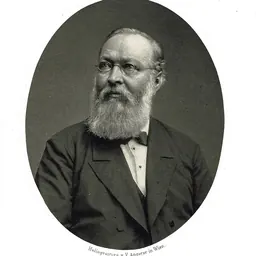
Influenced by his tutor Ferdinand von Hochstetter (who later became the first superintendent of the Imperial Natural History Museum), Rudolf became very interested in natural sciences, starting a mineral collection at an early age.
In contrast with his deeply conservative father, Rudolf held liberal views that were closer to those of his mother. Nevertheless, his relationship with her was at times strained.
Marriage In Vienna, on 10 May 1881, Rudolf married Princess Stéphanie of Belgium, a daughter of King Leopold II of Belgium, at the Augustinian Church in Vienna. Although their marriage was initially a happy one, by the time their only child, the Archduchess Elisabeth ("Erzsi"), was born on 2 September 1883, the couple had drifted apart.
After the birth of their child, Rudolf became increasingly unstable as he drank heavily and was having many affairs. This behaviour, however, was not entirely new as Rudolf had a long history of reckless promiscuity prior to his marriage.
In 1886, Rudolf became seriously ill and the couple was directed to the island of Lacroma (off present day Croatia) for his treatment. In transit, Stéphanie also became seriously ill and described "suffering terrible pain". The couple's diagnosis of peritonitis was kept secret by order of the Emperor.
After intensive treatment, Stéphanie was able to recover from the illness but she was left unable to have children as the illness had destroyed her fallopian tubes. Stéphanie's symptoms and outcome indicate Rudolf had most likely infected her with gonorrhoea. Rudolf himself did not improve with treatment and grew increasingly ill. It is likely he had contracted syphilis in addition to gonorrhoea. In order to cope with the effects of the disease, Rudolf began taking large doses of morphine.
By 1889, it was common knowledge at Court that Stéphanie would not have any more children due to the events of 1886, and that Rudolf's health was deteriorating.
Murder-suicide
In 1886, Rudolf bought Mayerling, a hunting lodge. In late 1888, the 30-year-old Crown Prince met the 17-year-old Baroness Marie von Vetsera, and began an affair with her. On 30 January 1889, he and the young baroness were discovered dead in the lodge as a result of an apparent joint suicide. As suicide would prevent him from being given a church burial, Rudolf was officially declared to have been in a state of "mental unbalance", and he was buried in the Imperial Crypt of the Capuchin Church in Vienna. Vetsera's body was smuggled out of Mayerling in the middle of the night and secretly buried in the village cemetery at Heiligenkreuz. The Emperor had Mayerling converted into a penitential convent of Carmelite nuns and endowed a chantry so that daily prayers would eternally be said by the nuns for the repose of Rudolf's soul.
Aftermath of death Rudolf's death plunged his mother, Empress Elisabeth, into despair. She wore black or pearl grey, the colours of mourning, for the rest of her life and spent more and more time away from the imperial court in Vienna. Her daughter Gisela was afraid that she might also commit suicide. In 1898, while Elisabeth was abroad in Geneva, Switzerland, she was murdered by an Italian anarchist, Luigi Lucheni.
Rudolf's death had left Franz Joseph without a direct male heir. Franz-Joseph's younger brother, Archduke Karl Ludwig, was next in line to the Austro-Hungarian throne, though it was falsely reported that he had renounced his succession rights. In any case, his death in 1896 from typhoid made his eldest son, Archduke Franz Ferdinand, the new heir presumptive. However, Archduke Franz Ferdinand was assassinated in 1914 (an event that precipitated World War I), so when Emperor Franz-Joseph died in November 1916, he was succeeded instead by his grandnephew, Charles I of Austria. The demands of the American President, Woodrow Wilson forced Emperor Charles I to renounce involvement in state affairs in Vienna in early November 1918. As a result, the Austro-Hungarian Empire ceased to exist and a republic came into being without revolution. Charles I and his family went into exile in Switzerland after spending a short time at Castle Eckartsau.
Legend Rudolf (also known as Ludolf or Ludó in folklore) was a figure in folk stories in Hungary. Legend has it, that it was his father who sentenced him to death, as he was a Hungarophile and defied his Hungarophobic father's will. However, the latter secretly pardoned him and buried a waxwork in his place, and the real Ludó lived out his life in South America. The legend's popularity peaked during the interwar period.
In popular culture In famed author André Gide's novel Lafcadio's Adventures, there's a fictionalized conspiracy behind the Mayerling Incident whereas it was the Archduke's cousin who killed him and his young lover, titled Maria Wettsyera and called the Archduke's "young bride," Mayerling, a 1936 film directed by Anatole Litvak, with Charles Boyer and Danielle Darrieux, based on a novel by Claude Anet. Sarajevo (1940), a film directed Max Ophüls starts with Rudolf's death. The fictionalized musical Marinka (1945), with book by George Marion Jr., and Karl Farkas, lyrics by George Marion Jr., music by Emmerich Kálmán. Mayerling, a 1957 film, starring Mel Ferrer as Crown Prince Rudolf, Audrey Hepburn as Baroness Mary Vetsara with Lorne Greene as Kaiser Franz Josef. Mayerling, a 1968 film, starring Omar Sharif as Crown Prince Rudolf, Catherine Deneuve as Mary with James Mason as Kaiser Franz Josef and Ava Gardner as Empress Elisabeth. Japanese Takarazuka Revue's "Utakata no Koi"/"Ephemeral Love", based on the 1968 film. Requiem for a Crown Prince, one-hour episode of the British documentary/drama series Fall of Eagles (1974), directed by James Furman and written by David Turner, tracks in detail the events of 30 January 1889 and the following few days at Mayerling. Miklós Jancsó's 1975 film Vizi privati, pubbliche virtù (Private Vices, Public Virtues), a reinterpretation in which the lovers and their friends are murdered by imperial authorities for treason and immorality. Kenneth MacMillan's 1978 ballet, Mayerling. Japanese manga by Higuri You, Tenshi no Hitsugi (2000). The Crown Prince, a 2006 television film in two parts directed by Robert Dornhelm, with Crown Prince Rudolf portrayed by German-Austrian actor Max von Thun. Composer Frank Wildhorn's musical Rudolf – Affaire Mayerling (2006), produced in some territories as The Last Kiss or Rudolf – The Last Kiss. Rudolf (2011), a play by David Logan which dramatises the last few weeks of the life of Crown Prince Rudolf. A highly fictionalized version of the incident at Mayerling is depicted in the 2006 film The Illusionist. Crown Prince Leopold (played by Rufus Sewell) is a fictional analog of Rudolf. The Empress, a German historical drama television series based on the life of Empress Elisabeth of Austria, starring Devrim Lingnau in the title role and Philip Froissant as Emperor Franz Joseph. Freud, a 2020 miniseries in which Rudolf (played by Stefan Konarske) and his father Emperor Franz Joseph (Johannes Krisch) are pivotal characters. Corsage, a 2022 film, starred as Crown Prince Rudolph with Vicky Krieps as Empress Elisabeth.
Titles, styles and honours Titles and styles 21 August 1858 – 30 January 1889: His Imperial and Royal Highness The Crown Prince of Austria, Hungary, Bohemia and Croatia
Honours Domestic Knight of the Golden Fleece, 1858 Grand Cross of the Royal Hungarian Order of St. Stephen, 1877
Foreign Knight of the House Order of Fidelity, 1873 Grand Cross of the Zähringer Lion, 1873 Knight of St. Hubert, in Diamonds, 1868 Grand Cordon of the Order of Leopold, 1880 – wedding gift Grand Cross of the Southern Cross Knight of the Elephant, 24 November 1873 Ernestine duchies: Grand Cross of the Saxe-Ernestine House Order Grand Cross of the Legion of Honour Greece: Grand Cross of the Redeemer Hesse and by Rhine: Grand Cross of the Ludwig Order, 21 August 1865 Knight of the Annunciation, 6 May 1881 Parmese Ducal Family: Grand Cross of the Constantinian Order of St. George Tuscan Grand Ducal Family: Grand Cross of St. Joseph Bailiff Grand Cross of Honour and Devotion Grand Cordon of the Order of the Chrysanthemum, 14 February 1881 Mecklenburg: Grand Cross of the Wendish Crown, with Crown in Ore Grand Cross of the Mexican Eagle, 1865 Grand Cross of the Order of Prince Danilo I Nassau Ducal Family: Knight of the Gold Lion of Nassau Grand Cross of the Netherlands Lion Order of Osmanieh, 1st Class Husainid Family Order, in Diamonds Persia: Order of the August Portrait, in Diamonds, 1 August 1873 Grand Cross of the Sash of the Two Orders Prussia: Knight of the Black Eagle, 21 August 1864 Grand Commander's Cross of the Royal House Order of Hohenzollern Knight of St. Andrew, 1878 Knight of St. Alexander Nevsky Knight of the White Eagle Knight of St. Anna, 1st Class Knight of St. Stanislaus, 1st Class Grand Cross of the Star of Romania Grand Cross of the Order of San Marino Grand Cross of the Cross of Takovo Grand Cross of the White Falcon, 1873 Knight of the Rue Crown, 1876 Siam: Grand Cross of the White Elephant Grand Cross of the Crown of Siam Grand Cross of the Order of Charles III, 5 June 1875 Sweden-Norway: Knight of the Seraphim, 15 April 1879 Stranger Knight Companion of the Garter, 20 June 1887 Queen Victoria Golden Jubilee Medal in gold, 1887 Grand Cross of the Württemberg Crown, 1873
Ancestors
Gallery
Don’t just read it —
keep it.
Full-length biographies made to live with: read them, listen on the way to work, watch them tonight.
- E-book
- Audio
- Video
Instant download · yours to keep · every purchase keeps this site free
Important facts
Family & relationships
People in Rudolf, Crown Prince of Austria's life
Named in this biography and alive at the same time




Related people
Same field, nearest in time





Contemporaries
People whose lives overlapped Rudolf, Crown Prince of Austria's
Frequently asked questions
Who was Rudolf, Crown Prince of Austria?
Austrian archduke (1858-1889)
When was Rudolf, Crown Prince of Austria born?
Rudolf, Crown Prince of Austria was born on 21 August 1858 in Laxenburg.
When did Rudolf, Crown Prince of Austria die?
Rudolf, Crown Prince of Austria died on 30 January 1889 in Mayerling.
What was Rudolf, Crown Prince of Austria's occupation?
Rudolf, Crown Prince of Austria was a military officer, naturalist and politician.
What nationality was Rudolf, Crown Prince of Austria?
Rudolf, Crown Prince of Austria was Austrian.
Sources & further reading
· Wikipedia: Rudolf, Crown Prince of Austria
· DBpedia: Rudolf, Crown Prince of Austria
Cite this page
APA: Biography.guide. (2026). Rudolf, Crown Prince of Austria. https://biography.guide/rudolf-crown-prince-of-austria/
MLA: "Rudolf, Crown Prince of Austria." Biography.guide, https://biography.guide/rudolf-crown-prince-of-austria/.
Chicago: "Rudolf, Crown Prince of Austria." Biography.guide. https://biography.guide/rudolf-crown-prince-of-austria/.
Data last updated: 2026-09-20 · Spot an error? Report a correction.
Page generated 2026-09-27 05:20 UTC