
Rüdiger Proske
German television presenter, journalist and author
About Rüdiger Proske
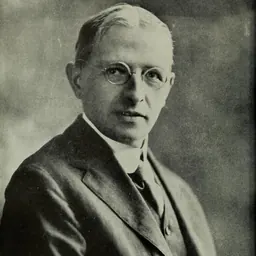
Lived 1916 – 2010 (aged 93). Rüdiger Proske was a German television presenter, journalist, writer, documentarian, television writer and film screenwriter.
Rüdiger Proske (26 December 1916 – 10 December 2010) was a prolific German author on politics and current affairs, a television journalist and a social democratic trades unionist. In 1961 he was a co-founder of the NDR current affairs programme Panorama (consciously modelled on its BBC namesake).
Life Provenance and early years Rüdiger Proske was born in Berlin, the son of a senior railway official. He attended school first in Königsberg (as Kaliningrad was known before 1945) and then in Breslau (as Wrocław was known) before 1945). He was shot down over London in 1940 but survived and was transported as a prisoner of war to Canada. He now took the opportunity afforded by his detention to study English, French and Spanish. He then went on to study Political Sciences and Economics with the universities of Toronto and, more briefly, Saskatchewan. He was in no doubt that Germany needed to focus on a closer collaboration with other European states. Between 1948 and 1951 he served as chairman of the "Bund Europäischer Jugend". With the central portion of Germany administered since 1945 as the increasingly separated Soviet occupation zone, Proske now found himself building his career in what became, after May 1949, the German Federal Republic (West Germany). In 1950/51 he teamed up with Charles Maignal to launch and operate a monthly Franco-German magazine. This introduced Proske to developments in world of television which had been underway since 1953 at the NDR Hamburg-Lokstedt studios. The programme's first episode on 4 June 1961 made the headlines in the printed press, a pattern which was followed for some time with each successive feature. The programme did not, even at the outset, back away from contentious subjects and moved the new medium firmly into the heart of the media firmament, but controversy was never far away. The scandal had its origins in allegations of bribery implicating Defence Minister Strauss printed in Der Spiegel, but it escalated in 1962 when an article alleging major deficiencies in the nation's defence preparedness also appeared in Spiegel and elements in the government reacted by ordering the arrest of several journalists and Spiegel proprietor Rudolf Augstein. As matters turned out Augstein was detained for more than 100 days. There was outrage across the media establishment, while Proske's Panorama programme took a lead in condemning the government actions through the broadcast media. In the end the government backed down and the pugnacious Defence Minister Franz Josef Strauss resigned (though he resurfaced as Finance Minister four years later). For the Panorama editorial team the "affair" was an assault on journalistic freedom. Sources differ over whether Rüdiger Proske resigned or simply "was fired" in Autumn/Fall 1963.
Television freelancer After the end of 1963 Proske worked as a freelance film producer and journalist-commentator. Through production contacts with Studio Hamburg he was nevertheless able to continue working on the popular science series "Auf der Suche nach der Welt von morgen" ("Seeking tomorrow's world") which had originally launched in 1961. In the end there were 81 programmes which were highly successful not just in West Germany, but internationally. In 1965 he produced a 13 part series for NDR's Third Channel called "Ausblick auf die Zukunft" ("Future outlook") and in 1967 another 13 part series about Microbiology entitled "Die neue Welt der Biologie" ("The new world of biology"). He also made a large number of corporate films. In 1976 he set up his own television production company, "Projekt Studio Rüdiger Proske GmbH". which concentrated on documentaries and company training/promotional films. Private sector clients included Esso, Siemens, Volkswagen and Mercedes-Benz. In the public sector he produced films for the Ministry for Education and Research and the Interior Ministry: the European Union was another client. His last blockbuster television series, produced and transmitted over a couple of years between 1987 and 1989, was an 18 part series entitled "Mitten in Europa – Deutsche Geschichte" ("In the heart of Europe – German history").
A sometimes outspoken retirement Some people found Rüdiger Proske gratuitously critical, and he was certainly sure in own his sense of what was right and what was not: even in retirement he did not hesitate to court controversy where necessary. This aspect of his nature was on display in several short books from his final decades. running to just over 100 pages, and "Vom Marsch durch die Institutionen zum Krieg gegen die Wehrmacht" published in 1997 and more than twice as long, each resonated with critics and other readers enough to run to several editions. "Wider den liederlichen Umgang mit der Wahrheit. Anmerkungen zu einer umstrittenen Ausstellung" re-visited some of the same themes, but this time in the context of a large public "Army Exhibition" created by the Hamburg Institute for Social Research which toured Germany and Austria between 1995 and 1999. The exhibition took as its theme the war crimes of the German army between 1941 and 1944. Proske, as a widely respected surviving army veteran who was still a familiar personality for television viewers, proved to be one of its fiercest and most effective critics, though he was very far from being alone in his condemnation. Like other critics, Proske found the exhibition riddled with factual inaccuracies and bizarrely incomplete in its coverage.
Proske published various other books, mostly from the perspective of a science journalist. His film and television productions won numerous prizes, including several Grimme Awards.
Output (selection) Television programmes and reportages
Books
Awards and honours (selection)
Don’t just read it —
keep it.
Full-length biographies made to live with: read them, listen on the way to work, watch them tonight.
- E-book
- Audio
- Video
Instant download · yours to keep · every purchase keeps this site free
Important facts
People in Rüdiger Proske's life
Named in this biography and alive at the same time
Related people
Same field, nearest in time



Contemporaries
People whose lives overlapped Rüdiger Proske's



Frequently asked questions
Who was Rüdiger Proske?
German television presenter, journalist and author (1916-2010)
When was Rüdiger Proske born?
Rüdiger Proske was born on 26 December 1916 in Berlin.
When did Rüdiger Proske die?
Rüdiger Proske died on 10 December 2010 in Hamburg.
What was Rüdiger Proske's occupation?
Rüdiger Proske was a television presenter, journalist, writer, documentarian, television writer and film screenwriter.
What nationality was Rüdiger Proske?
Rüdiger Proske was German.
Sources & further reading
Cite this page
APA: Biography.guide. (2026). Rüdiger Proske. https://biography.guide/rudiger-proske/
MLA: "Rüdiger Proske." Biography.guide, https://biography.guide/rudiger-proske/.
Chicago: "Rüdiger Proske." Biography.guide. https://biography.guide/rudiger-proske/.
Data last updated: 2026-09-20 · Spot an error? Report a correction.
Page generated 2026-09-27 05:30 UTC