
About Roza Baglanova
Lived 1922 – 2011 (aged 89). Roza Baglanova was a Russian and Kazakh opera singer.
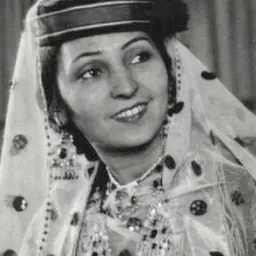
Roza Urbiybi Tazhibaykyzy Baglanova (January 1, 1922 – February 8, 2011) was a Soviet and Kazakh soprano opera and pop music singer. She was honoured with many awards throughout her career, including the People's Artist of the USSR and the Order of Lenin. She was also deemed a Hero of Kazakhstan.
Early life
Childhood and schooling Baglanova was born in Kazalinsk, in Kyzylorda Region. The Baglanov family consisted of grandmother Kundey, father Tazhibay, mother Akkurush, Tazhibai's second wife the Tatar Maryam, and older brother Idris. Roza spent her whole childhood on the left coast of the river Syr Darya. From the earliest years of her life, she dreamed of being a great singer. Her grandmother Kundey was a talented woman and she was the person who taught the child to sing. Her grandfather also loved singing, and together with his wife they used to perform at feasts. Her two mothers liked singing and playing the accordion, surrounding Baglanova with a love of art. Later Roza became an active member of the art club in the local theatre.
During her school years, Baglanova participated in many school, district, region, and republican concerts, including competitions in Kyzylorda, Almaty, Orenburg. With the help of her sonorous childish voice, Roza was the darling of the people and often won prizes.
When her father Tazhibay Baglanov died while performing service duty, the family was left without the only breadwinner. Grandmother Kundey owned rich property, and exchanged jewellery, dishes, trays, spoons, belts, and bracelets for bread, tea, flour. Baglonova's grandmother and mothers sewed clothes and sold them to feed the children.
Famine in the Kazakh steppe began in 1932. It worsened the situation when combined with the death of the head of the family. When the winter started, Roza had no warm clothes to wear. There were no roads but only a steppe with impenetrable snowdrifts. As a child, Roza was muffled into blankets from head to foot, and wearing a head woollen scarf and homemade boots from the large felt mat. She walked 6 kilometers to school in the blizzards every day.
Baglanova studied at the Kyzylorda Pedagogical Institute from 1939 to 1941. She dropped out from studying in the university in her third year since the material situation of her family had worsened.
Years in Uzbekistan Baglanova moved her relatives in Tashkent, the capital of Uzbekistan, and enrolled in the textile institute. In Tashkent she had a chance meeting with the soloist of the Tashkent Opera House and the director of the Uzbek philharmonic Mukhitdin Kari-Yakubov. He liked her singing and suggested she audition for the Uzbek Philharmonic. She was accepted there and performed as a soloist from 1941 to 1947. At one of her concerts, her singing impressed the First Secretary of the Central Committee of the Communist Party of Uzbekistan, Usman Yusupov. He provided Baglanova with a five-room apartment in the centre of the city and arranged to bring her remaining relatives to Tashkent. In the summer of 1941, on the coast of the reservoir in the village Kattakurgan, there was the second concert by Roza within the ensemble. Usman Yusupov attended and after the concert, he came to the singer and gave her 1000 roubles with a ticket to studying at the Moscow Conservatory.
Singer at the front After the outbreak of the Eastern Front of the Second World War (known as the Great Patriotic War), Baglanova and her choir went to the frontline to lift the spirit of the Soviet Army soldiers. She continued this activity for the next four years. The young star sang about 15 hours a day without a break despite the bad weather, blood, and flying bullets.
Thanks to this military period in her career, her collection of songs was filled with many military and folk compositions. The most popular song was “Ah, Samara-gorodok” from the repertoire of Lidia Ruslanova. Ruslanova liked how Baglanova performed the song and "gave" it to her. Baglanova sang in 20 various languages. It included all the languages that were spoken by soldiers from all the Soviet countries. She wanted to remind them by singing in their native languages about the homeland and bring some light memories despite the horrors of on-going war.
In 1943, Baglanova was injured in the eyes by artillery fire. Six operations were made to save her health. And even after being injured, she came back to the battlefield and helped medical staff to carry and bandage the soldiers.
Baglanova was the only Soviet artist who was twice awarded the medal “For Military Merit” in the period of the Great Patriotic War. Marshal Ivan Konev awarded her with the first medal on 1 May 1943. On 22 February 1945, Warsaw was freed from the occupying German forces. The ensemble of Tamara Khanum with Roza Baglanova and other members went to the city to perform to the seriously wounded soldiers who laid on the ground in the half-ruined buildings. After the victory in releasing the city, on the same day in 18:00, Konstantin Rokossovsky awarded Baglanova with the second medal “For Military Merit” in his residence.
On 2 May 1945, the singer returned to Moscow after getting within 90 kilometres from Berlin. In the capital, she celebrated the victory of the USSR and gave concerts with her ensemble.
Later life
During World War II, Baglanova met Kazakh poet Zhuban Moldagaliev, who asked her to return to her motherland, Uzbekistan. After four years, in 1949, with the help of the chief secretary of the Communist Party of Kazakhstan, Zhumabay Shayakhmetov, and with the permission of the chief secretary of the Communist Party of Uzbekistan – Usman Yusupov, Baglanova returned to Kazakh SSR.
Living in Almaty from the beginning of 1949, she became a singer with the Kazakh State Academic Theatre of Opera and Ballet named after Abay, then the Jambyl Kazakh State Philharmonic (1960) and was a leading master of the Kazakh state concert association "Kazakhconcert". During her career, she performed in Poland, the German Democratic Republic, Belgium, Hungary, Austria, Czechoslovakia, the People's Republic of China, the Republic of Korea, India, Burma, Canada, and other countries. One of her passions was singing in the language of the country she was performing in, and so performed traditional folk songs in Russian, Kazakh, Uzbek, Tatar, Mongolian, Korean, and others. Her international repertoire included: "Ah, Samara-gorodok", "Dark Is the Night", "Vasya-Vasilek", "Ogonyok", Korean folk song "Doradi", Finnish folk song “Tuku-tuku”, Indian folk song “You stole my heart”, Kyrgyz folk song “Perizat-ou”, Uzbek folk song “Tam basynda turgan kyz” and many others.
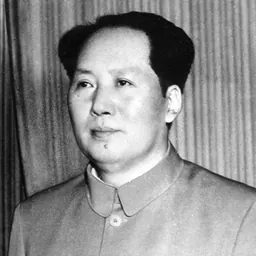
In 1949, the head of the USSR Stalin turned seventy years old, and Roza took part in a large concert in the Kremlin dedicated to his anniversary. She sang two songs. Stalin gave her a standing ovation and his guests of honor followed after him: Mao Zedong, Jacques Duclos, Wilhelm Pieck, Klement Gottwald, and others.
In 1955, during a tour in India, she was awarded the title "People's Artist of the Kazakh SSR". In 1967 when she gave concerts in Semipalatinsk, she was awarded the highest title at that time "People's Artist of the USSR". She traveled all over the Soviet Union. She was with the builders of the Baikal–Amur Mainline, in the Kuril Islands with fishermen, on the island of Sakhalin. She went to every corner of Kazakhstan: at the Baikonur cosmodrome, with the fishermen of the Aral Sea, with livestock breeders in the most distant districts, on many stages of the Houses of Culture. She sang in auls (villages of the republic) sometimes right under the open sky, and on moonlit nights and hot days.
On December 13, 1979, during one of the concerts in the city of Pavlodar, her eyes darkened and she lost her vision. This was due to the wartime injury she received. The singer did not stop the concert and continued performing. Although she received treatment until April 1980, her vision was not restored. On April 5, 1980, at the Palace of the Republic, the big festive concert took place, and she performed at the stage with the help of her son. She began the concert with her favourite song, “Dark Is the Night”. While performing it, she tried to convey to the audience the inner anguish and bitterness of war.
After that, she immediately flew to Moscow for an operation. She underwent three operations at once. The surgeons told her they needed another operation and explained why: one of the fragments from the mine was still in her head. The operation was completed successfully.
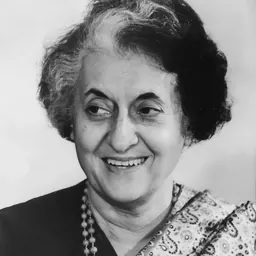
Baglanova visited many countries with state delegations. She was in India twice with the delegation of N. Khrushchev. The prime minister of India Jawaharlal Nehru himself gave a bouquet to the singer after her performance of the favourite song of Nehru's mother “You took my heart” in Hindi. On this visit, Roza also visited the house of Indira Gandhi twice and got to know her personally.
Death Baglanova died of a heart attack at the age of 89 in Alma-Ata.
Family and children Baglanova married twice. Her first husband was the Hero of the USSR, Sadyk Abdizhapparov, with whom she lived for 7 years. The second was Satybaldy Zhappayev. They were together for almost 10 years. Roza herself said in her interviews that no man would be satisfied with her lifestyle that was full of different tours and the attention of the people. At the age of 47 the singer gave birth to a son named Tazhen. Later she had two grandchildren, Akerke and Tazhibay, by her son Tazhen and his wife Maral. One of the sons was named after her father. After the death of the singer, her son and daughter-in-law gave the name “Urbiybi” to their next daughter, after her grandmother, whose real name was Urbiybi.
In January 2021, the president of Kazakhstan, Kassym-Jomart Tokayev, posted a tweet with an assurance to the country to build a historical monument in order to memorialise Baglanova and commemorate the 100th anniversary of the singer's birthday.
In 2021, UNESCO included Baglanova on the list of UNESCO anniversaries for 2022–2023 in honor of the 100th anniversary of her birth.
In April 2022, a monument to Baglanova was erected in Almaty. A bronze statue almost five meters tall is installed in front of the building of the Jambyl Kazakh State Philharmonic.
Awards
People's Hero of Kazakhstan Order of Otan People's Artist of Kazakh SSR Medal "For Military Merit" (1945) People's Artist of the USSR (1967) Shapagat Medal (1995) People's Artist of Kyrgyzstan (1996) "Daneker" International Prize (2000) Order of Lenin Order of the Red Banner of Labor Order of Friendship of Peoples The Order of Honour Public Prize "Tarlan" - "Contribution"
Don’t just read it —
keep it.
Full-length biographies made to live with: read them, listen on the way to work, watch them tonight.
- E-book
- Audio
- Video
Instant download · yours to keep · every purchase keeps this site free
Important facts
People in Roza Baglanova's life
Named in this biography and alive at the same time



Related people
Same field, nearest in time



Contemporaries
People whose lives overlapped Roza Baglanova's


Frequently asked questions
Who was Roza Baglanova?
singer (1922–2011)
When was Roza Baglanova born?
Roza Baglanova was born on 1 January 1922 in Kazaly.
When did Roza Baglanova die?
Roza Baglanova died on 8 February 2011 in Almaty.
What was Roza Baglanova's occupation?
Roza Baglanova was an opera singer.
What nationality was Roza Baglanova?
Roza Baglanova was Russian and Kazakh.
Sources & further reading
Cite this page
APA: Biography.guide. (2026). Roza Baglanova. https://biography.guide/roza-baglanova/
MLA: "Roza Baglanova." Biography.guide, https://biography.guide/roza-baglanova/.
Chicago: "Roza Baglanova." Biography.guide. https://biography.guide/roza-baglanova/.
Data last updated: 2026-09-20 · Spot an error? Report a correction.
Page generated 2026-09-27 05:21 UTC