
About Roy Henderson
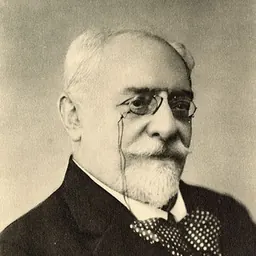
Lived 1899 – 2000 (aged 100). Roy Henderson was a British opera singer, music educator, singer and musician.
Roy Galbraith Henderson CBE (4 July 1899 – 16 March 2000) was a British baritone singer, conductor and teacher.
Born in Edinburgh and raised in Nottingham, Henderson began singing in public during the First World War, entertaining his army colleagues. After the war he enrolled at the Royal Academy of Music (RAM) in London, where he won numerous prizes. He received wider notice in 1925 for deputising at short notice in the difficult and important baritone part in Frederick Delius's A Mass of Life at a London concert. Henderson maintained a successful concert career for the next 27 years, taking part in the premieres of many works by British composers.
Henderson appeared in opera in two seasons at Covent Garden in 1928 and 1929, and was a founding member of the company of the Glyndebourne Festival, singing there in every season from 1935 to 1939. He was also well known as a recitalist, performing classic and new songs. He made many recordings, mainly for the Decca company, although he is particularly remembered for recordings from Glyndebourne and a 1938 Columbia recording of Ralph Vaughan Williams's Serenade to Music in which Henderson and fifteen other leading British singers took part. In addition to singing he was a conductor, mostly of choral music, and made some recordings in that capacity.
From the start of his career Henderson aimed to be a teacher of singing. He took pupils from the late 1920s onwards, and was a professor at the RAM from 1940. In 1953, he retired from public performance and devoted himself to full-time teaching. Among his many pupils the best-known was Kathleen Ferrier, and others included Jennifer Vyvyan (soprano), Constance Shacklock (mezzo-soprano), Norma Procter (contralto), Thomas Round (tenor) and John Shirley-Quirk and Derek Hammond-Stroud (baritones).
Early years Henderson was born in Edinburgh, the third child and elder son of the Rev Alexander Roy Henderson and his wife, Jean Boyd, née Galbraith. Alexander Henderson was minister of the Augustine Congregational Church between 1895 and 1902, when he moved to England to take charge of Castle Gate Congregational Church, Nottingham. Henderson attended Nottingham High School, where he received a classical education and became captain of the cricket team.
During the First World War Henderson served in the Artists Rifles and the Nottinghamshire and Derbyshire Regiment. In his hut were two well-known baritones, Percy Heming and Charles Mott, the latter being particularly helpful to him. Henderson joined an army concert party entertaining the troops, and he began learning the knack of what he called "putting it over" to an audience. There he won thirteen awards, including the Betjemann gold medal for singing, the Worshipful Company of Musicians' medal, and the medal for the most distinguished student of the year. In addition, he led the RAM's cricket team against the Royal College of Music, captained by Falkner, While still a student Henderson made his first broadcast in August 1922, for the Marconi Company, shortly before the establishment of the BBC.
Senior students could be appointed sub-professors − assistants to faculty members − and while serving in that capacity Henderson decided in 1923 that when he reached the age of fifty he would retire from singing and devote himself to teaching.
On March 27, 1926, Henderson married Bertha Collin Smyth (1901–1985), a fellow student from the RAM. They had a son and two daughters. A London newspaper reported the next day: blockindent|The soloists were Mme Miriam Licette, Miss Astra Desmond, Mr Walter Widdop, and Mr Roy Henderson, who took the all-important baritone part. The success of this young Scottish singer, who was making his first appearance at an important concert, was emphatic. He not only has a voice which he uses well, but is a singer of exceptional intelligence. His interpretation was not only musically excellent, but showed a rare understanding of the elusive spirit of the text. Mr. Henderson, who undertook the part at short notice, moreover sung by heart. … He is only 24 and should go far. (He was in fact 25 rather than 24, as he pointed out in a later interview.) Six were conducted by Sir Thomas Beecham, whom Henderson admired, although finding himself instinctively more in rapport with Sir Hamilton Harty: "I felt with Harty that there was a sort of joint effort − whatever I did he responded to, and whatever he did I responded to". After a performance of the Mass of Life with Harty in 1932 Delius wrote to Henderson saying that it had been the best performance he had heard. The composer sent him a signed photograph inscribed "To the unequalled interpreter of Zarathustra". Dyson's The Canterbury Pilgrims under the composer (1931), Vaughan Williams's Five Tudor Portraits (1935) and Dona nobis pacem (1936), both conducted by the composer, He was one of the sixteen soloists chosen for the Serenade to Music (1938), which Vaughan Williams composed as a tribute to Wood for the latter's golden jubilee as a conductor. The composer wrote the music with each soloist's voice in mind, and like the other singers, Henderson is commemorated in the published score which prints each soloist's initials alongside his or her lines, in Henderson's case "Nor is not mov'd with concord of sweet sounds".
Henderson's concert repertory was wide and varied. He was closely associated with the choral works of Elgar, and sang under the composer's baton in The Dream of Gerontius in 1933. Henderson was greatly admired in Elgar's The Apostles, In Grove's Dictionary of Music and Musicians, Alan Blyth quotes a review from The Times: blockindent|Among the solo singers the most outstanding was Mr Roy Henderson, who delivered the words of Jesus with a gentle, firm conviction that tallied with his ability to sing the whole of the music without a score in his hand. He breathed the true atmosphere as by nature fitted to it. and he made a well-received record for Vocalion of a scene from the opera, singing the parts of both Ford and Falstaff. His professional debut in opera was in the 1928 international season at Covent Garden. In the following Covent Garden season he appeared again in Das Rheingold and sang the Herald in Lohengrin, conducted respectively by Bruno Walter and Robert Heger. Also in 1929, conducted by John Barbirolli, he played Ford in Falstaff for the British National Opera Company, opposite his RAM Falstaff, Arthur Fear.
After 1929 Henderson made no further appearances at Covent Garden. In 1931 he was the baritone soloist in a concert performance of Manuel de Falla's opera Master Peter's Puppet Show, conducted by the composer. He became closely associated with the Glyndebourne Festival. In 1934 he sang Count Almaviva in Le nozze di Figaro on the opening night of the festival's inaugural season and at twelve further performances in 1934 and 1935. Thereafter he appeared at Glyndebourne every year until the outbreak of the Second World War in 1939. His other roles there were Papageno in Die Zauberflöte (16 performances, 1936−1937), Guglielmo in Così fan tutte (19 performances, 1936−1939) and Masetto in Don Giovanni (36 performances, 1936−1939). Of these, his favourite roles were Papageno and Guglielmo: "not the Count which I didn't enjoy particularly. It's an angry, jealous part and I'm much more inclined to comedy". The conductor was Fritz Busch, who was, along with Harty, the conductor Henderson most liked working with. In 1940 the Glyndebourne company went on tour with a production of The Beggar's Opera in which Henderson played Peachum and was scheduled to take over from Michael Redgrave as Macheath, but the fall of France and evacuation from Dunkirk forced the cancellation of the tour. The accompanist Gerald Moore wrote that Henderson's "quiet unobtrusive manner concealed a probing mind and an imagination that made every song he sang vital":
Moore added, "Our enjoyable work together apart, I know of no colleague with a livelier humour and keener sense of fun". After Ferrier's early death, Henderson contributed a chapter on being her teacher and friend in a memorial volume edited by Neville Cardus in 1954.
Other recordings Henderson made studio recordings for EMI and other labels; these and recordings of him singing in live concerts and broadcasts have been issued, including: YearComposerTitleWith 1934 Delius Songs of Sunset Olga Haley (contralto), London Select Choir, London Philharmonic, Sir Thomas Beecham 1934 Delius An Arabesque London Select Choir, London Philharmonic, Sir Thomas Beecham 1935 Mozart Le nozze di Figaro Soloists, Chorus and Orchestra of the Glyndebourne Festival, Fritz Busch 1935 Mozart Così fan tutte Soloists, Chorus and Orchestra of the Glyndebourne Festival, Fritz Busch 1936 Mozart Don Giovanni Soloists, Chorus and Orchestra of the Glyndebourne Festival, Fritz Busch 1936 Vaughan Williams Dona nobis pacem BBC Symphony, the composer 1938 Vaughan Williams Serenade to Music BBC Symphony, Sir Henry Wood 1951 Vaughan Williams Serenade to Music Liverpool Philharmonic, the composer Source: Naxos Music Library.
Last years Until his final years Henderson continued to teach, at his house in Belsize Park, London. He contributed reminiscences and comment to many BBC radio programmes in his retirement, including one in 1989 in which he and the two other surviving soloists (The other two were Dame Eva Turner and Mary Jarred.) To celebrate his hundredth birthday a compilation of his recordings was issued on compact disc, the earliest of them dating back to 1925.
Henderson died at the Musicians' Benevolent Fund nursing home, Ivor Newton House, Bromley, south-east London, on 16 March 2000, aged 100. He was survived by his son and one daughter; his wife and a daughter predeceased him.
Notes, references and sources
Don’t just read it —
keep it.
Full-length biographies made to live with: read them, listen on the way to work, watch them tonight.
- E-book
- Audio
- Video
Instant download · yours to keep · every purchase keeps this site free
Important facts
People in Roy Henderson's life
Named in this biography and alive at the same time





Related people
Same field, nearest in time

Contemporaries
People whose lives overlapped Roy Henderson's




Frequently asked questions
Who was Roy Henderson?
British opera singer (1899–2000)
When was Roy Henderson born?
Roy Henderson was born on 4 July 1899 in Edinburgh.
When did Roy Henderson die?
Roy Henderson died on 16 March 2000 in London.
What was Roy Henderson's occupation?
Roy Henderson was an opera singer, music educator, singer and musician.
What nationality was Roy Henderson?
Roy Henderson was British.
Sources & further reading
· DBpedia: Roy Henderson (baritone)
Cite this page
APA: Biography.guide. (2026). Roy Henderson. https://biography.guide/roy-henderson-opera-singer/
MLA: "Roy Henderson." Biography.guide, https://biography.guide/roy-henderson-opera-singer/.
Chicago: "Roy Henderson." Biography.guide. https://biography.guide/roy-henderson-opera-singer/.
Data last updated: 2026-09-20 · Spot an error? Report a correction.
Page generated 2026-09-27 05:04 UTC