
About Fritz Busch
Lived 1890 – 1951 (aged 61). Fritz Busch was a German conductor, pianist, music director, director, general music director and conducting.
Fritz Busch (13 March 1890 – 14 September 1951) was a German conductor.
Busch was born in Siegen to a musical family and studied at the Cologne Conservatory. After army service in the First World War, he was appointed to senior posts in two German opera houses. At the Stuttgart Opera (1918 to 1922) he modernised the repertory, and at the Dresden State Opera (1922 to 1933) he presented world premieres of operas by Richard Strauss, Ferruccio Busoni, Paul Hindemith and Kurt Weill among others. He also conducted at the Bayreuth and Salzburg Festivals.
Being an ardent Anti-Nazi, Busch was dismissed from his post as director at Dresden in 1933 and made most of his later career outside Germany. He conducted in New York and London, but his main bases were Buenos Aires, where he was in charge at the Teatro Colón for several opera seasons in the 1930s and 1940s; Copenhagen and Stockholm, conducting the Danish Radio Symphony Orchestra and the Stockholm Philharmonic; and Glyndebourne in England, where he was the founding musical director of Glyndebourne Festival Opera working together with the stage director Carl Ebert.
Busch disliked showmanship and was known as a scrupulous musician who strove to do justice to the composers whose works he conducted. He died in London aged 61.
Life and career Early years Busch was born on 13 March 1890 in Siegen, Westphalia, the eldest of eight children of and his wife Henriette, née Schmidt. Wilhelm was a carpenter, violin-maker and music-shop keeper; his wife was an embroiderer. It was a musical family; Wilhelm and Henriette supplemented their incomes by performing dance music at weekends.
As a boy, Busch took music lessons with his father and others, and in 1906 he entered the Cologne Conservatory, studying harmony and counterpoint with , piano with Karl Boettcher and later Lazzaro Uzielli, and conducting with the principal, Fritz Steinbach. He was then appointed director of music for the city of Aachen with responsibility for the Municipal Opera and the city's celebrated choral society. Among those whose works he premiered there were Donald Tovey, who became a close friend of Busch and his brothers. In 1911 Busch married Margarete Boettcher, a niece of his piano teacher; their first son, Hans, later a stage director, was born in 1914.
Busch remained at Aachen until the outbreak of the First World War in 1914, when he enlisted in the German army, rising from the ranks to become a junior officer.
Stuttgart and Dresden
In 1918 Busch successfully applied for the vacant post of Württemberg Court Kapellmeister – musical director of the Stuttgart Opera – in succession to Max von Schillings. The conservative tradition of the house, until then the court opera of the Kingdom of Württemberg within the German Empire, was swept away in the November Revolution of 1918, and Busch took advantage of the freedom to widen the repertoire, introducing new works by composers including Hindemith and Pfitzner, and presenting modern stagings such as Adolphe Appia's for Wagner's Ring. In 1922, Busch was appointed musical director of the Dresden State Opera. In the words of The Musical Times: This was success indeed: a musician in his early thirties raised to the post where Ernst von Schuch himself had conducted the premieres of Richard Strauss's] Salome, Elektra and Der Rosenkavalier. No opera house in Germany held greater repute. Under Fritz Busch Dresden maintained its lead. To Dresden's series of Strauss premieres Busch added Intermezzo (1924) and Die ägyptische Helena (1928)). He presented the world premieres of works by Ferruccio Busoni (Doktor Faust, 1925), Paul Hindemith (Cardillac, 1926) and Kurt Weill (Der Protagonist, 1926), and others, and the German premiere of Puccini's Turandot (1926). Busch refused subsequent requests to conduct at the festival. In 1927, at the invitation of Walter Damrosch, he made his American debut, conducting the New York Symphony Orchestra: the climax of the programme was the nine-year-old Yehudi Menuhin's first performance of the Beethoven Violin Concerto. Busch was so impressed that he arranged for Menuhin to come to Dresden, where he played the Beethoven concerto, the Bach E major and the Brahms.
In 1932 Busch was invited to conduct Mozart's Die Entführung aus dem Serail at the Salzburg Festival. Having recently been much impressed by Carl Ebert's staging of that opera in Berlin, Busch accepted the invitation on condition that Ebert should be engaged as director. The success of the production led Ebert to invite Busch to Berlin to conduct a new staging of Verdi's Un ballo in maschera, a celebrated and long-remembered production.
Though not generally concerned with national or international politics, Busch had watched the rise of the Nazi Party with dismay and disgust. Not himself Jewish, he counted many Jews among his friends, valued democracy and hated dictatorship. He made no secret of his contempt for the Nazis, and after Adolf Hitler came to power in 1933, Busch was dismissed by the Nazi-dominated Saxon Landtag. Among those outraged by the affair was Strauss, whose new opera Arabella, dedicated to Busch, was to have been premiered at the Dresden opera under its dedicatee. The last offer from the Nazis was a return to Bayreuth to replace Toscanini, who refused to work under the régime. Busch too refused.
Buenos Aires, Copenhagen, Stockholm and Glyndebourne From 1933 Busch's career was mostly outside Germany. In May of that year he accepted the musical directorship of the Teatro Colón in Buenos Aires for a season. Returning to Europe at the end of the year he began a long association with the Danish Radio Symphony Orchestra and the Stockholm Philharmonic.
Grove's Dictionary of Music and Musicians sums up the success of the Glyndebourne enterprise: The level achieved by the carefully chosen and rehearsed ensemble at the summer festivals, 1934–1939, is part of operatic history. The repertory was based on Mozart but included Donizetti's Don Pasquale and the first staging by a British company of Verdi's Macbeth. Ironically, it was at patrician Glyndebourne rather than at Dresden that the democratically minded Busch came nearest to his ideal of being able "to build up an opera production in the smallest detail and with ... complete respect for the work'". He made his London debut in 1938, conducting the London Symphony Orchestra at the Queen's Hall in a programme of Mozart, Beethoven and Brahms.
Busch continued to conduct at the Teatro Colón (1934–1936 and 1940–1947). Until 1940 he worked in Scandinavia during the winter months. According to Grove he grew so attached to Copenhagen that he turned down the offer to become chief conductor of the New York Philharmonic.
In 1950 Busch returned to Glyndebourne when the main festival resumed there after the war. In the early post-war years the Glyndebourne company appeared regularly at the Edinburgh Festival, and in August 1951 Busch was in Edinburgh to conduct his first post-war Verdi opera for the company, La forza del destino. Critics praised his "percipient direction" and "inspired" conducting. On 14 September, five days after the last Edinburgh performance, Busch died suddenly of a heart attack in London at the age of 61.
Recordings Busch's recordings include: 1923: Smetana: Overture to The Bartered Bride, with the Kapelle der Dresdener Staatsoper (recorded Dresden, June 1923 by Deutsche Grammophon) 1934–1935: Mozart, The Marriage of Figaro, with the Glyndebourne Festival Opera, Audrey Mildmay, Luise Helletsgruber, Italo Tajo, Roy Henderson, Norman Allin, Willi Domgraf-Fassbänder, Constance Willis 1935: Mozart, Così fan tutte, with the Glyndebourne Festival Opera, Ina Souez, Luise Helletsgruber, Irene Eisinger, Heddle Nash, John Brownlee, Willi Domgraf-Fassbaender 1936: Mozart, Don Giovanni, with the Glyndebourne Festival Opera, John Brownlee, Salvatore Baccaloni, Ina Souez, Roy Henderson, Luise Helletsgruber, Koloman von Pataky, Salvatore Baccaloni, David Franklin, Audrey Mildmay 1936: Strauss, Don Juan, op. 20, conducting the London Philharmonic Orchestra (recorded 6 & 8 July 1936 by His Master’s Voice) 1942: Beethoven Violin Concerto op. 61, with Adolf Busch and the New York Philharmonic Symphony Orchestra (recorded February 1942 Liederkranz Hall, New York by Columbia Records) 1947: Brahms Symphony No. 2, conducting the Danish State Radio Symphony Orchestra (HMV) 1950: Mozart, Cosi fan tutte with Glyndebourne Opera, Sena Jurinac, Blanche Thebom, Richard Lewis, Erich Kunz, Mario Borriello (recorded June 1950, Gyndebourne by HMV) 1951: Mozart, Idomeneo excerpts, with the Glyndebourne Festival Opera, Sena Jurinac, Dorothy McNeil, Richard Lewis, Alexander Young (recorded Abbey Road July 1951, HMV) 1951: Verdi, Un ballo in maschera, in German, Ein Maskenball, with the Cologne Radio Symphony Orchestra and the Cologne Radio Choir, Lorenz Fehenberger, Martha Mödl, Walburga Wegner, Dietrich Fischer-Dieskau, and Anny Schlemm 1951: Verdi, La forza del destino, with the Royal Philharmonic Orchestra and the Glyndebourne Festival Choir, Walburga Wegner, David Poleri, Marko Rothmüller, Bruce Dargavel, and Mildred Miller
Notes, references and sources
Don’t just read it —
keep it.
Full-length biographies made to live with: read them, listen on the way to work, watch them tonight.
- E-book
- Audio
- Video
Instant download · yours to keep · every purchase keeps this site free
Important facts
People in Fritz Busch's life
Named in this biography and alive at the same time






Related people
Same field, nearest in time


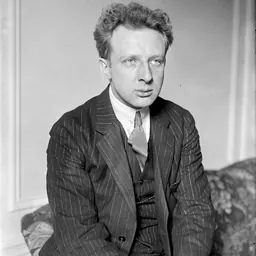
Contemporaries
People whose lives overlapped Fritz Busch's



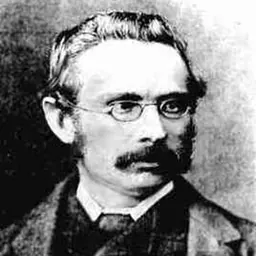
Frequently asked questions
Who was Fritz Busch?
German conductor (1890–1951)
When was Fritz Busch born?
Fritz Busch was born on 13 March 1890 in Siegen.
When did Fritz Busch die?
Fritz Busch died on 14 September 1951 in London.
What was Fritz Busch's occupation?
Fritz Busch was a conductor, pianist, music director, director, general music director and conducting.
What nationality was Fritz Busch?
Fritz Busch was German.
Sources & further reading
Cite this page
APA: Biography.guide. (2026). Fritz Busch. https://biography.guide/fritz-busch/
MLA: "Fritz Busch." Biography.guide, https://biography.guide/fritz-busch/.
Chicago: "Fritz Busch." Biography.guide. https://biography.guide/fritz-busch/.
Data last updated: 2026-09-20 · Spot an error? Report a correction.
Page generated 2026-09-27 05:23 UTC