
Roy Dowling
Royal Australian Navy commander, Chief of Naval Staff, Chairman of the Chiefs of Staff Committee
About Roy Dowling
Lived 1901 – 1969 (aged 67). Roy Dowling was an Australian military personnel and queen Elizabeth II.
Vice Admiral Sir Roy Russell Dowling, (28 May 1901 – 15 April 1969) was a senior commander in the Royal Australian Navy (RAN). He served as Chief of Naval Staff (CNS), the RAN's highest-ranking position, from 1955 until 1959, and as Chairman of the Chiefs of Staff Committee (COSC), forerunner of the role of Australia's Chief of the Defence Force, from 1959 until 1961.
Born in northern New South Wales, Dowling entered the Royal Australian Naval College in 1915. After graduating in 1919 he went to sea aboard several Royal Navy and RAN vessels, and later specialised in gunnery. In 1937, he was given command of the sloop . Following the outbreak of World War II, he saw action in the Mediterranean theatre as executive officer of the Royal Navy cruiser , and survived her sinking by a German U-boat in March 1942. Returning to Australia, he served as Director of Plans and later Deputy Chief of Naval Staff before taking command of the light cruiser in November 1944. His achievements in the South West Pacific earned him the Distinguished Service Order.
Dowling took command of the RAN's first aircraft carrier, , in 1948. He became Chief of Naval Personnel in 1950, and Flag Officer Commanding HM Australian Fleet in 1953. Soon after taking up the position of CNS in February 1955, he was promoted to vice admiral and appointed a Companion of the Order of the Bath. As CNS he had to deal with shortages of money, manpower and equipment, and with the increasing role of the United States in Australia's defence planning, at the expense of traditional ties with Britain. Knighted in 1957, Dowling was Chairman of COSC from March 1959 until May 1961, when he retired from the military. In 1963 he was appointed a Knight Commander of the Royal Victorian Order and became Australian Secretary to Queen Elizabeth II, serving until his death in 1969.
Pre-war career
Roy Russell Dowling was born on 28 May 1901 in Condong, a township on the Tweed River in northern New South Wales. His parents were sugar cane inspector Russell Dowling and his wife Lily. The youth entered the Royal Australian Naval College (RANC) at Jervis Bay, Federal Capital Territory, in 1915. An underachiever academically, he excelled at sports, and became chief cadet captain before graduating in 1918 with the King's Medal, awarded for "gentlemanly bearing, character, good influence among his fellows and officer-like qualities". The following year he was posted to Britain as a midshipman, undergoing training with the Royal Navy and seeing service on and . He was promoted to sub-lieutenant on 15 April 1921. By January 1923 he was back in Australia, serving aboard the cruiser . He was promoted to lieutenant on 15 March. In April 1924, Adelaide joined the Royal Navy's Special Service Squadron on its worldwide cruise, taking in New Zealand, Canada, the United States, Panama, and the West Indies, before docking in September at Portsmouth, England. There Dowling left the ship for his next appointment, training as a gunnery officer and serving in that capacity at .
After returning to Australia in December 1926, Dowling spent eighteen months on and , continuing to specialise in gunnery. In July 1928, he began instructing at the gunnery school in Flinders Naval Depot on Western Port Bay, Victoria. He married Jessie Blanch in Melbourne on 8 May 1930; they had two sons and three daughters. Jessie accompanied him on his next posting to Britain commencing in January 1931. Dowling was promoted to lieutenant commander on 15 March, and was appointed gunnery officer on the light cruiser in May. He returned to Australia in January 1933, and was appointed squadron gunnery officer aboard the heavy cruiser that April. In July 1935, Dowling took charge of the gunnery school at Flinders Naval Depot. He was promoted to commander on 31 December 1936. Completing his tenure on Swan in January 1939, he was briefly assigned to the Navy Office, Melbourne, before returning to Britain in March for duty at HMS Pembroke, awaiting posting aboard the yet-to-be-commissioned anti-aircraft cruiser. Following repairs, she became flagship of the 15th Cruiser Squadron and conducted shore bombardments in support of Allied troops during the Syrian campaign in June and July. She also escorted convoys resupplying Malta. In December, Naiad participated in the First Battle of Sirte against Italian naval forces. On 11 March 1942, she was torpedoed by a German U-boat off the Egyptian coast, and sank in just over twenty minutes.
Having survived Naiads sinking, Dowling returned to Australia and was appointed Director of Plans at the Navy Office in July 1942.
In November 1944, Dowling was given command of the light cruiser , which had been undergoing repair and refit in Sydney since being torpedoed by a Japanese submarine in the Solomons on 20 July 1943. Dowling took her on her shakedown cruise to Melbourne on 30 December, before embarking for the South West Pacific Area in February 1945. The following month, Hobart supported the US forces that recaptured Cebu during the liberation of the Philippines. She bombarded Tarakan Island prior to the Allied invasion on 1 May and, later that month, covered the Australian 6th Division's operations at Wewak. The cruiser supported the Allied landings on Brunei in June, and on Balikpapan in July. For his "outstanding courage, skill and initiative" during these operations, Dowling was awarded the Distinguished Service Order (DSO), gazetted on 6 November 1945.
Post-war career alt=A group of four senior military officers sitting down together conversing. There is a small table in front of them with a book on it. Dowling joined the Australian contingent at the surrender of Japan in Tokyo Bay on 2 September 1945. Following the cessation of hostilities, Hobart became flagship of HM Australian Squadron, and Dowling flag captain and chief of staff to Commodore John Collins, the squadron commander. The war had taken a toll on Dowling's health, and he required leave before commencing his next appointment in May 1946 as Director of Ordnance, Torpedoes and Mines at the Navy Office.
In June 1950, Dowling was promoted to commodore and appointed Second Naval Member and Chief of Naval Personnel, serving in this capacity until the end of 1952. His term coincided with the outbreak of the Korean War, and resultant increased demands on manpower. Raised to rear admiral in July 1953, he returned home to take up the post of Flag Officer Commanding HM Australian Fleet that December, serving through the following year. He had to preside over cutbacks to operations brought on by government stringency after the Korean War. He was promoted to vice admiral on 7 June, and appointed a Companion of the Order of the Bath (CB) in the Queen's Birthday Honours two days later. On 15 June, he joined fellow chiefs of staff Lieutenant General Henry Wells and Air Marshal John McCauley, Prime Minister Robert Menzies, and senior government members in approving a draft directive for the role of the Far East Strategic Reserve (FESR); this made Commonwealth forces available for the fight against communist insurgents in Malaya, as well as for the security of Malaya and Singapore against external aggression. The Navy's contribution to the FESR was to be at least two destroyers or frigates on an ongoing basis, as well as a yearly visit by an aircraft carrier. The destroyers and , already in the region on an exercise, were immediately committed, and Dowling flew to Singapore to personally announce the plan and the reasons for it to the ships' crews.
Dowling was an early advocate for the establishment of an Australian submarine fleet; in 1963, after several false starts, the first of six Oberon-class submarines was ordered. As part of a general Western trend that viewed with alarm the increasing capability of the Soviet Navy's surface fleet, Dowling also worked to improve the offensive power of the Fleet Air Arm. In March 1956, he went so far as proposing purchase of nuclear weaponry for the RAN's De Havilland Sea Venoms. During much of Dowling's remaining time as CNS, faced with the obsolescence of HMAS Sydney and in accordance with its two-carrier policy, the Navy tried unsuccessfully to acquire a new and larger aircraft carrier to augment . Believing in the maintenance of traditionally close ties between the RAN and the Royal Navy, he worked to coordinate his policies as CNS with those of Britain's First Sea Lord, Earl Mountbatten.
Other issues facing the RAN during Dowling's term as CNS were its relegation—since the beginning of the 1950s—to third place behind the other armed forces in terms of Federal budget allocations, its replacement by the RAAF as the country's first line of defence, and a shortage of manpower. Dowling himself considered "separation from families, lack of houses, over employment, high wages and overtime payment in civvie street" as the causes for the Navy's inability to attract and retain personnel; the Allison Report in 1958 led to improvements to service conditions, which helped reduce wastage. The RANC had moved to Flinders Naval Depot in 1930, and Dowling was pleased to be able to oversee its return to Jervis Bay in 1958, the year before he relocated the office of the CNS to Canberra.
Dowling was appointed a Knight Commander of the Order of the British Empire (KBE) in the 1957 New Year Honours, and completed his term as CNS on 23 February 1959. He was succeeded as CNS by Vice Admiral Henry Burrell. Other setbacks during his tenure included the Defence Department's decision—rescinded after his term—to disband the Fleet Air Arm, and the Federal government's failure to back him when he announced at a SEATO press conference in March 1961 that Australia was prepared to intervene militarily in the second Laotian crisis if it became necessary.
Later life Dowling retired from the military on 27 May 1961 and was succeeded as Chairman of COSC by Air Marshal Sir Frederick Scherger. Though keen to secure a diplomatic appointment, nothing was offered to him and, as a practising Anglican, he instead busied himself with church affairs in Canberra. In July 1962, the government gave him responsibility for organising Queen Elizabeth II's upcoming royal tour. He was rewarded with appointment as a Knight Commander of the Royal Victorian Order (KCVO) as of 27 March 1963, and became Australian Secretary to the Queen on 1 November the same year. Dowling was also the Australian Red Cross Society's Canberra chairman from 1962 to 1967; at the time he took over the chairmanship, Lady Dowling was acting president of the organisation, in the absence of Lady William Oliver.
Don’t just read it —
keep it.
Full-length biographies made to live with: read them, listen on the way to work, watch them tonight.
- E-book
- Audio
- Video
Instant download · yours to keep · every purchase keeps this site free
Important facts
People in Roy Dowling's life
Named in this biography and alive at the same time


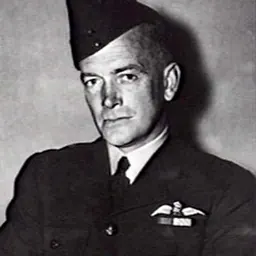
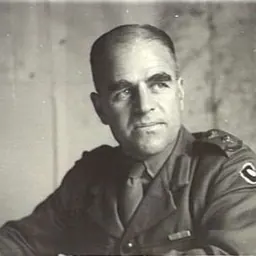


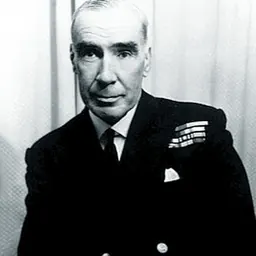
Related people
Same field, nearest in time



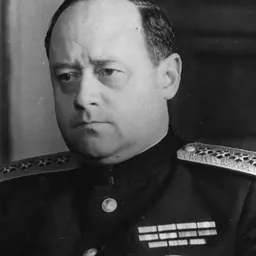

Contemporaries
People whose lives overlapped Roy Dowling's


Frequently asked questions
Who was Roy Dowling?
Royal Australian Navy commander, Chief of Naval Staff, Chairman of the Chiefs of Staff Committee (1901-1969)
When was Roy Dowling born?
Roy Dowling was born on 28 May 1901 in New South Wales.
When did Roy Dowling die?
Roy Dowling died on 15 April 1969 in Canberra.
What was Roy Dowling's occupation?
Roy Dowling was a military personnel and queen Elizabeth II.
What nationality was Roy Dowling?
Roy Dowling was Australian.
Sources & further reading
Cite this page
APA: Biography.guide. (2026). Roy Dowling. https://biography.guide/roy-dowling/
MLA: "Roy Dowling." Biography.guide, https://biography.guide/roy-dowling/.
Chicago: "Roy Dowling." Biography.guide. https://biography.guide/roy-dowling/.
Data last updated: 2026-09-20 · Spot an error? Report a correction.
Page generated 2026-09-27 05:30 UTC