
About Ross Macdonald
Lived 1915 – 1983 (aged 67). Ross Macdonald was an American writer, novelist and architect.
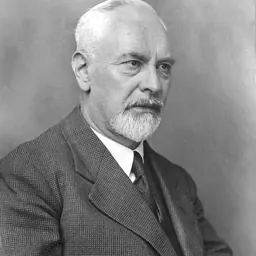
Kenneth Millar (; December 13, 1915 – July 11, 1983), known mainly by the pseudonym Ross Macdonald, was an American-Canadian writer of crime fiction. He is best known for his series of hardboiled novels set in Southern California and featuring private detective Lew Archer. Since the 1970s, Macdonald's works (particularly the Archer novels) have received attention in academic circles for their psychological depth, sense of place, use of language, sophisticated imagery and integration of philosophy into genre fiction. Brought up in the province of Ontario, Canada, Macdonald eventually settled in the state of California, where he died in 1983.
The Wall Street Journal wrote that:... it is the sheer beauty of Macdonald’s laconic style—with its seductive rhythms and elegant plainness—that holds us spellbound. "Hard-boiled," "noir," "mystery," it doesn’t matter what you call it. Macdonald, with insolent grace, blows past the barrier constructed by Dorothy Sayers between "the literature of escape" and "the literature of expression." These novels, triumphs of his literary alchemy, dare to be both.
Life Millar was born in Los Gatos, California, and raised in his Canadian parents' native Kitchener, Ontario. Millar was a Scots spelling of the surname Miller, and the author pronounced his name Miller rather than Millar. Some years later, he attended the University of Michigan and received a PhD in 1952. He married Margaret Sturm in 1938, though they'd known each other earlier in high school. They had a daughter in 1939, Linda, who died in 1970. The family moved from Kitchener to Santa Barbara in 1946.
Millar began his career writing stories for pulp magazines and used his real name for his first four novels. Of these he completed the first, The Dark Tunnel, in 1944. After serving at sea as a naval communications officer from 1944 to 1946, Millar returned to Michigan, where he obtained his Ph.D. degree in literature. For his doctorate, Millar wrote a dissertation on Samuel Taylor Coleridge and studied under poet W. H. Auden. Unusual for a prominent literary intellectual of the era, Auden held mystery or detective fiction could rise to the level of literature and encouraged Millar's interest in the genre.
In 1983 Macdonald died of Alzheimer's disease. He has been called the primary heir to Dashiell Hammett and Raymond Chandler as the master of American hardboiled mysteries.
Macdonald's writing built on the pithy style of his predecessors by adding psychological depth and insights into the motivations of his characters. His plots, described as of "baroque splendor", were complicated and often turned on Archer's unearthing family secrets of upwardly mobile clients, sometimes going back over several generations. Lost or wayward sons and daughters were a theme common to many of the novels. During adolescence, Macdonald engaged in petty crime and delinquency from school, and his own daughter Linda dropped out of college and disappeared for a week in 1959 only to be found living with an older man, events which he later said explained his sympathy for the troubled young adults often featured in his novels. Even his regular readers seldom saw a Macdonald denouement coming.
Tom Nolan, Macdonald's biographer, wrote, "By any standard he was remarkable. His first books, patterned on Hammett and Chandler, were at once vivid chronicles of a postwar California and elaborate retellings of Greek and other classic myths. Gradually he swapped the hard-boiled trappings for more subjective themes: personal identity, the family secret, the family scapegoat, the childhood trauma; how men and women need and battle each other, how the buried past rises like a skeleton to confront the present. He brought the tragic drama of Freud and the psychology of Sophocles to detective stories, and his prose flashed with poetic imagery."
Recognition
The Lew Archer novels are recognized as some of the most significant American mystery books of the mid 20th century, bringing a literary sophistication to the genre. Literary critic John Leonard declared that Macdonald had surpassed the limits of crime fiction to become "a major American novelist". William Goldman, who adapted Macdonald's The Moving Target to film as Harper in 1966, called his works "the finest series of detective novels ever written by an American". A later film adaptation was The Drowning Pool (1975), also starring Paul Newman as the detective Lew Harper. In addition, The Underground Man was adapted as a TV movie in 1974.
Over his career, Macdonald was presented with several awards. In 1964, the Mystery Writers of America awarded him the Silver Dagger award for The Chill. Ten years later, he received the Grand Master Award from the Mystery Writers of America, and in 1982 he received "The Eye," the Lifetime Achievement Shamus Award from the Private Eye Writers of America. In 1982, he was awarded the Robert Kirsch Award by the Los Angeles Times for "an outstanding body of work by an author from the West or featuring the West."
Published works
Writing as Kenneth Millar The Dark Tunnel (a.k.a. I Die Slowly) – 1944 Trouble Follows Me (a.k.a. Night Train) – 1946 Blue City – 1947 (filmed with Judd Nelson as Blue City, 1986) The Three Roads – 1948 (filmed with Michael Sarrazin as Deadly Companion, 1980)
These first four novels, all non-series standalones, were initially published using Millar's real name, but have since been intermittently reissued using his literary pseudonym, Ross Macdonald.
Other non-series novels Two later non-series novels were also published: Meet Me at the Morgue (aka Experience With Evil) – 1953, credited to John Ross Macdonald The Ferguson Affair – 1960, credited to Ross Macdonald
Lew Archer Novels
Source: The New York Times Best Seller list Figures are for the Adult Hardcover Fiction lists for the years of publication: highest position reached and total number of weeks on list (possibly nonconsecutive). A "—" indicates it did not make the list. Note that the Times list consisted of a Top 10 from 1973 through 1976, but a Top 15 in the covered years before that.
Short story collections The Name Is Archer (paperback original containing seven stories) – 1955 Lew Archer: Private Investigator (The Name Is Archer + two additional stories) – 1977 Strangers in Town (unpublished drafts edited by Tom Nolan) - 2001 The Archer Files, The Complete Short Stories of Lew Archer Private Investigator, Including Newly Discovered Case Notes, ed. Tom Nolan – 2007.
Omnibuses Archer in Hollywood – 1967 includes The Moving Target, The Way Some People Die, and The Barbarous Coast. Archer at Large – 1970 includes The Galton Case, The Chill, and Black Money. Archer in Jeopardy – 1979 includes The Doomsters, The Zebra-Striped Hearse, and The Instant Enemy. Archer, P.I.—includes The Ivory Grin, The Zebra-Striped Hearse and The Underground Man. Mystery Guild, 1990. Collects three Vintage Crime/Black Lizard printings. Ross MacDonald: Four Novels of the 1950s - May 2015, Library of America, includes The Way Some People Die, The Barbarous Coast, The Doomsters, and The Galton Case. Ross MacDonald: Three Novels of the Early 1960s - April 2016, Library of America, includes The Zebra-Striped Hearse, The Chill and The Far Side of the Dollar. Ross MacDonald: Four Later Novels - July 2017, Library of America, includes Black Money, The Instant Enemy, The Goodbye Look, and The Underground Man
British omnibuses Allison & Busby published three Archer omnibus editions in the 1990s. The Lew Archer Omnibus. Vol. 1. includes The Drowning Pool, The Chill and The Goodbye Look. The Lew Archer Omnibus. Vol. 2. includes The Moving Target, The Barbarous Coast, and The Far Side of the Dollar The Lew Archer Omnibus. Vol. 3. includes The Ivory Grin, The Galton Case, and The Blue Hammer.
Non-fiction On Crime Writing – 1973, Santa Barbara : Capra Press, Series title: Yes! Capra chapbook series; no. 11, The Library of Congress bibliographic information includes this note: "Writing The Galton case." Self-Portrait, Ceaselessly Into the Past – 1981, Santa Barbara : Capra Press, collection of book prefaces, magazine articles and interviews.
Don’t just read it —
keep it.
Full-length biographies made to live with: read them, listen on the way to work, watch them tonight.
- E-book
- Audio
- Video
Instant download · yours to keep · every purchase keeps this site free
Important facts
People in Ross Macdonald's life
Named in this biography and alive at the same time







Related people
Same field, nearest in time




Contemporaries
People whose lives overlapped Ross Macdonald's



Frequently asked questions
Who was Ross Macdonald?
American writer (1915–1983)
When was Ross Macdonald born?
Ross Macdonald was born on 13 December 1915 in Los Gatos.
When did Ross Macdonald die?
Ross Macdonald died on 11 July 1983 in Santa Barbara.
What was Ross Macdonald's occupation?
Ross Macdonald was a writer, novelist and architect.
What nationality was Ross Macdonald?
Ross Macdonald was American.
Sources & further reading
Cite this page
APA: Biography.guide. (2026). Ross Macdonald. https://biography.guide/ross-macdonald/
MLA: "Ross Macdonald." Biography.guide, https://biography.guide/ross-macdonald/.
Chicago: "Ross Macdonald." Biography.guide. https://biography.guide/ross-macdonald/.
Data last updated: 2026-09-20 · Spot an error? Report a correction.
Page generated 2026-09-27 05:23 UTC