
Rosalba Carriera
Italian portrait painter and pastellist
About Rosalba Carriera
Lived 1675 – 1757 (aged 81). Rosalba Carriera was an Italian painter, draftsperson, architectural drafter, artist and visual artist.
Rosalba Carriera (12 January 1673 – 15 April 1757) was an Italian Rococo painter. In her younger years, she specialized in portrait miniatures. Carriera would later become known for her pastel portraits, helping popularize the medium in eighteenth-century Europe. She is remembered as one of the most successful women artists of any era.
Biography Carriera was born in Venice to Andrea Carriera, a lawyer, and Alba Foresti, an embroiderer and lacemaker.
The popularity of snuff-taking gave her an opportunity. Carriera began painting miniatures for the lids of snuff-boxes and as independent objects. She was among the first painters to use ivory instead of vellum as a support for miniatures. The portraits of her early period include those of Maximilian II of Bavaria; Frederick IV of Denmark; the "Artist and her Sister Naneta" (Uffizi); and Augustus the Strong, King of Poland and Elector of Saxony, who acquired a large collection of her pastels.
By 1700, Carriera was already painting miniatures and by 1703 she had completed her first pastel portraits. In 1704, she was made an Accademico di merito by the Roman Accademia di San Luca, a title reserved for non-Roman painters.
Between 1720 and 1721, Carriera worked in Paris, where her work was in great demand.
Carriera's other sister, Giovanna, and her mother, accompanied her to France. Both sisters, particularly Giovanna, helped her in painting the hundreds of portraits she was asked to execute. This was because she undertook a lot of work in order to support her family. Carriera's diary of these 18 months in Paris was later published by her devoted admirer, Antonio Zanetti, the Abbé Vianelli, in 1793. Her extensive correspondence has also been published.
In the short time she spent in Paris, Carriera's work contributed to forming the new aristocratic tastes of the court and by extension, the tastes of Parisians. No longer did art serve only the monarchy's needs. She injected her free style, sense of colour and charm into the Rococo style, to which she was closely associated and which soon dominated the arts. She outlived all her family, spending her last years in a small house in the Dorsoduro district of Venice, where she died at the age of 84.
Training Carriera's mother taught her the art of lace making. Her training as a portraitist remains undocumented. It is possible that she studied with Giovanni Antonio Lazzari , Federico Bencovich, and Giuseppe Diamantini. She may also have been associated with Antonio Balestra, whose work she copied.
Carriera shared her talents with her sisters Giovana and Angela and later in life had female students such as Marianna Carlevarijs, Margherita Terzi, and Felicita Sartori.
Influence Carriera's influence would spread widely among many. In 1720 she provided King Louis XV with a portrait that completed the transition from the previously accepted style of the court. It was a shift between what looked powerful and a decorative style with international appeal.
Despite her renown and contribution to an established manner, Carriera is "often treated as an exception, a rarity as a woman artist" The Rococo style emphasized the use of pastel colors; spontaneous brush strokes, dancing lights, subtle surface tonalities and a soft, elegant and charming approach to subject matter. She was known for dragging the sides of white chalk across an under-drawing of darker tones to capture the shimmering texture of lace and satin. She was also able to highlight facial features and the soft cascades of powdered hair.
Her best-known self-portrait is one she contributed to the Medici collection of self-portraits at the Uffizi Gallery in Florence. This piece was different because she veered away from idealizing herself, as was a custom of the era. Instead, she was brusque and honest in her representation, featuring a larger nose, thin lips and a deep dimple in her chin. She holds a portrait of her sister and assistant Giovanna, to whom she was very close.
Carriera was not just a portrait painter, even though that was her subject matter of choice due to her profession. She also created a few allegorical pieces, including The Four Seasons, The Four Elements and The Four Continents. These allegories were represented by beautiful, nymph like and barely clothed women holding symbols that referenced the meaning of the piece.
Gallery
Legacy
Carriera was best known for her innovative approach to pastels, which had previously been used for informal drawings and preparatory sketches. She was also credited with pastel as a medium for serious portraiture that redefined the Rococo manner.
Rosalba Carriera is a character in the novel The Laws of Time (2019) by Andrea Perego.
Don’t just read it —
keep it.
Full-length biographies made to live with: read them, listen on the way to work, watch them tonight.
- E-book
- Audio
- Video
Instant download · yours to keep · every purchase keeps this site free
Important facts
more
rosalva carriera, Rosalba, la Ros-Alba, la Rose Alba, Demoiselle Rosalba, Rosa alba Carriera, Rosabella Carriera, Mademoiselle Rosalba, Signora Rosalba, carriera rosalba, M.lle Rosalba, Mad. Rosalba, Mademoiselle Rosabella, Rosabella, Rosalba di Venezia, Carriera, La Rosalba, Rosalva, Rose Alba, Rosalbe, Rosaba, Rosalba.People in Rosalba Carriera's life
Named in this biography and alive at the same time

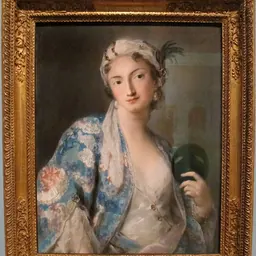


Related people
Same field, nearest in time


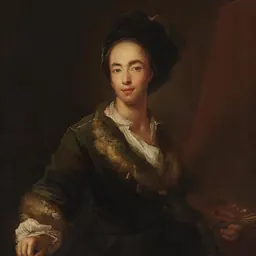

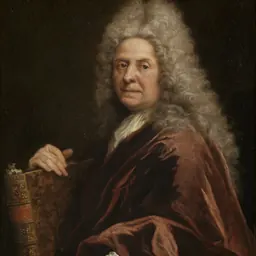
Contemporaries
People whose lives overlapped Rosalba Carriera's


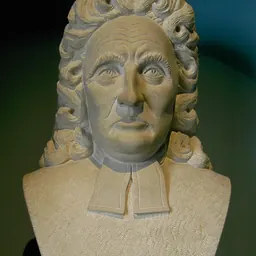


Frequently asked questions
Who was Rosalba Carriera?
Italian portrait painter and pastellist (1675–1757)
When was Rosalba Carriera born?
Rosalba Carriera was born on 7 October 1675 in Venice.
When did Rosalba Carriera die?
Rosalba Carriera died on 15 April 1757 in Venice.
What was Rosalba Carriera's occupation?
Rosalba Carriera was a painter, draftsperson, architectural drafter, artist and visual artist.
What nationality was Rosalba Carriera?
Rosalba Carriera was Italian.
Sources & further reading
Cite this page
APA: Biography.guide. (2026). Rosalba Carriera. https://biography.guide/rosalba-carriera/
MLA: "Rosalba Carriera." Biography.guide, https://biography.guide/rosalba-carriera/.
Chicago: "Rosalba Carriera." Biography.guide. https://biography.guide/rosalba-carriera/.
Data last updated: 2026-09-20 · Spot an error? Report a correction.
Page generated 2026-09-27 05:33 UTC