
About Ronald Penney
Lived 1896 – 1964 (aged 68). Ronald Penney was a British engineer and military personnel.
Major-General Sir William Ronald Campbell Penney, (16 May 1896 – 3 December 1964) was a British Army officer who fought in both the First and the Second World Wars. His most notable role occurred during the latter, when he was General Officer Commanding (GOC) of the 1st Infantry Division during the Battle of Anzio, part of the Italian Campaign, in 1944.
Early life and military career Born in Midlothian on 16 May 1896, Penney was the third of four sons of Joseph Campbell Penney, an Edinburgh accountant, and Margaret Eleanor Jane Gourlay. He was educated at Wellington College, Berkshire and, with the intention of starting a military career, the Royal Military Academy, Woolwich. Promoted to lieutenant on 23 December 1915, he was initially held back in the United Kingdom, but from 24 January 1916, he fought on the Western Front. He was promoted to the acting rank of captain on 22 January 1917 and made second-in-command (2IC) of a signals company, and his rank of captain was made permanent on 3 November of that year.
When the war came to an end on 11 November 1918 Penney had been awarded the Military Cross (MC) and was mentioned in despatches on 18 May 1917. and, the Belgian Croix de guerre on 4 September 1919.
Between the wars Immediately after the war, in March 1919, Penney became a General Staff Officer Grade 3 (GSO3) at the Signal Service Training Centre, where he remained until 13 June 1921, during which time he transferred, on 11 May 1921, to the newly formed Royal Corps of Signals. He then served in India, where he played rugby for the army and served as Assistant to the Signal Officer-in-Chief, India. In 1925 he married Shirley Mary Gurner; they had two daughters. Returning to England, he served briefly as an instructor at the Royal School of Signals from 22 March 1926 until 20 January 1927, and attended the Staff College, Camberley, graduating there in late 1928. Among his many fellow students at Camberley were John Whiteley, Clement West, Eric Dorman-Smith, Angus Collier, Reginald Savory, Philip Christison, Oliver Leese, Evelyn Barker, John Hawkesworth, Alec Bishop, Eric Nares, Eric Hayes, Charles Norman, Stanley Kirby, Edmund Beard, Christopher Woolner, Wilfrid Lloyd, Reginald Savory, Robert Bridgeman and Alfred Curtis.
Soon after he graduated from Camberley Penney was posted to the War Office as a GSO3, from 14 April 1929 until 15 January 1931, when he was posted to Shanghai, China as a brigade major, remaining there until March 1933. and, on 1 July 1934, he was promoted to the brevet rank of lieutenant-colonel, and lieutenant-colonel on 1 April 1935. Upon being sent to India in 1935, where he was awarded the Distinguished Service Order (DSO) on 21 December 1937 and was mentioned in despatches on 18 February 1938 for his part in the Waziristan campaign, he returned to England and attended the Imperial Defence College in 1939, graduating from there later in the year. Penney was the first officer from the Royal Corps of Signals to do so.
Second World War Britain and the home front Upon the outbreak of World War II in September 1939 Penney was still a student at the Imperial Defence College but, graduating soon afterwards, on 18 November he was promoted to colonel (with seniority backdated to 1 July 1937) and the acting rank of brigadier, and became the Deputy Director of Military Intelligence (DDMI) at the War Office on the sane date. and, upon being sent to the Middle East, was made Signals Officer-in-Chief with Middle East Command (General Sir Claude Auchinleck) becoming the latter's chief signal officer. Penney, as Signals Officer-in-Chief, was to obtain for the army sufficient wireless radio sets, with sufficient range to cover the long distances between the numerous units. On 18 February, Penney was made a Commander of the Order of the British Empire (CBE) and, on 25 June, his rank of major-general was made permanent (with seniority backdating to 17 November 1941). Alexander's, now Penney's superior officer, influence later secured Penney's next major appointment, as GOC of the 1st Infantry Division, in mid-October 1943. Just over two years after Penney had left the division, he returned as its GOC. In this way, by 26 January, four days after the operation started, opposing the Allies at Anzio were elements of six German divisions.
The Germans were now determined in their attempts to destroy the 3rd Brigade in its exposed position, as part of the first phase of their offensive to drive the VI Corps back into the sea. Penney was particularly unhappy at this news, and, upon Dorman-Smith's arrival at Anzio, greeted him with the words "I didn't want you at first and I do not want you now". He stood down as Director of the London Communications Security Agency in 1957. Knighted the following year, in 1963 he remarried, after the death of his first wife in 1960, to Muriel Stella Daubeny and spent his final years in Berwick-on-Tweed, Northumberland, where he died on 3 December 1964, at the age of 68. he was highly regarded by Lucian Truscott and Alexander and most of his subordinates. Carlo D'Este wrote that Anzio "haunted Penney for the rest of his life. He believed his men had fought well but had never been given the credit they deserved for their sacrifice at Anzio. He was proud to have been their commander but remained bitter over what he considered to have been Lucas's failure".
Don’t just read it —
keep it.
Full-length biographies made to live with: read them, listen on the way to work, watch them tonight.
- E-book
- Audio
- Video
Instant download · yours to keep · every purchase keeps this site free
Important facts
People in Ronald Penney's life
Named in this biography and alive at the same time


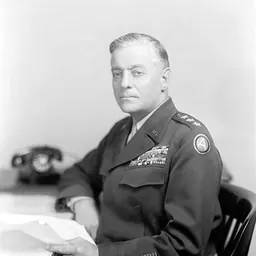

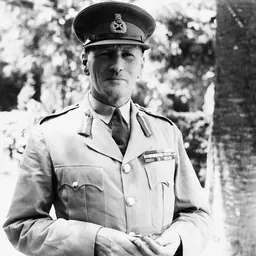

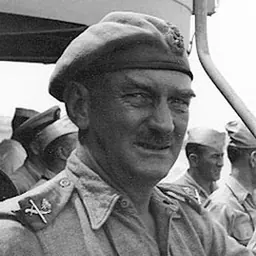
Related people
Same field, nearest in time


Contemporaries
People whose lives overlapped Ronald Penney's



Frequently asked questions
Who was Ronald Penney?
British Army general
When was Ronald Penney born?
Ronald Penney was born on 16 May 1896 in Midlothian.
When did Ronald Penney die?
Ronald Penney died on 3 December 1964 in Berwick-upon-Tweed.
What was Ronald Penney's occupation?
Ronald Penney was an engineer and military personnel.
What nationality was Ronald Penney?
Ronald Penney was British.
Sources & further reading
Cite this page
APA: Biography.guide. (2026). Ronald Penney. https://biography.guide/ronald-penney/
MLA: "Ronald Penney." Biography.guide, https://biography.guide/ronald-penney/.
Chicago: "Ronald Penney." Biography.guide. https://biography.guide/ronald-penney/.
Data last updated: 2026-09-20 · Spot an error? Report a correction.
Page generated 2026-09-27 05:11 UTC