
About Evelyn Barker
Lived 1894 – 1983 (aged 89). Evelyn Barker was a British military officer and military personnel.
General Sir Evelyn Hugh Barker, (22 May 1894 – 23 November 1983) was a British Army officer who saw service in both the First World War and the Second World War. During the latter, he commanded the 10th Brigade during the Battle of France in 1940, the 49th (West Riding) Infantry Division and the VIII Corps in the Western Europe Campaign from 1944 to 1945.
After the war, Barker was the General Officer Commanding (GOC) of the British Forces in Palestine and Trans-Jordan from 1946 to 1947, during the Palestine Emergency. He is remembered for surviving assassination attempts during the insurgency, and his controversial order in the wake of the King David Hotel bombing in July 1946 in which he declared, "[We] will be punishing the Jews in a way the race dislikes as much as any, by striking at their pockets and showing our contempt of them."
Early life Born in Southsea, Hampshire, England, on 22 May 1894, Evelyn Hugh Barker was the son of Major General Sir George Barker, a British Army officer of the Royal Engineers, and the Hon. Clemency Hubbard, daughter of John Hubbard, 1st Baron Addington, as the youngest of two children and the only son. He was educated at Wellington College, Berkshire, later entering the Royal Military College, Sandhurst, where, on 5 February 1913, he passed out and was commissioned into the King's Royal Rifle Corps (KRRC) of the British Army. He was posted to the 4th Battalion, KRRC, which was then serving in Gharial, British India.
First World War Barker, who had by now gained the nickname "Bubbles", was still in India with his battalion when the First World War began in August 1914. In November, the battalion was dispatched back to the United Kingdom, and joined the 27th Division. On 27 November, Barker was promoted to the temporary rank of lieutenant. The following month, the 27th Division was deployed to the Western Front in France. Barker was wounded in March 1915, during the actions of St Eloi Craters. By the end of the war, he had been wounded twice, awarded the Military Cross and the Italian Silver Medal of Military Valor, and twice been mentioned in despatches. On 3 June 1919, he was appointed a Companion of the Distinguished Service Order.
In 1919, Barker took part in the British military expedition in the Russian Civil War. He later returned to the United Kingdom and served as a GSO3 at the War Office and later at Southern Command.
On 1 July 1934, Barker was made a brevet lieutenant-colonel and assigned to the 8th Infantry Brigade, part of the 3rd Infantry Division. In June 1936, Barker became Commanding Officer of the 2nd Battalion, KRRC. The battalion was dispatched to Palestine, on internal security duties, during the 1936–39 Arab revolt in Palestine.
In late July 1938, Barker relinquished his battalion command. On 1 August, he was promoted to brevet colonel and was given the temporary rank of brigadier for his new command, the 10th Infantry Brigade (part of the 4th Infantry Division). Barker, who was 44, had been selected over those who had seniority and indicated that Barker's superiors regarded him highly. That move caused some resentment with other officers who had been passed over. The 10th Brigade formed part of the 4th Division. The division advanced to Brussels but, after a strategic reverse in the campaign, was forced to retreat soon afterwards. The historian Peter Young, then a platoon commander in Barker's brigade, was impressed by Barker during this period and wrote he was "the coolest man you could wish to see under fire. He seemed to like it; indeed I feel sure that he did. He liked to observe his officers and men in times of stress, because it helped to weigh them up. After so many years I am not ashamed to confess that I always felt braver when he was present".
Home front In England, Barker retained command of the 10th Infantry Brigade until 5 October 1940. He then spent the next two months as member of a Transportation Committee, which saw him temporarily reduced to the rank of colonel. In early 1944, the invasion plan was updated and the 49th Division was assigned to a follow-up role rather than being an assault division.
Northwestern Europe The 49th Division landed in Normandy, as part of Operation Overlord, on 12 June 1944. The division's first contact with German forces came near Tilly-sur-Seulles on 16 June. By the month's end, the division was at Willemstad. His first action as corps GOC was to oversee the corps' role in the final stages of Operation Nutcracker. After the German capitulation and the end of World War II in Europe, Montgomery appointed Barker to head the Schleswig-Holstein Corps District of the British occupation zone. Barker was knighted as a Knight Commander of the Order of the British Empire on 5 July 1945. During the entire campaign, Barker was twice mentioned in despatches.
Postwar and British Mandate On 31 December 1945, Barker was made an Honorary Colonel of the Duke of York's Own Loyal Suffolk Hussars. He held this position until 1 September 1950. He was also made colonel commandant of the KRRC from 11 February 1946 to 10 February 1956. On 5 May 1946, his rank of lieutenant general was made permanent. During his term of command, he lived in Rehavia in the Schocken Villa, one of the most upscale residences in Jerusalem.
Affair with Katie Antonius Soon after arriving in Palestine, Barker became a frequenter of the Jerusalem high society gatherings in the mansion of Katie Antonius, who was the widow of George Antonius. The evening dances in the Karm al Mufti mansion, the Shepherd Hotel, were attended by diplomats, artists and British officers. Barker engaged in an affair with Katie. Barker's letters to his mistress contained passages that were overtly anti-Semitic. For example, he described his feelings towards the Jews in Palestine in an April 1947 letter: "Yes I loathe the lot – whether they be Zionists or not. Why should we be afraid of saying we hate them? Its time this damned race knew what we think of them – loathsome people."
Advocate of death penalty Barker saw capital punishment as an effective deterrent and argued for a wide application of the death penalty to Zionist guerillas. That it had never been applied in the preceding years he considered among the major causes of the failure to suppress the insurgency. Barker said: "I am in favour of the death penalty for murder, political or otherwise. The one strict law we had was against carrying arms. And it's no good having a law like that if you don't enforce it. So if anyone was caught carrying arms, he was up before a court martial, he could state his case, but if he was found guilty that was it. And, subject to Alan Cunningham's [the High Commissioner of Palestine] final say, I would confirm the death sentence". Barker was strongly supported by Montgomery. On 18 June 1946, the Irgun, a group of Zionist militants, abducted five British officers, to be held as hostages for recently-condemned militants. Montgomery, now Chief of the Imperial Staff, travelled to Palestine and met with Barker. Montgomery recalled: "I said that General Barker, as the confirming authority for death sentences on Jews convicted by military tribunals, must not be deterred from his duty by threats of the murder of five British officers who had been kidnapped since my visit a few days earlier. This did a good deal to strengthen his resolve. Barker was suffering from a lack of support by the Government authorities; I promised him my full support in his difficult task".
Operation Agatha In June 1946, Barker planned a large-scale police operation throughout the Yishuv. Having the long-awaited order to arrest the leaders of the Jewish Agency, which was now believed to be complicit in terrorism, Barker organised Operation Agatha. The operation began on 29 June, with tens of thousands of soldiers and policemen employed in a cordon-and-search action in almost every Jewish settlement. Over 2,700 Jews were detained, including leaders of the Jewish Agency. Dozens of weapon caches were found, including one in the Great Synagogue of Tel Aviv.
Ban on social interaction with Jews On 22 July 1946, the King David Hotel in Jerusalem was bombed. The hotel housed Barker's office and the British headquarters for the Palestinian mandate. Barker was present but was not among the injured. Afterwards, Barker drafted an order that placed "out of bounds to all ranks all Jewish establishments, restaurants, shop, and private dwellings". The order forbade British soldiers in Palestine from having "social intercourse with any Jew" and noted, "I appreciate that these measures will inflict some hardship on the troops, yet I am certain that if my reasons are fully explained to them they will understand their propriety and will be punishing the Jews in a way the race dislikes as much as any, by striking at their pockets and showing our contempt of them." Barker later regretted issuing the order: "My office was in the middle of the building, overlooking the Old City. When I heard the explosion, I walked across the landing and I couldn't see anything, only dust. I was so angry when I found out what had happened that I went straight to my office and wrote an order to the troops, putting all Jewish establishments out of bounds. It was a rotten letter, written on the spur of the moment. I ought to have restrained myself for an hour or two before putting pen to paper."
Operation Shark With information that the Irgun ring, responsible for the King David Hotel bombing, was hiding in Tel Aviv, Barker organised a massive police operation in the city. His instructions were short: "I want you to search Tel Aviv, every single room and attic and cellar in Tel Aviv. Is that quite clear?" The police action in Tel Aviv, codenamed Operation Shark, began on 30 July and achieved several successes. However, the most important figure of the Zionist underground, Menachem Begin, slipped through British hands. Barker later recalled: "We should have caught him, but the men did not search his house properly. This is one of the problems of search operations. You have to rely on very junior people, and, if they make a mistake, the whole operation can be damaged."
On 24 January 1947, Barker confirmed the death sentence of the Irgun fighter, Dov Gruner. Barker later said in an interview:This was a cut-and-dried case. Gruner had been caught red-handed, armed and shooting up British troops. His political views were nothing to do with the matter. It's nonsense to say that he was a prisoner of war. There was no war. Even if there had been, the Irgun were not obeying the rules of war. He was a criminal, a murderer. So I took it up to Alan Cunningham and I said, "This is an absolutely definite case of carrying arms and I propose to sign the death warrant. Do you agree? He said he did. It wasn't political. It wasn't referred to London. It was a decision taken by me on the spot.
Assassination attempts Barker was the target of several assassination efforts, which included explosive devices placed around his residence. In 1977, after it was revealed that General Ezer Weizman, a former commander of the Israeli Air Force and future President of Israel, was involved in one of these attempts, Barker commented: "I expect he's glad that he failed in his mission. What good would it have done to kill me? It wouldn't have helped the Jewish cause or the Irgun or anyone else. At least General Weizman has been able to go through the last thirty years without a murder on his conscience."
Last years of military service and retirement Barker left Palestine in February 1947, and returned to the United Kingdom. Despite controversy surrounding his command in Palestine, Barker was largely unknown to the public. On 2 January 1950, he was appointed a Knight Commander of the Order of the Bath. From 6 July 1949 to 18 March 1950, he was aide-de-camp general to King George VI. Barker retired from military service on 18 March 1950.
Don’t just read it —
keep it.
Full-length biographies made to live with: read them, listen on the way to work, watch them tonight.
- E-book
- Audio
- Video
Instant download · yours to keep · every purchase keeps this site free
Important facts
People in Evelyn Barker's life
Named in this biography and alive at the same time
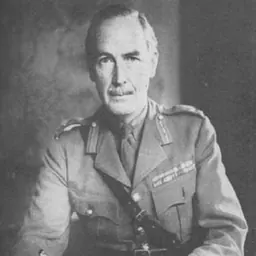



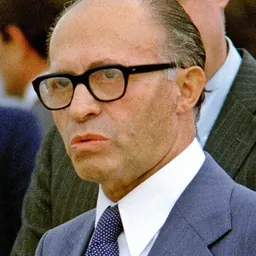
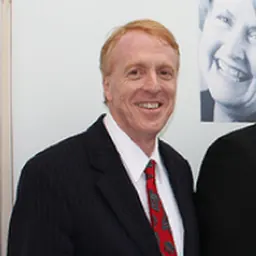


Related people
Same field, nearest in time
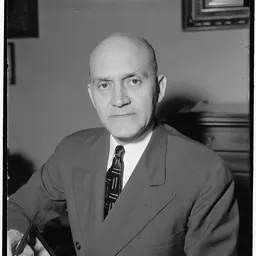


Contemporaries
People whose lives overlapped Evelyn Barker's

Frequently asked questions
Who was Evelyn Barker?
British Army general (1894–1983)
When was Evelyn Barker born?
Evelyn Barker was born on 22 May 1894 in Southsea.
When did Evelyn Barker die?
Evelyn Barker died on 23 November 1983 in Mendip.
What was Evelyn Barker's occupation?
Evelyn Barker was a military officer and military personnel.
What nationality was Evelyn Barker?
Evelyn Barker was British.
Sources & further reading
Cite this page
APA: Biography.guide. (2026). Evelyn Barker. https://biography.guide/evelyn-barker/
MLA: "Evelyn Barker." Biography.guide, https://biography.guide/evelyn-barker/.
Chicago: "Evelyn Barker." Biography.guide. https://biography.guide/evelyn-barker/.
Data last updated: 2026-09-20 · Spot an error? Report a correction.
Page generated 2026-09-27 05:25 UTC