
About Ronald Blythe
Lived 1922 – 2023 (aged 100). Ronald Blythe was a British literary critic, writer, author, librarian, essayist and editor, known for Church Times.
Ronald George Blythe (6 November 1922 – 14 January 2023) was a British writer, essayist and editor, best known for his work Akenfield, an account of agricultural life in Suffolk from the turn of the century to the 1960s. He wrote a long-running and considerably praised weekly column in the Church Times entitled "Word from Wormingford".
Early life and education Blythe was born in Acton, Suffolk, on 6 November 1922, the eldest of six children. His father, Albert, who had seen action in the First World War at Gallipoli and in Palestine, came from generations of East Anglian farmers and farm workers. His London-born mother, Matilda (née Elkins), had worked as a Voluntary Aid Detachment nurse during the war and passed on to her son her passion for books. Blythe could remember as a child seeing the sugar beet being farmed by men in army greatcoats and puttees. and grew up exploring churches, architecture, plants and books.
Literary career Early cultural connections Blythe briefly served during the Second World War. Considered unfit for service by his superiors,
Blythe lived briefly at Aldeburgh on the Suffolk coast (as recalled in his 2013 book The Time by the Sea) before moving to Debach. There were short stories and book reviews, and Blythe later prepared a number of anthologies, including The Pleasure of Diaries (1989) and Private Words: Letters and Diaries from the Second World War (1991). 'Akenfield' is a made-up placename based partly upon Akenham (a small village just north of Ipswich) and probably partly on Charsfield. "When I wrote Akenfield," Blythe said, "I had no idea that anything particular was happening, but it was the last days of the old traditional rural life in Britain. And it vanished." and was made into a film, Akenfield, by Peter Hall in 1974. When the film was aired it attracted fifteen million viewers; He later published a book, First Friends (1999), based on, and quoting from, a trunk of letters he found in the house that recorded the friendship between the Nash brothers, John's future wife, Christine Külenthal, and the artist Dora Carrington.
His life at Bottengoms and the landscape around his home became the subject of Blythe's long-running column, "Word from Wormingford", in the Church Times from 1993 to 2017. These meditative reflections on literature, history, the Church of England and the natural world were subsequently collected together in books including A Parish Year (1998) and A Year at Bottengoms Farm (2006). A compilation of his work, Aftermath: Selected Writings 1960–2010, appeared in 2010.
A biography of Blythe by Ian Collins, entitled Blythe Spirit: The Remarkable Life of Ronald Blythe, was published by John Murray in 2024.
Later life and death Blythe never married. He continued to live and work at Bottengoms Farm in Wormingford until his death, following the opinion expressed in The View in Winter that the elderly should remain in their own homes whenever possible. He never learned to drive and did not use a computer. and died at his home just over two months later, on 14 January 2023. His grave lies in St Andrew’s Churchyard in Wormingford, Essex.
Blythe bequeathed his farmhouse, Bottengoms, to the Essex Wildlife Trust, which intends to use it as a conservation site, as well as a centre for education and art. His personal archive, including notebooks, index cards and research notes for Akenfield, was acquired by the British Library.
Other positions
Blythe was a lay reader in the Church of England and a lay canon at St Edmundsbury Cathedral in Bury St Edmunds. He was a fellow of the Royal Society of Literature from 1970 and was president of the John Clare Society from its foundation. and in 2015 he received an honorary degree from the University of Suffolk.
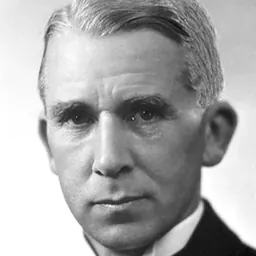
Portraits The National Portrait Gallery has two portraits of Blythe, a 2005 C-type print by Mark Gerson and a 1990 bromide print by Lucinda Douglas-Menzies. A 2014 terracotta head by Jon Edgar is featured in his 2015 collection of poems Decadal.
Don’t just read it —
keep it.
Full-length biographies made to live with: read them, listen on the way to work, watch them tonight.
- E-book
- Audio
- Video
Instant download · yours to keep · every purchase keeps this site free
Important facts
People in Ronald Blythe's life
Named in this biography and alive at the same time






Related people
Same field, nearest in time



Contemporaries
People whose lives overlapped Ronald Blythe's

Frequently asked questions
Who was Ronald Blythe?
British writer (1922–2023)
When was Ronald Blythe born?
Ronald Blythe was born on 6 November 1922 in Acton.
When did Ronald Blythe die?
Ronald Blythe died on 14 January 2023 in Wormingford.
What was Ronald Blythe's occupation?
Ronald Blythe was a literary critic, writer, author, librarian, essayist and editor.
What was Ronald Blythe known for?
Ronald Blythe was known for Church Times.
What nationality was Ronald Blythe?
Ronald Blythe was British.
Sources & further reading
Cite this page
APA: Biography.guide. (2026). Ronald Blythe. https://biography.guide/ronald-blythe/
MLA: "Ronald Blythe." Biography.guide, https://biography.guide/ronald-blythe/.
Chicago: "Ronald Blythe." Biography.guide. https://biography.guide/ronald-blythe/.
Data last updated: 2026-09-20 · Spot an error? Report a correction.
Page generated 2026-09-27 05:13 UTC