
About Ron Tschetter
Born 1941. Ron Tschetter is an American politician.
Ronald A. Tschetter (born October 4, 1941) was the 17th Director of the Peace Corps.
Education and Peace Corps service Tschetter earned a bachelor's degree from Bethel University in psychology and social studies. Although the couple wanted to serve in Turkey, Iran, or Afghanistan, Tschetter and his wife were assigned to teach family-planning techniques in Maharashtra, India, beginning in 1966.
Career as investment executive Tschetter began his career in 1970 as both a retail and institutional investment executive with Blyth Eastman Dillon Union Securities. In 2004 Tschetter was named President of D.A. Davidson & Co., a full-service investment firm based in the Northwest. The White House announced Tschetter's nomination on July 25, 2006, "When you do and are going through it, you just don’t realize how much it is going to impact your life," says Tschetter. In April, 2007, the Peace Corps announced the new "50 plus initiative." Under the initiative, older volunteers will be placed in nine test countries: Cameroon, Lesotho and South Africa, along with Ukraine, Romania, Thailand, Jamaica, Dominican Republic and Panama. Medical screening, traditionally a lengthy and onerous process for older applicants, will be streamlined, and the transition time from acceptance to placement may be lengthened so older volunteers have more time to deal with personal affairs.
The Peace Corps announced a goal to boost the ranks of volunteers 50 and older from 5 percent of the 7,749 Americans in the Peace Corps to 15 percent over the next two years. The Peace Corps reported in August, 2008 that applications from seniors had risen 50% since the campaign began in September 2007. The new campaign - called "Still Asking What You Can Do for Your Country?" is designed to appeal to baby boomers who grew up in the Kennedy years. After Campbell's body was recovered, Tschetter met with Philippine President Arroyo to thank the Philippine people and the government for their search efforts. A local citizen, Juan Donald Duntugan, was subsequently arrested for Campbell's murder, found guilty, and sentenced to life in prison in June, 2008. Tschetter visited the Philippines in September 2008 and met with President Arroyo to personally relay his gratitude for the speedy resolution of the Campbell case.
Actions by U.S. Ambassador to Tanzania Michael Retzer On June 14, 2007, the Peace Corps issued a press release announcing its strong disagreement with the decision of Michael Retzer, U.S. Ambassador to Tanzania, to withdraw the authorization for Peace Corps Country Director Christine Djondo to remain in Tanzania.
On June 27 Senator Chris Dodd put a hold on the nomination of Mark Green to replace Retzer as Ambassador citing Retzer's action as interference in the independence of the Peace Corps. On June 28, the State Department provided a written letter of apology to Djondo and Senator Dodd released his hold on Green's nomination allowing it to go forward.
Embassy incident in Bolivia In July, 2007 just before a new group of thirty Peace Corps volunteers were sworn in, they received a security briefing from US Embassy Security Officer Vincent Cooper in which they were asked "to basically spy" on Cubans and Venezuelans in the country according to a report from ABC News on February 8, 2008. Peace Corps Deputy Director for Bolivia Doreen Salazar was present at the meeting and found the comments so out of line that she interrupted the briefing to clarify that volunteers did not have to follow the embassy's instructions and Salazar protested directly to the embassy. There is no indication that any Peace Corps volunteer made reports to the Embassy and Peace Corps issued a press release reiterating in no uncertain terms that the corps is not involved in any intelligence gathering.
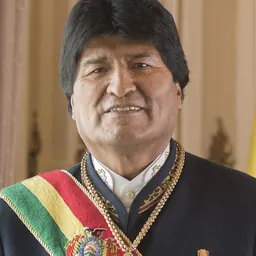
On February 11, 2008 the Associated Press reported that Bolivian President Evo Morales had declared Cooper an "undesirable person." The U.S. embassy released a statement explaining that volunteers had mistakenly been given a security briefing meant only for embassy staff.
Withdrawal of volunteers from Bolivia On September 16, 2008, Peace Corps announced it was suspending operations in Bolivia due to "growing instability" and withdrawing all volunteers from the country. "Our first priority is the safety and security of our volunteers," said Tschetter.
Mac Maroglis wrote in Newsweek on September 20 that after Bolivia expelled US Ambassador Goldberg that "Washington answered by sending off the Bolivian and Venezuelan ambassadors, and even suspending Peace Corps operations." The Peace Corps issued a press release on September 22 that "while the expulsion of the U.S. Ambassador was considered by the Peace Corps, the decision to temporarily suspend the Peace Corps program in Bolivia was based on the Peace Corps emergency action plan and its evaluation process for suspensions and evacuations. The safety and security of the Volunteers and their ability to do their work are the primary factors in such a decision. In the case of Bolivia, there was increasing civil unrest, including blockading of major transportation routes, a mass protest and march planned, and escalating violence against Bolivian citizens. We made the decision to consolidate the Volunteers and then to move all 113 Volunteers based on our own evaluation."
On October 22, 2008 Associated Press published a story saying that several volunteers who had been serving in Bolivia believe that the US government overreacted with a blanket withdrawal of volunteers and that although some parts of Bolivia were unstable, most volunteers felt no security threat. Thomas Shannon, the top US diplomat for Latin America, said that security had been the only reason for the pullout of Peace Corps volunteers. "I've never felt safer in my life than I was here," said volunteer Aaron York. "With the country enjoying a new period of peace and at the request of President Sirleaf, the Peace Corps is reestablishing a program to help rebuild Liberia's education infrastructure. And it was last year in October that the President of the United States told President Sirleaf that we would work to make that happen," said State Department Press Secretary Dana Perino. Liberian President Ellen Johnson Sirleaf had requested that the Peace Corps re-establish its program.
Don’t just read it —
keep it.
Full-length biographies made to live with: read them, listen on the way to work, watch them tonight.
- E-book
- Audio
- Video
Instant download · yours to keep · every purchase keeps this site free
Important facts
People in Ron Tschetter's life
Named in this biography and alive at the same time



Related people
Same field, nearest in time






Contemporaries
People whose lives overlapped Ron Tschetter's



Frequently asked questions
Who is Ron Tschetter?
Peace Corps director
When was Ron Tschetter born?
Ron Tschetter was born on 4 October 1941 in Huron.
What is Ron Tschetter's occupation?
Ron Tschetter is a politician.
What nationality is Ron Tschetter?
Ron Tschetter is American.
Sources & further reading
Cite this page
APA: Biography.guide. (2026). Ron Tschetter. https://biography.guide/ron-tschetter/
MLA: "Ron Tschetter." Biography.guide, https://biography.guide/ron-tschetter/.
Chicago: "Ron Tschetter." Biography.guide. https://biography.guide/ron-tschetter/.
Data last updated: 2026-09-20 · Spot an error? Report a correction.
Page generated 2026-09-27 05:18 UTC