
Rómulo Kintanar
Philippine Marxist–Leninist guerrilla fighter
About Rómulo Kintanar
Lived 1952 – 2003 (aged 50–51). Rómulo Kintanar was a Filipino resistance fighter and security consultant.
Romulo Kintanar (1952 – January 23, 2003) was a Filipino political dissident and rebel leader who became commander of the New People's Army (NPA), the armed wing of the Communist Party of the Philippines (CPP) in the 1980s. Under his leadership, the NPA adopted a more aggressive approach in its rebellion against the Philippine government, including the assassination of police and military personnel using hit squads and offensive actions in urban areas. His strategies caused differences within the CPP, and following the party's split in 1992, Kintanar was expelled from the CPP after being accused of treason by its chairman, Jose Maria Sison. He rejoined civilian life and worked in various positions in the Philippine government before being assassinated by an NPA hit squad in 2003.
Personal life Kintanar originated from Davao City and was among seven siblings of a landed family. He was also a nephew of Cebu congressman Simeon Kintanar
Kintanar married twice. He had two sons with Ester Resanay, a Catholic social worker, martial law dissident and Mindanao State University faculty member from Iligan who died in the sinking of the M/V Doña Cassandra in 1983. In 1987, he married Gloria "Joy" Jopson (née Asuncion), an activist and widow of dissident Edgar Jopson who became finance secretary of the Communist Party of the Philippines. He had a son with her, in addition to Joy's three children by Edgar.
NPA leader In 1970, Kintanar joined the New People's Army at the age of 18 when he was still a freshman at the Ateneo de Davao. He persuaded his parents to redistribute of their land in Davao and South Cotabato to their farmer-tenants.
In 1984, Kintanar was promoted as chief of the NPA General Command (GC), during which he oversaw the movement's escalation of raids and ambushes and its expansion to include 25,000 members, 33 guerrilla companies and six battalions nationwide by 1987. Kintanar reported directly to the CPP Central Committee's Executive Committee and its Political Bureau (Politburo) as chief of the NPA-GC. The Alex Boncayao Brigade (ABB) active in Metro Manila became the most prominent of these "sparrow" units. In 1989, Kintanar claimed responsibility for the killing of US military attaché James N. Rowe in Quezon City on April 21, accusing him of being a "direct participant" in President Corazon Aquino's counter-insurgency campaign.
As NPA-GC Chief, Kintanar approved the forming of working relations with the Japanese Red Army (JRA) in April 1986.
Kintanar himself visited Pyongyang in North Korea with a CPP-NPA delegation in October 1986 to help arrange the training of NPA officers in anti-tank, anti-aircraft, and urban warfare.
Arrests The Philippine government placed a reward of P150,000 ($7,500) for Kintanar's capture. In March 1988, he was arrested in a military raid along with his wife Joy and three other CPP officials in San Juan, Metro Manila. He was detained at Camp Crame but escaped along with Gloria in November while attending a birthday party for one of the prison wardens inside the camp. As a member of the CPP's central committee, a $17,800 reward was issued for Kintanar's recapture. The couple were recaptured in August 1991 at the Makati Medical Center, where he was seeking treatment for high blood pressure.
Schism and expulsion from the CPP Kintanar became embroiled in disputes within the Communist Party of the Philippines over military tactics. In 1985, he initiated an elaborate plot to seize the Batasang Pambansa Complex in Quezon City and hold the Regular Batasang Pambansa hostage while it was in session to force the release of political prisoners under the regime of President Ferdinand Marcos and trigger his overthrow. Despite having the support of senior CPP leaders, including its founding chair, Jose Maria Sison, the plan was aborted after acting CPP chair Rodolfo Salas rejected the idea, calling it an insurrection that deviated from the CPP's strategy of protracted warfare. Kintanar also opposed Sison's call to abolish the ABB and other urban hit squads, and with other leaders, called for a second congress to review the CPP's strategy and tactics. Instead, Sison called him a "traitor, a military agent" and utak-pulbura . Kintanar was subsequently expelled from the CPP. He was also convicted for instigating other CPP leaders such as Arturo Tabara and Filemon Lagman to break with the party and establish the Revolutionary Proletarian Army (RPA). and was also appointed by Estrada as a consultant for the Technical Education and Skills Development Authority. At the same time, he served as a consultant during negotiations between the RPA-ABB and the government that culminated with the signing of a peace agreement between the RPA-ABB and the Estrada administration in December 2000. when he was fatally shot eight times by two gunmen while dining at the Kamameshi House restaurant inside the Quezon Memorial Circle in Quezon City in an attack that also injured two bystanders. His remains were subsequently cremated following a wake that was also attended by President Gloria Macapagal-Arroyo. and accused the Arroyo administration of using the murder as a pretext to have him deported from the Netherlands. On August 28, 2007, Sison was arrested in Utrecht, the Netherlands on charges of ordering the killings of Kintanar and Tabara. The next day, Kintanar's widow, Joy Jopson, admitted to filing alongside Tabara's widow the case against Sison that led to his arrest. However, Sison was released in September after judges found that there was insufficient evidence to show that he "had a conscious and close co-operation with those in the Philippines who carried out the deed".
Don’t just read it —
keep it.
Full-length biographies made to live with: read them, listen on the way to work, watch them tonight.
- E-book
- Audio
- Video
Instant download · yours to keep · every purchase keeps this site free
Important facts
People in Rómulo Kintanar's life
Named in this biography and alive at the same time

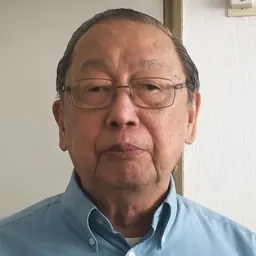

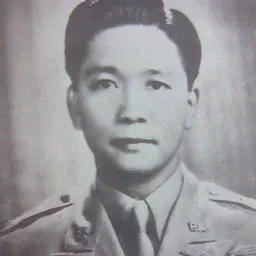

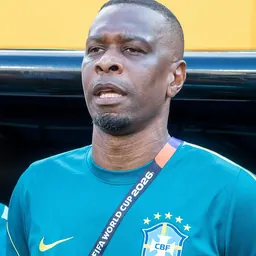


Related people
Same field, nearest in time


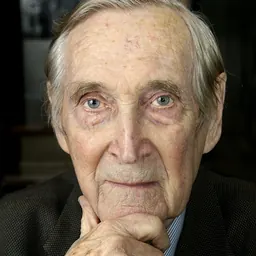


Contemporaries
People whose lives overlapped Rómulo Kintanar's

Frequently asked questions
Who was Rómulo Kintanar?
Philippine Marxist–Leninist guerrilla fighter
When was Rómulo Kintanar born?
Rómulo Kintanar was born in 1952.
When did Rómulo Kintanar die?
Rómulo Kintanar died on 23 January 2003 in Quezon Memorial Circle.
What was Rómulo Kintanar's occupation?
Rómulo Kintanar was a resistance fighter and security consultant.
What nationality was Rómulo Kintanar?
Rómulo Kintanar was Filipino.
Sources & further reading
Cite this page
APA: Biography.guide. (2026). Rómulo Kintanar. https://biography.guide/romulo-kintanar/
MLA: "Rómulo Kintanar." Biography.guide, https://biography.guide/romulo-kintanar/.
Chicago: "Rómulo Kintanar." Biography.guide. https://biography.guide/romulo-kintanar/.
Data last updated: 2026-09-20 · Spot an error? Report a correction.
Page generated 2026-09-27 05:06 UTC