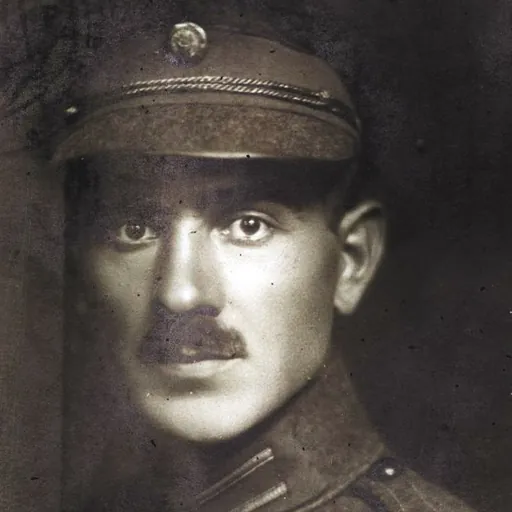
About Roman Sushko
Lived 1894 – 1944 (aged 49). Roman Sushko was a politician, military officer and soldier.
First World War During the First World War, Sushko commanded a company of the Legion of Ukrainian Sich Riflemen (USS) and fought in the battles of Makivka and Lysonia, rising to the rank of lieutenant.
Ukrainian War of Independence Sushko arrived in Kyiv in early January 1918 and assisted in organising the Sich Riflemen under the Ukrainian People's Republic. He initially commanded one of two frontline infantry sotni, later commanding a kurin when the unit was expanded in March. Sushko's forces were among the frontline units that were reorganised under the command of Symon Petliura in order to launch a counteroffensive against the Kyiv Arsenal January Uprising and assist in liberating the city. Following the installation of the Ukrainian State in April and the demobilisation of the Sich Riflemen, Sushko accompanied Konovalets at a meeting with Dmytro Dontsov in July where they attempted to lobby Hetman Pavlo Skoropadskyi for its restoration.
Members of the last supreme command of the Sich Riflemen; Lutsk, January 1920. Sushko is seated, fourth from the left. Sushko worked to organise the new Sich Riflemen formation in Bila Tserkva and commanded the main kurin of the unit during the November Anti-Hetman Uprising, being conferred the rank of colonel. He later commanded the Northern Group on the eastern front from January 1919 and, following a reorganisation, assumed command of the 11th Division in July. Around this time, Sushko met Princess Christina Trubetskaya-Dolgorukaya (going by the false name 'Skachkivska') whom he married soon after. With the Ukrainian People's Army caught in a 'death triangle', Sushko's 11th Division was deployed against Anton Denikin's White Volunteers in October 1919. Soon after the disbandment of the Sich Riflemen in December, Sushko was captured by Polish troops and interned in Lutsk.
He was later released in March 1920 and commanded a brigade of the newly formed Sich Rifleman Division. He settled in Prague where he graduated from the Faculty of Law of Charles University in 1927. He was arrested by the Polish authorities on several occasions and, amid UVO cooperation with Weimar Germany and waves of arrests for pro-German espionage, his leadership generated discontent among members of the Home Command with there being efforts to remove him.
Collaboration with Nazi intelligence From 1938, Sushko led the training of OUN members in Wiener-Neustadt, Austria in collaboration with the Abwehr. After some confusion the BBH battalions were activated on 12 September and attached to Wehrmacht Group South whereby they crossed into Poland and set up administrations in territories inhabited by Ukrainians. Sushko, together with Yaroslav Baranovsky and Osyp Boidunyk who were attached to his staff, reached Sambir on 15 September where they were joined by Melnyk and set up a temporary headquarters, intending to move to Lviv as soon as possible. Following the Soviet invasion from the east, BBH members retreated westwards with the German Army. Sushko established a regrouping point in Krosno for OUN members fleeing the Soviet annexation of Galicia where he demobilised the BBH formations.
Activity in occupied-Poland In October, Sushko lobbied the German authorities from his temporary base in Krosno for greater Ukrainian representation, the reactivation of the Prosvita society, the establishment of Ukrainian primary schools and gymnasiums, a Ukrainian university or faculty at Jagiellonian University, and the creation of a Ukrainian police or militia. On 17 November, a delegation headed by Sushko and Volodymyr Kubijovyč presented their demands to Hans Frank for a centralised organisation representing Ukrainians in the General Government. Given that the Germans insisted that the leader of such an organisation needed to be native to the territory so as not to upset the Nazi–Soviet alliance, he nominated Kubijovyč who was accepted.
Sushko moved to Kraków in late 1939 to head the OUN executive in the General Government and maintained close contacts with the Abwehr, receiving assurances from Dehmel as to the development of Ukrainian police units and recruiting nationalists to work for German intelligence in the Soviet occupation zone. With the split of the OUN into Melnykites and Banderites, Sushko sided with the Melnykite faction. In April 1940 the Ukrainian Central Committee (UTsK) was formally established to distribute aid and welfare to Ukrainians in the General Government, based in the same building as Hans Koch's Kraków office and the Melnykite leadership where Sushko had his office. After ejecting a group of young Bandera adherents who attempted to take over the UTsK headquarters, Sushko led a raid on the Banderites' offices in August, disrupting their press operation. Sushko was initially the chief organiser of camps training Ukrainians for police units and as interpreters for the Wehrmacht, however with the split of the OUN many of these groups came under the control of the Banderites.
In the summer of 1941, and after the German invasion of the Soviet Union, Sushko moved to Lviv where he was active in the OUN(m) underground. In July, Sushko joined Melnyk and his fellow former officers of the UNA in submitting an appeal to Adolf Hitler through the Abwehr, requesting that they be permitted to create a Ukrainian military formation.
Death
Sushko was assassinated in Lviv on 14 January 1944, likely perpetrated by Banderites or possibly by agents of the Gestapo. Melnykites blamed the OUN(b) for the assassination.
Streets are named after him in Lviv and Brovary.
Don’t just read it —
keep it.
Full-length biographies made to live with: read them, listen on the way to work, watch them tonight.
- E-book
- Audio
- Video
Instant download · yours to keep · every purchase keeps this site free
Important facts
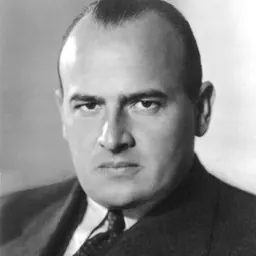
People in Roman Sushko's life
Named in this biography and alive at the same time



Related people
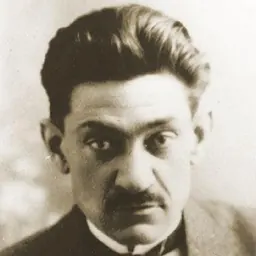
Same field, nearest in time




Contemporaries
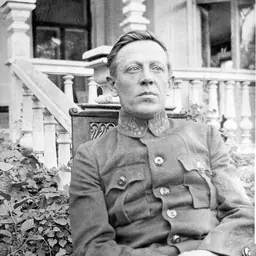
People whose lives overlapped Roman Sushko's

Frequently asked questions
Who was Roman Sushko?
Ukrainian military and public leader (1894-1944)
When was Roman Sushko born?
Roman Sushko was born on 9 March 1894 in Remeniv.
When did Roman Sushko die?
Roman Sushko died on 12 January 1944 in Lviv.
What was Roman Sushko's occupation?
Roman Sushko was a politician, military officer and soldier.
Sources & further reading
Cite this page
APA: Biography.guide. (2026). Roman Sushko. https://biography.guide/roman-sushko/
MLA: "Roman Sushko." Biography.guide, https://biography.guide/roman-sushko/.
Chicago: "Roman Sushko." Biography.guide. https://biography.guide/roman-sushko/.
Data last updated: 2026-09-22 · Spot an error? Report a correction.
Portrait: Wikimedia Commons · author & licence
Page generated 2026-09-27 05:01 UTC