
Volodymyr Kubijovyč
Ukrainian historian, geographer, encyclopedist, publisher, and public and political figure
About Volodymyr Kubijovyč
Lived 1900 – 1985 (aged 85). Volodymyr Kubijovyč was an Austrian and Polish geographer, historian, encyclopedist, publisher, public figure and politician.
Volodymyr Kubijovyč (also spelled Kubiiovych or Kubiyovych; ; ; ; 23 September 1900 – 2 November 1985) was a well-known anthropological geographer in prewar Polish-ruled Western Ukraine, a leading wartime Ukrainian nationalist politician who collaborated with German authorities, and an important post-war émigré intellectual of mixed Ukrainian-Polish background. In 1943, he was involved in the formation of the 14th Waffen Grenadier Division of the SS. On the other hand, in 1944 a politician appealed for an end to the hostilities between Poles and Ukrainians in Volyn and Eastern Galicia.
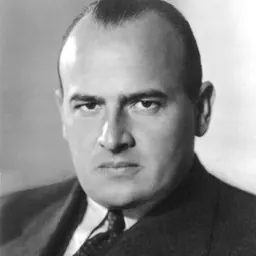
Kubijovyč was loyal to the OUN-M, Andriy Melnyk's faction in the Organization of Ukrainian Nationalists. Kubijovyč also supported other projects of the Ukrainian diaspora. In April 1941, Kubijovyč asked Hans Frank to create under the auspices of Nazi Germany an ethnically filtered Ukrainian area within the General Government or an autonomous state, where Poles and Jews would not be allowed to live.
In the spring of 1940, acting with the permission of Hans Frank, a number of Ukrainian self-help committees staffed by the OUN established in Kraków a coordinating structure called the (UCC). Volodymyr Kubijovyč was elected as its head. The UCC was the only officially authorized Ukrainian social welfare organization in the Nazi-occupied Polish territories, with a mandate to care for the elderly, sick and homeless, and to look after the welfare of the Ukrainian workers sent to Germany from the General Government. As part of its activities, it published antisemitic materials in the collaborationist press thumb Harvest Festival at Wawel, German occupied Poland, October 1943. On August 16, 1942, a message from the Ukrainian Central Committee (UCC) was published in the newspaper stating, "Anyone who hides Jews or hinders their resettlement will be punished." Resettlement in August 1942 meant the deportation of 40,000 members of Lviv's Jewish population to Belzec extermination camp.
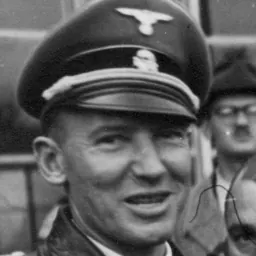
In 1943, Volodymyr Kubijovyč worked closely with a high-ranking member of the SS, Otto Wächter, in organizing the Waffen-SS Galizien. At other times, he was reduced to writing in protest to the German authorities against the impact of their rule of terror on the Ukrainian civilian population, which included unprovoked public abuse, arbitrary killings and mass shootings. Some of this material was later brought up as evidence at the Nuremberg Trials. In 1943 he communicated to Frank that "the Ukrainians would work for the [Reich's] final victory" and expressed appreciation for "the liberation from the Polish yoke due to the will of the Fuhrer and the glorious victory of the Wehrmacht".
According to some Ukrainian sources, Kubijovyč tried to use his official position to ameliorate Ukrainian-Polish wartime tensions in Galicia by calling for an end to the armed underground conflict between the two sides in 1944. These sources also credit him with saving some three hundred people, most of them Jews, from arrest by the Nazi authorities. But in his correspondence with Nazi officials "he glorified Hitler, shared anti-Semitic tropes, and advocated the cleansing of Jews and Poles from the majority Ukrainian areas of the General Governorate for the Occupied Polish Region". The Jewish population of Sanok, including the Jewish ghetto, had been eradicated by December 1942. By February 1943, the Jews from Sanok had been deported to Belzec extermination camp. In addition, Ukrainian auxiliaries had helped the Nazis with deportations and murders of Jews in Sanok. A few sentences later Kubijovyč writes, "The current view is that now the shootings of the Jews [have] come to an end those of the Ukrainians begin".
As the Red Army approached in 1944, Kubijovyč and his Ukrainian Central Committee fled German-occupied Poland to Germany. but the 1984 entry on "Anti-Semitism" by Bohdan Wytwycky with the latter statement remains). It also includes pseudoscience in relation to race, referencing theories by one of the foremost racial theorists in Nazi Germany in an attempt to analyze the psychology of the Ukrainian population.
In 1975, Kubijovych published an account of history titled "The Ukrainians in the Generalgouvernment – 1939–1941". The National Archives of Canada has a Volodymyr Kubijovyč collection. It consists of 28 volumes, with each volume being 20 cm of files, that were donated between 1987 and 1993. None of the documents appear to have been digitized.
In 2000 a pre-stamped envelope was issued by the Ukrainian postal service honouring the hundredth anniversary of Kubijovyč's birthday. In the 2020s, Director of the Ukrainian Jewish Committee, Eduard Dolinsky, has been a vocal opponent on the veneration of Kubijovyč, stating that Kubijovyč should be remembered as a direct accomplice in the murder of Ukrainian Jews and the plunder of their property.
The University of Alberta's Canadian Institute for Ukrainian Studies has an endowment of $437,757 CAD, that is used to support the institute's encyclopedia projects. The endowment was established in November, 1986 with support from the Government of Alberta.
In April 2023, a majority of people who partook in a vote regarding the renaming of in Kyiv voted to rename the street after Volodymyr Kubijovyč. An online petition was launched through Kyiv City Council to prevent the renaming, which received 696 signatures, after a motion for the renaming was adopted by the city council. However, following a complaint from Israeli ambassador to Ukraine Michael Brodsky, the mayor of Kyiv, Vitalii Klychko, personally intervened and prevented the street from being renamed. In July 2023, a Ukrainian village was deciding between Levko Matsievich Street and Volodymyr Kubijovyč Street for the renaming of Chelyuskin Street. There is currently a street honouring him in Ivano-Frankivsk Oblast. Since 1992, there has been a street named after him in Lviv.
Don’t just read it —
keep it.
Full-length biographies made to live with: read them, listen on the way to work, watch them tonight.
- E-book
- Audio
- Video
Instant download · yours to keep · every purchase keeps this site free
Important facts
People in Volodymyr Kubijovyč's life
Named in this biography and alive at the same time

Related people
Same field, nearest in time
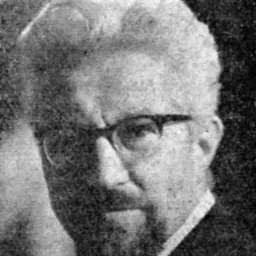

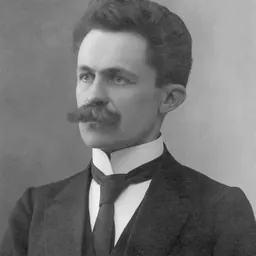
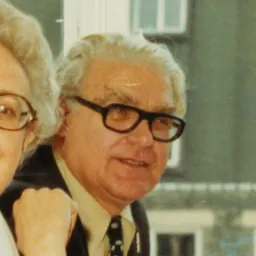
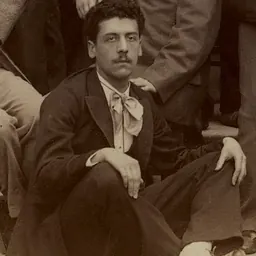
Contemporaries
People whose lives overlapped Volodymyr Kubijovyč's





Frequently asked questions
Who was Volodymyr Kubijovyč?
Ukrainian historian, geographer, encyclopedist, publisher, and public and political figure (1900–1985)
When was Volodymyr Kubijovyč born?
Volodymyr Kubijovyč was born on 23 September 1900 in Nowy Sącz.
When did Volodymyr Kubijovyč die?
Volodymyr Kubijovyč died on 2 November 1985 in 12th arrondissement of Paris.
What was Volodymyr Kubijovyč's occupation?
Volodymyr Kubijovyč was a geographer, historian, encyclopedist, publisher, public figure and politician.
What nationality was Volodymyr Kubijovyč?
Volodymyr Kubijovyč was Austrian and Polish.
Sources & further reading
· Wikipedia: Volodymyr Kubijovyč
· DBpedia: Volodymyr Kubijovyč
Cite this page
APA: Biography.guide. (2026). Volodymyr Kubijovyč. https://biography.guide/volodymyr-kubijovyc/
MLA: "Volodymyr Kubijovyč." Biography.guide, https://biography.guide/volodymyr-kubijovyc/.
Chicago: "Volodymyr Kubijovyč." Biography.guide. https://biography.guide/volodymyr-kubijovyc/.
Data last updated: 2026-09-20 · Spot an error? Report a correction.
Page generated 2026-09-27 05:32 UTC