
About Rollin Hotchkiss
Lived 1911 – 2004 (aged 92–93). Rollin Hotchkiss was a biochemist.
Rollin Douglas Hotchkiss (September 8, 1911 – December 12, 2004) was an American biochemist who helped to establish the role of DNA as the genetic material and contributed to the isolation and purification of the first antibiotics. His work on bacterial transformation helped lay the groundwork for the field of molecular genetics.
Education Hotchkiss was born in South Britain, Connecticut. The son of factory workers, he attended Yale University after scoring the highest in the nation on an achievement test. Hotchkiss earned a B.S. in chemistry in 1932, and remained at Yale for a Ph.D. in organic chemistry. After completing his doctoral work in 1935, Hotchkiss became a fellow of the Rockefeller Institute of Medical Research, where he would remain until retirement in 1982.
Research career At the Rockefeller Institute, Hotchkiss initially worked as an assistant to Oswald Avery and Walter Goebel, and was encouraged to learn more biology at a summer courses at the Marine Biological Laboratory. His early work isolating and synthesizing derivatives of glucoronic acid led to the identification of one of the specific polysaccharides in the capsule of type III pneumococci. Hotchkiss spent the 1937–1938 academic year in the lab of Heinz Holter and Kaj Linderstrøm-Lang at Carlsberg Laboratory learning protein analysis techniques. In 1938, he began collaborating with René Dubos to isolate and study antibiotics produced by soil bacteria. Their work on gramicidin and tyrocidine led to the first commercial antibiotics, and with Fritz Lipmann they found that the antibiotics include D-amino acids.
In 1946, in the wake of the Avery–MacLeod–McCarty experiment showing that DNA, not protein, had the power to transform bacteria from one type to another, Hotchkiss rejoined Avery's lab. His work on protein analysis helped answer Avery's critics who argued that the experiment was not sufficiently rigorous to rule out protein contamination (and thus the possibility that protein was the transforming factor). Hotchkiss found that virtually all the detected nitrogen in the purified DNA used in for the transformation experiments came from glycine, a breakdown product of the nucleotide base adenine, and estimated that undetected protein contamination was at most .02%, although he did not publish this result until 1952 (the year of the Hershey–Chase experiment). In 1948 Hotchkiss used paper chromatography to quantify the base composition of DNA and, independently of Erwin Chargaff, found that the base ratios differed from species to species.
Notes and references
5. ∧ r o l l i n d o u g l a s h o t c h k i s s
Don’t just read it —
keep it.
Full-length biographies made to live with: read them, listen on the way to work, watch them tonight.
- E-book
- Audio
- Video
Instant download · yours to keep · every purchase keeps this site free
Important facts
People in Rollin Hotchkiss's life
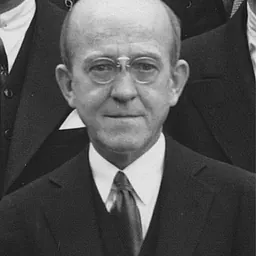
Named in this biography and alive at the same time


Related people
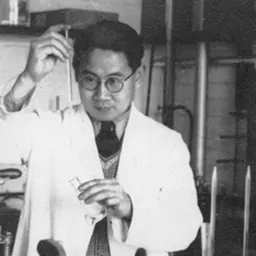
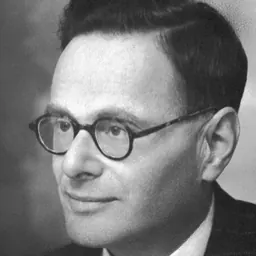
Same field, nearest in time




Contemporaries
People whose lives overlapped Rollin Hotchkiss's






Frequently asked questions
Who was Rollin Hotchkiss?
American biochemist
When was Rollin Hotchkiss born?
Rollin Hotchkiss was born in 1911.
When did Rollin Hotchkiss die?
Rollin Hotchkiss died on 12 December 2004.
What was Rollin Hotchkiss's occupation?
Rollin Hotchkiss was a biochemist.
Sources & further reading
Cite this page
APA: Biography.guide. (2026). Rollin Hotchkiss. https://biography.guide/rollin-hotchkiss/
MLA: "Rollin Hotchkiss." Biography.guide, https://biography.guide/rollin-hotchkiss/.
Chicago: "Rollin Hotchkiss." Biography.guide. https://biography.guide/rollin-hotchkiss/.
Data last updated: 2026-09-20 · Spot an error? Report a correction.
Page generated 2026-09-27 05:30 UTC