
About Rolf Muuss
Lived 1924 – 2020 (aged 95–96). Rolf Muuss was a German and American psychologist and university teacher.
Rolf Eduard Helmut Muuss (September 26, 1924 – July 3, 2020 Muuss's academic career was spent primarily at Goucher College, where he taught from 1959 to 1995. Muuss enlisted and fought in the Luftwaffe during WWII.
Early life Muuss was born in Tating, a village in the North West of Germany on September 26, 1924. His parents were Rudolf A. Muuss and Else Osterwald, and he had two older siblings. His father remarried in 1931, and his new wife had three children, making Muuss one of 6.
World War II
Hitler Youth Muuss joined a junior branch of Hitler Youth at a young age, before officially joining Hitler Youth at the age of 14. Membership was compulsory for Muuss and many others. Over 90 percent of German children were members of Hitler Youth in 1939, a year after Muuss joined.
German Air Force When Muuss was 17, he enlisted in the German Air Force, where he trained for two years in Ghent.
After completing his training Muuss was stationed at several German air bases, including those in northern France and Romania.
Prisoner of war After the fall of Germany in 1945, Muuss was taken as an American prisoner of war. He was held in the Rhine meadow camps for 4 months. After working as a farmhand after the end of WWII, Muuss received an offer to work as a lay-teacher in Sylt, an island in the North Sea. After teaching for a year, Muuss returned to high school to further his own education and received his Abitur at the age of 23.
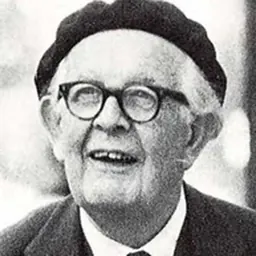
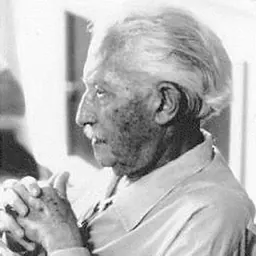
Muuss's work in psychology has been recognised by the American Psychological Society, in which he was elected Fellow. He has also been acknowledged by the American Psychological Association. He also drew from works by Soren Kierkegaard, Karl Jaspers, and Jean-Paul Sartre. The study identified and defined causality as knowledge and understanding of human behaviour and the influencing factors behind it. Muuss emphasised the aspect of seeing situations through other people's eyes, and recognising possible problems that could arise. The study was based on an experimental learning program designed by the University of Iowa's Preventative Psychiatry Program. Among others, Muuss reviewed the theories and work of Sigmund Freud, Erik Erikson, Jean Piaget, and Carol Gilligan. He recognises Freud's influence in areas including literature, advertising, art, philosophy, sociology, medication, and education. implies that educators should not frustrate their students. Muuss believed that this was proof that educators should create environments that include leniency, approval, and attention. Muuss believed Erikson's theory to be the base of contemporary identity research.
Muuss reviewed Piaget's cognitive theory of adolescence. While Muss recognised that Piaget's theory has been criticised and suffered a loss of popularity, he believed that Piaget was responsible for completely changing the approach to and knowledge of children's learning in the Western world. He was interested in the contradiction Gilligan's theory posed to work by Lawrence Kohlberg that claimed to demonstrate a higher level of moral judgement and maturity in males than females. Muuss discussed the difficulty adolescent girls have with relationships and free self-expression. He proposed that authentic relationships are hard for adolescent girls to achieve and maintain, as they are afraid that being open about their thoughts and feelings will pose a threat to the relationships they have with others. Muuss stated that this forms the "unauthentic voice of adolescence".
Together with Gertrude, Muuss had two children. His son Michael was born in 1958, and his daughter Gretchen was born in 1961. Michael was killed in a car accident in late 2000, a year after his mother's death. Prior to his death, Michael was an accomplished computer scientist. Gretchen attended Goucher College as a senior from 1982 to 1983, where her father Muuss taught. She went on to become a computer accounting specialist.
Death Muuss died of heart failure on 3 July 2020 at the age of 95. He died in Towson, Maryland at the University of Maryland St. Joseph Medical Centre.
Selected works
Don’t just read it —
keep it.
Full-length biographies made to live with: read them, listen on the way to work, watch them tonight.
- E-book
- Audio
- Video
Instant download · yours to keep · every purchase keeps this site free
Important facts
People in Rolf Muuss's life
Named in this biography and alive at the same time




Related people
Same field, nearest in time




Contemporaries
People whose lives overlapped Rolf Muuss's


Frequently asked questions
Who was Rolf Muuss?
German-American psychologist and academic
When was Rolf Muuss born?
Rolf Muuss was born in 1924.
When did Rolf Muuss die?
Rolf Muuss died on 3 July 2020.
What was Rolf Muuss's occupation?
Rolf Muuss was a psychologist and university teacher.
What nationality was Rolf Muuss?
Rolf Muuss was German and American.
Sources & further reading
Cite this page
APA: Biography.guide. (2026). Rolf Muuss. https://biography.guide/rolf-muuss/
MLA: "Rolf Muuss." Biography.guide, https://biography.guide/rolf-muuss/.
Chicago: "Rolf Muuss." Biography.guide. https://biography.guide/rolf-muuss/.
Data last updated: 2026-09-20 · Spot an error? Report a correction.
Page generated 2026-09-27 04:58 UTC