
About Roland Ayers
Lived 1932 – 2014 (aged 81). Roland Ayers was an American visual artist, painter, art educator, draftsperson and illustrator.
Roland Ayers (1932–2014) was an African American watercolorist and printmaker. He is better known for his intricate drawings – black-ink figures of humans and nature intertwined in a dream-like state against a neutral backdrop. A poet and lover of jazz and books, he expressed his poetry through images rather than words, he often noted, and considered his artwork to be poetry.
Early life and education Ayers was born July 2, 1932, in Philadelphia, an only child who at age four drew pictures on the inside blank pages of his parents’ books. Alice and Lorenzo Ayers gave their son some paper and other materials, and he'd sit for hours and draw. He drew war planes and jets, and copied the comics. His father, Ayers said in a 1978 exhibition catalog, showed him the beauty of words and inspired his interest in poetry.
He graduated from Germantown High School, joined the Army and spent two years in Germany as a cook. Afterward, he enrolled at the Philadelphia College of Art (now the University of the Arts), where he produced pen-and-ink drawings, collages, gouaches and watercolors. He graduated in 1954.
Artistic philosophy Ayers described himself to one writer as an artist who dealt with “the reality of dreams.”
During the mid-1960s, Ayers found his way to Europe, traveling to Holland and Greece.
In 1972, he visited West Africa, where he deepened his connection to his African heritage, which had been fueled by the 1960s Black power movement. His first juried competition was the Philadelphia Art Alliance's “Young Water Colorists” show in 1958. In 1963, he received a "Best of the Year" award from the alliance.
Ayers was a regular at galleries owned by Socrates Perakis in 1963. He had a one-man show at the Towne Gallery in March. Ayers was identified as one of 16 members of the gallery, whose name was eventually changed to the Socrates Perakis Gallery. He was back at Towne later that year.
He showed watercolors and drawings at the Socrates Perakis Gallery again in the summer and fall of 1968. He created a poster for the fall show. A year later, he was included in a premier exhibition of Black artists – "a regionally major museum event," as one local newspaper writer stated. It was sponsored by the Philadelphia Civic Center Museum and the School District of Philadelphia. Titled "Afro-American Artists 1800-1969," the show featured 250 works by old and new artists from across the country. Ayers was one of three dozen local artists represented, including Ellen Powell Tiberino.
The Philadelphia Museum of Art included Ayers' watercolors in its Art Sales Rental Gallery in 1969, sponsored by the museum's Women's Committee. The works were consigned by local galleries. In 1971, he exhibited at the Carnegie Institute alongside artists Paul Keene and Bob Thompson. Titled "Contemporary Black Artists in America," the show was boycotted by a coalition of artists who had initiated the idea for the exhibit, along with others who pulled out. Coalition members complained that they were left out of the selection of artists for the show.
The aim of "Blackness USA-1973" at the New York Cultural Center was to show off 43 of the country's most talented Black artists, and Ayers was among them. A newspaper article noted his contributions: the drawings "Spring" and "Home."
In 1974, he was part of an exhibit at the Ridgeway Recreation Center in Philadelphia as an adjunct to a Nigerian folk-artists tour sponsored by the Smithsonian Institution. Titled "Nigeria – We Salute You ... Black Artists of Philadelphia," Ayers' works were hung aside other local Philadelphia artists, including Howard N. Watson, Benjamin Britt, James Brantley and Walter Edmonds.
Ayers also exhibited in homes, the most public of which was at the Pennsylvania governor's mansion in 1981. The show was mounted by the Afro-American Historical and Cultural Museum in Philadelphia as part of a statewide salute to artists in the state. The works were from the museum and private collections. Ayers' work titled "Americana II – Jazz" was from a private collection.
He participated in a group show at the Woodmere Art Gallery (later renamed the Woodmere Art Museum) in 1977 that included a retrospective of his pen-and-ink drawings over a 10-year period. "I think of the drawings as a ten-year journey of mind/body/soul that traveled over parts of three continents and explored many aspects of inner time and space," he said.
The Afro-American Historical and Cultural Museum featured Ayers' pen-and-ink works from 1972 to 1978 in a one-man show titled "Roland Ayers: A Personal Construct" in 1978. The Philadelphia Inquirer noted that his drawings had become very popular around the country and the Philadelphia Daily News stated that he was one of the country's most renowned artists. "Nature," as one writer noted of Ayers' works, "is always shown as part of the scheme of man." In the yearlong project, artists provided classes and workshops, created murals and other public projects, and exhibited their works.
The year 1987 was a busy one for Ayers as a printmaker. He was commissioned by Moonstone Inc. of Philadelphia to create a pen-and-ink drawing and poster for its first annual Paul Robeson Festival in April. Ayers produced a drawing of Robeson in his many careers: as a football player at Rutgers University, as Othello on stage and as a peace and social activist. In 2021, the drawing was center stage at a one-man exhibit at the Woodmere. It was the impetus for a collaborative program between the museum and the West Philadelphia Cultural Alliance/Paul Robeson House & Museum in Philadelphia. The poster was printed at the Brandywine Workshop. Ayers was also represented in a 2015 group exhibition at the Woodmere.
He designed a commemorative poster titled "Originating," again printed at the Brandywine. The poster was distributed in June to recipients of the American Book Award, sponsored by the Before Columbus Foundation of Berkeley (California). Visitors attending a "Celebration of Black Writing" conference in Philadelphia in February were told that they would receive an autographed print designed by Ayers. At other times, he produced posters for groups, including the Joan Kerr Dance Company for its Winter-Spring 1980–81 season.
Ayers was manager of the Free Library of Philadelphia's used bookstore when he was included in a library exhibit titled "Prints of Black Artists of the Delaware Valley" in 1992. His Robeson print was among a collection uncovered by a curator at the library – some dating back to the Works Progress Administration's Depression-era Federal Art Project. He was back at the African American Museum in Philadelphia – under its new name – in 2001 for a group show titled "Affirmations: Objects and Movements That Make Us Feel." Its focus was on the spiritual power and high aspirations of Black people. Ayers was represented with the painting "Avenging Angel."
Later years In 1980, he was one of the organizers of the Philadelphia Chapter of the National Conference of Artists. The national organization was founded in 1959 in Atlanta to bring together Black artists.
Ayers was director of the Allens Lane Art Center in 1985 where he also taught classes. Also that year, Ayers lectured on “Image and the Artist” at the Chester County Art Association. He also taught at his alma mater, the Philadelphia College of Art. Ayers was forced to quit after developing Alzheimer's. He died of complications from Alzheimer's in 2014.
Collections Bibliothèque Royale de Belique (Royal Museum of Belgium) Museum of Fine Arts, Boston, 1975 Woodmere Art Museum, 1977, 2015, 2021 Allens Lane Arts Center, 1985 Free Library of Philadelphia, 1992 African American Museum in Philadelphia, 1978, 2001
Awards Best of Year Award (1963), Philadelphia Art Alliance Excellence in Printmaking (1959, 1960), Fleischer Art Memorial Henry O. Tanner Award, Best of Show (1974), Philadelphia Urban League Guild
Don’t just read it —
keep it.
Full-length biographies made to live with: read them, listen on the way to work, watch them tonight.
- E-book
- Audio
- Video
Instant download · yours to keep · every purchase keeps this site free
Important facts
People in Roland Ayers's life
Named in this biography and alive at the same time



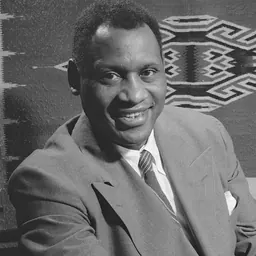


Related people
Same field, nearest in time


Contemporaries
People whose lives overlapped Roland Ayers's



Frequently asked questions
Who was Roland Ayers?
African American artist (1932-2014)
When was Roland Ayers born?
Roland Ayers was born on 2 July 1932 in Germantown.
When did Roland Ayers die?
Roland Ayers died on 18 May 2014 in Philadelphia.
What was Roland Ayers's occupation?
Roland Ayers was a visual artist, painter, art educator, draftsperson and illustrator.
What nationality was Roland Ayers?
Roland Ayers was American.
Sources & further reading
Cite this page
APA: Biography.guide. (2026). Roland Ayers. https://biography.guide/roland-ayers/
MLA: "Roland Ayers." Biography.guide, https://biography.guide/roland-ayers/.
Chicago: "Roland Ayers." Biography.guide. https://biography.guide/roland-ayers/.
Data last updated: 2026-09-20 · Spot an error? Report a correction.
Page generated 2026-09-27 05:11 UTC