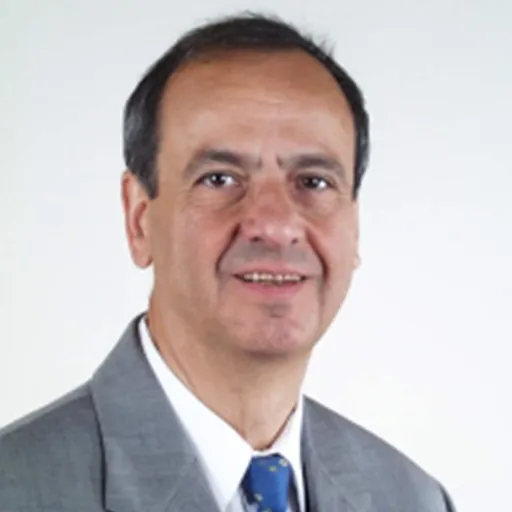
About Roger Temam
Born 1940. Roger Temam is a French mathematician and university teacher, known for Navier–Stokes equations.
Roger Meyer Temam (born 19 May 1940) is a French mathematician and Professor Emeritus of Mathematics working in the fields of numerical analysis, nonlinear partial differential equations and fluid mechanics. He is known for his contributions to the theory of the Navier–Stokes equations and to numerical analysis. He has published over 400 articles, as well as 12 (authored or co-authored) books. The influence of Roger Temam in the development of applied mathematics in France, as well as all over the world, has been essential. His scientific aura and influence can also be measured in the number of doctoral theses which were written under his guidance, both in France and in the United States. the second-highest number supervised by an individual in the field of mathematics. He has a total of 654 mathematical "descendants," including Denis Serre.
Early life and education Roger Temam was born in Tunis, into a Jewish family. He moved to France at the age of 17 and enrolled at the University of Paris – the Sorbonne to study Mathematics. In 1960, he became an assistant at the Faculty of Mechanics of the Faculty of Sciences of Paris. There, Temam worked under the direction of Jacques-Louis Lions, earned his agrégation in mathematics in 1962, and completed his doctorate in 1967.
After completing his studies, Temam became a Maître de Conférences (Associate Professor) at Paris-Sud University, Orsay in 1968 and later a full Professor where he remained until 2003. He was also a at the Ecole Polytechnique in Paris from 1968 to 1986.
Together with Professors Jacques Deny and Charles Goulaouic, he founded the Laboratory of Numerical and Functional Analysis in Orsay, which he directed from 1972 to 1988.
He was the director of the doctoral program in Numerical Analysis at Orsay from 1975 to 1994, and director of the Mathematics Laboratory at Orsay between 1977 and 1980. He was also a member of the scientific council of CISI from 1989 to 1995 and served multiple terms on the National Council of Universities.
In 1983, Temam co-founded the French Société de Mathématiques Appliquées et Industrielles (SMAI), analogous to the Society for Industrial and Applied Mathematics (SIAM), and served as its first president.
Between 1983 and 1987, Temam was a member of the National Committee for Mathematics of the CNRS, head of the "Doctoral training" expert group in mathematics.
He was also one of the founders of the International Congress on Industrial and Applied Mathematics (ICIAM) series and the chair of the steering committee of the first ICIAM meeting held in Paris in 1987; and then the chair of the standing committee of the second ICIAM meeting held in Washington, D.C., in 1991. He was the Editor-in-Chief of the mathematical journal M2AN from 1986 to 1997.
In addition to his scientific activities in France, Temam came to Indiana University in 1986 to work with Ciprian Foias. In Bloomington, Indiana, he was offered a position at the university while retaining his roles in France. This is how Temam became a professor of mathematics and the director of the Institute for Scientific Computing and Applied Mathematics (ISCAM) at Indiana University since 1986 (co-director with Ciprian Foias from 1986 to 1992). He was promoted to Distinguished Professor Emeritus in 2013. thumb Dr. Temam is appointed Honorary Professor at Lanzhou University, China, June 2012
Scientific work Roger Temam's scientific work lies at the intersection of mathematical analysis, numerical analysis, and scientific computing. It encompasses mathematical modeling and analysis, as well as the development of new numerical methods.
His first work, carried out in his doctoral thesis, focused on the method of fractional steps. He since has "continued to explore and develop new directions and techniques" including: calculus of variations, and the notion of duality, developing the mathematical framework for discontinuous (in displacement) solutions; a concept later used for his works on the mathematical theory of plasticity; mathematical formulation of the equilibrium of a plasma in a cavity, expressed as a nonlinear free boundary problem; Korteweg–de Vries equation; Kuramoto–Sivashinsky equation; Euler equations in a bounded domain; optimal control of the incompressible Navier–Stokes equations as a tool for the control of turbulence; boundary layer phenomena for incompressible flows. Helped establish the modern theory of infinite-dimensional dynamical systems. In particular, he investigated the existence of finite-dimensional global attractors for many dissipative equations in mathematical physics, including the incompressible Navier–Stokes equations. Together with Peter Constantin, Ciprian Foias, and Oscar Manley, he obtained an almost sharp, physically meaningful upper bound on the dimension of the global attractor. Co-founded the concepts of inertial manifolds together with Ciprian Foias and George R. Sell and of exponential attractors with Alp Eden, Ciprian Foias and Basil Nicolaenko
He has published over 400 articles, as well as 12 (authored or co-authored) books.
Of all Mathematics advisors recorded by the Mathematical Genealogy Project database, Temam has the second-largest number of doctoral students. More than 30 of his students are now full professors all over the world, and have themselves many "descendants." thumb
Awards and honors Peccot Prize, Collège de France (1970) Invited speaker at the International Congress of Mathematicians, Nice — "Some Decomposition Methods in Numerical Analysis" (1970) Carrière Prize, French Academy of Sciences (1977) Seymour Cray Prize for Numerical Simulation (1989) Alexandre-Joannidès Prize, French Academy of Sciences (1993) Honorary Professor, Fudan University, Shanghai (1996) Jacques-Louis Lions Prize, French Academy of Sciences (2003) Elected Member, French Academy of Sciences (11 December 2007) Knight of the Legion of Honor (Chevalier de la Légion d'honneur), France, 2012. Fellow, American Mathematical Society (2012) Elected Member, American Academy of Arts and Sciences (2015), ISIMM Prize, Darmstadt University of Technology (2016)
Books
Don’t just read it —
keep it.
Full-length biographies made to live with: read them, listen on the way to work, watch them tonight.
- E-book
- Audio
- Video
Instant download · yours to keep · every purchase keeps this site free
Important facts
People in Roger Temam's life
Named in this biography and alive at the same time





Related people
Same field, nearest in time

Contemporaries
People whose lives overlapped Roger Temam's



Frequently asked questions
Who is Roger Temam?
French mathematician
When was Roger Temam born?
Roger Temam was born on 19 May 1940 in Tunis.
What is Roger Temam's occupation?
Roger Temam is a mathematician and university teacher.
What is Roger Temam known for?
Roger Temam is known for Navier–Stokes equations.
What nationality is Roger Temam?
Roger Temam is French.
Sources & further reading
Cite this page
APA: Biography.guide. (2026). Roger Temam. https://biography.guide/roger-temam/
MLA: "Roger Temam." Biography.guide, https://biography.guide/roger-temam/.
Chicago: "Roger Temam." Biography.guide. https://biography.guide/roger-temam/.
Data last updated: 2026-09-22 · Spot an error? Report a correction.
Portrait: Wikimedia Commons · author & licence
Page generated 2026-09-27 05:02 UTC