
About Roger I. McDonough
Lived 1892 – 1966 (aged 74). Roger I. McDonough was an American lawyer and judge.
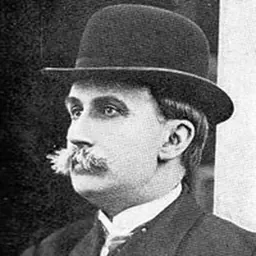
Roger I. McDonough (September 29, 1892 – November 25, 1966) was an American judge. He presided over Utah's Third Judicial District Court for ten years. Then in 1938 he was elected to the Utah Supreme Court, where he went on to serve as chief justice from 1947 to 1948 and 1954 to 1959. At the time of his death, his tenure was the longest of any judge or justice in the state's history. Upon graduation from Park City High School, he was hired to teach history and geography and eventually became principal of the Jefferson School. McDonough joined the army on October 3, 1917 and was commissioned as second lieutenant in the field artillery at Camp Jackson. Following the war, he received his education from Notre Dame University and the University of Utah Law School.
He was married to Mildred Ann Devine by Catholic Archbishop John Joseph Mitty in San Francisco in May 1932. Together they raised five children; Roger James McDonough, John Vincent McDonough, Anne Moore (McDonough), Edward McDonough, and Gerald McDonough.
Third District Court
McDonough was a judge in Utah's Third District Court from 1928 to 1938. In 1938, he called a grand jury to investigate vice protection payoffs in Salt Lake County. He went on to win three consecutive 10-year terms on Utah’s high court. Within that time he served as chief justice from 1947 to 1949 and 1954 to 1959. At the time of his death, it was the longest tenure of any judge in Utah's history.
Immigration
Justice McDonough was the son of Irish immigrants who came to America seeking a better life. Over his tenure on Utah's bench, Justice McDonough granted thousands of men and women petitions for US citizenship. In 1935, McDonough assured the citizenship of 160 foreign-born class graduates after the requirement of court examination was replaced with earned diplomas. The program encompassed American schools and adult-learning programs within Salt Lake City, as well as the Neighborhood house, Chapman Branch Library and Mexican Mission. During the onset of WW2, he presided over a mass naturalization and allegiance ceremony which granted nearly 250 men and women US Citizenship. According to the Salt Lake Tribune, Justice McDonough described the heritage of American citizenship as not consisting of material things, which can be enjoyed without citizenship, but as being the privileges of a social organization.
Gerrymandering and Voting Rights
In Parkinson v. Watson, 291 P.2d 400 (Utah 1955), Utah's 1955 Legislative Reapportionment Act was upheld to be constitutional by a 4–1 vote of the State Supreme Court. The establishment reversed a decision by Judge AH Elliot holding the act to be in violation of constitutional provisions requiring representation on a basis of population. Chief Justice McDonough filed the court's sole dissent, primarily based on the Utah Legislature's use of a double ratio in appropriating the Senate.
Presidential appointments
On December 31, 1945, President Harry S. Truman appointed Judge McDonough, with University of Wisconsin Law Professor Nathan Feinsinger and Missouri Supreme Court Chief Justice James Marsh Douglas, to a presidential fact-finding board, to investigate an ongoing labor dispute in the steel industry in which 700,000 steelworkers threatened to strike. The strike was not averted, but the board's report contributed to the eventual settlement.
In 1946 he was offered an appointment to the International Military Tribunal War Crimes Court (Nuremberg Trials) in Germany, but declined.
On March 15, 1949, President Truman appointed the Wabash Strike Fact Board by Executive Order 10045 Pursuant to Section 10 of the Railway Labor Act. Roger I. McDonough, chief justice of the Utah Supreme court, was selected as chairman. Additional board members included Curtis G. Shake, former member of the Indiana Supreme court, and John W. Yeager, associate justice of the Nebraska Supreme court. The board was ordered to investigate and report in respect to a dispute involving the Wabash Railroad Co. and the Ann Arbor Railroad Co., carriers, and certain employees represented by the Brotherhood of Locomotive Engineers, Brotherhood of Locomotive Firemen and Enginemen, Order of Railway Conductors, and Brotherhood of Railroad Trainmen.
In 1950, President Truman appointed McDonough to an emergency board to help settle labor disputes and avert a nationwide railroad strike.
Don’t just read it —
keep it.
Full-length biographies made to live with: read them, listen on the way to work, watch them tonight.
- E-book
- Audio
- Video
Instant download · yours to keep · every purchase keeps this site free
Important facts
People in Roger I. McDonough's life
Named in this biography and alive at the same time

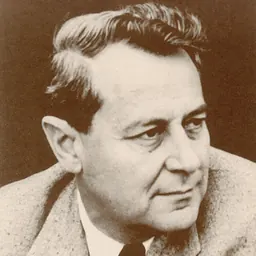



Related people
Same field, nearest in time

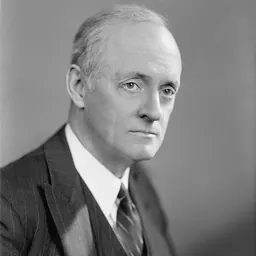
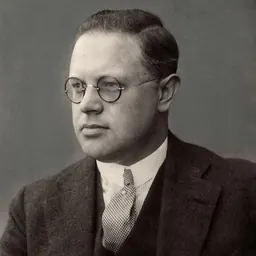
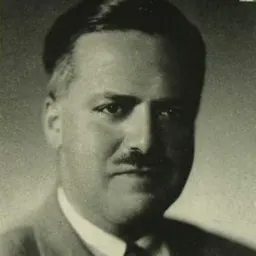

Contemporaries
People whose lives overlapped Roger I. McDonough's

Frequently asked questions
Who was Roger I. McDonough?
American judge (1892–1966)
When was Roger I. McDonough born?
Roger I. McDonough was born on 29 September 1892 in Park City.
When did Roger I. McDonough die?
Roger I. McDonough died on 25 November 1966.
What was Roger I. McDonough's occupation?
Roger I. McDonough was a lawyer and judge.
What nationality was Roger I. McDonough?
Roger I. McDonough was American.
Sources & further reading
· Wikipedia: Roger I. McDonough
Cite this page
APA: Biography.guide. (2026). Roger I. McDonough. https://biography.guide/roger-i-mcdonough/
MLA: "Roger I. McDonough." Biography.guide, https://biography.guide/roger-i-mcdonough/.
Chicago: "Roger I. McDonough." Biography.guide. https://biography.guide/roger-i-mcdonough/.
Data last updated: 2026-09-20 · Spot an error? Report a correction.
Page generated 2026-09-27 05:17 UTC