
About Roger de Piles
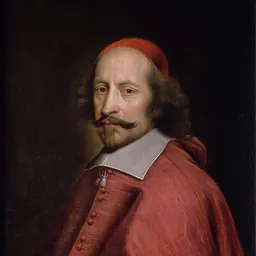
Lived 1635 – 1709 (aged 73). Roger de Piles was a French diplomat, painter, engraver, art critic, graphic artist and art historian.
Roger de Piles (7 October 1635 – 5 April 1709) was a French painter, engraver, art critic and diplomat.
Life Born in Clamecy, Roger de Piles studied philosophy and theology, and devoted himself to painting.
In 1662 he became tutor to Michel Amelot de Gournay, whom he was to follow throughout his life, acting as secretary to his various missions as French ambassador to Venice, Portugal, Spain.
De Piles went to Italy twice, first in 1673–1674 as tutor of Amelot on the latter's Grand Tour; and then again in 1682–1685, as his secretary when Amelot was appointed the French Ambassador to the Republic of Venice. On the latter occasion, de Piles was made a member of the Bolognese literary Accademia dei Gelati, most probably thanks to a motion promoted by his friend Carlo Cesare Malvasia, whom he had already met on the earlier occasion, as the Bolognese records in his Felsina Pittrice.
In Venice (1682–1685) he started a famous collection of prints, drawings and paintings of Giorgione, Correggio, Rembrandt, Claude Lorrain, Rubens, Antoine Coypel, Jean-Baptiste Forest.
He also acquired a taste for political intrigue using his travels ostensibly undertaken to study the European collections, as a buyer for Louis XIV, as cover for confidential missions - for example in Germany and Austria (1685) on behalf of Louis' minister, the marquis de Louvois.
He was not always fortunate as a spy. In 1692, during the War of the League of Augsburg, he was arrested in the Hague carrying a false passport and imprisoned for the next five years. He spent his time writing L'Abrégé de la vie des peintres ...avec un traité du peintre parfait. published in 1699 following his appointment as Conseiller Honoraire to the Académie de peinture et de sculpture.
In 1705 he followed Amelot de Gournay to Spain but illness forced him to return to Paris, where he died in 1709.
Art critic Roger de Piles, Frontispiece to History and life of the famous European Painters, Hamburg, Benj. Schiller, 1710 His important contribution to aesthetic theory rests on his Dialogue sur le coloris ("Dialogue on colours"), in which he initiated his famous defence of Rubens in the argument started in 1671 by Philippe de Champaigne on the relative merits of drawing and color in the work of Titian (in a lecture to the Académie de peinture et de sculpture on Titian's Virgin and Child with St John.)
The argument is most fascinating as an early debate on classic vs modern in painting; in essence on the mathematics of proportion and perspective in drawing—the classic approach— as opposed to the colored brush stroke—the approach of the moderns. In his detailed study of the argument, Roger de Piles et les débats sur le coloris au siècle de Louis XIV (1965), B. Teyssèdre gives a touching account of the bohème of the "modern" réfusés in seventeenth century Paris, a history that was to repeat itself with the Impressionists. The art historian Svetlana Alpers frames the importance of de Piles in a dozen plus pages on de Piles in her book on Rubens and persuasively details de Piles’s ideas and sensibility in particular his proposing of the alternating painterly modes of Poussinists and Rubenists which would inform the structure of French painting through the 19th century. She writes "It is less the values inherent in the style of Rubens and that of Poussin, and less the changing taste for each considered independently, but rather the differences perceived at any one time between the two that determined the dialectical structure of the history of art in France well into the nineteenth century. Art out of art, perhaps, but surely not art out of touch with the world."
List
The complete list is transcribed here from Manlio Brusatin:Histoire des couleurs (Paris: Flammarion, 1986, pp. 103–104), reproduced in Elisabeth G. Holt Literary Sources of Art History, (Princeton: Princeton University Press, 1947), pp. 415–416
Writings
De Arte Graphica (1668) (Translation from Latin to French of Charles Alphonse Du Fresnoy's work - with supplementary comments by Roger de Piles). Dialogue sur le coloris ( Dialogue upon Colour, 1673) Le Cabinet de Monseigneur le Duc de Richelieu (1676) Lettre d'un français à un gentilhomme flamand (1676) La Vie de Rubens (1681) L'Abrégé de la vie des peintres (1699), a seven-volume book of painter biographies: The list of painters in Part 5: Roger de Piles' artists from Lombardy The list of painters in Part 6: Roger de Piles' artists from Germany and the Low Countries The list of painters in Part 7: Roger de Piles' artists from France Cours de peinture par principes avec un balance de peintres ( The Principles of Painting, 1708), see: formal analysis
Don’t just read it —
keep it.
Full-length biographies made to live with: read them, listen on the way to work, watch them tonight.
- E-book
- Audio
- Video
Instant download · yours to keep · every purchase keeps this site free
Important facts
People in Roger de Piles's life
Named in this biography and alive at the same time
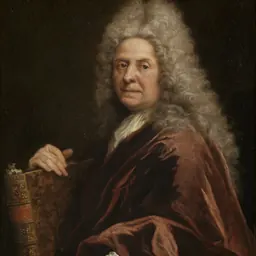



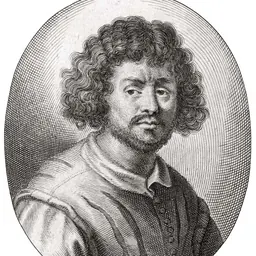


Related people
Same field, nearest in time

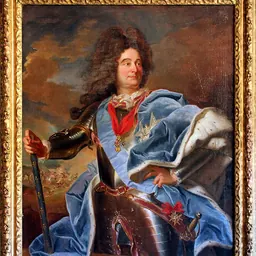

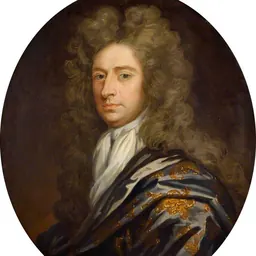
Contemporaries
People whose lives overlapped Roger de Piles's





Frequently asked questions
Who was Roger de Piles?
French painter (1635-1709)
When was Roger de Piles born?
Roger de Piles was born on 7 October 1635 in Clamecy.
When did Roger de Piles die?
Roger de Piles died on 5 April 1709 in Paris.
What was Roger de Piles's occupation?
Roger de Piles was a diplomat, painter, engraver, art critic, graphic artist and art historian.
What nationality was Roger de Piles?
Roger de Piles was French.
Sources & further reading
Cite this page
APA: Biography.guide. (2026). Roger de Piles. https://biography.guide/roger-de-piles/
MLA: "Roger de Piles." Biography.guide, https://biography.guide/roger-de-piles/.
Chicago: "Roger de Piles." Biography.guide. https://biography.guide/roger-de-piles/.
Data last updated: 2026-09-20 · Spot an error? Report a correction.
Page generated 2026-09-27 05:18 UTC