
Roger Bastide
French anthropologist and sociologist
About Roger Bastide
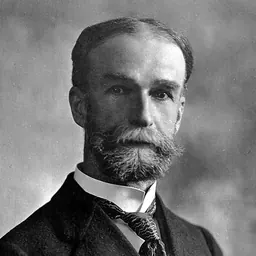
Lived 1898 – 1974 (aged 76). Roger Bastide was a French and Brazilian anthropologist, sociologist, university teacher, ethnologist and philosophy teacher.
Roger Bastide (1 April 1898, Nîmes – 10 April 1974, Maisons-Laffitte) was a French sociologist and anthropologist, specialist in sociology and Brazilian literature. Bastide is known for his contributions to the study of Afro-Brazilian and Afro-Caribbean religions.
He was raised as a Protestant and studied philosophy in France, developing at the same time an interest for sociological issues. His first sociological field research, in 1930–31, was about immigrants from Armenia to Valence, France. As scholars later noticed, already in his first works about the Armenians he was interested in how the memory of a different culture survives when a group of people moves to a faraway land, a theme that will become crucial in his studies of African populations in Brazil.
In 1938, the University of São Paulo asked him to succeed Claude Lévi-Strauss in its chair of Sociology. He remained in Brazil until 1957, and in 1958 moved back to France, where he became a professor of Sociology of religion at the Sorbonne University.
In 1958, shortly before starting his course at the Sorbonne, Bastide had made his first research trip to Africa, exploring the traditional religions of Dahomey and Nigeria.
Bastide came to an “identification” with Candomblé practitioners, both religiously and emotionally, famously claiming “Africanus sum,” “I am an African.” This was criticized by a later generation of scholars as depriving him of the necessary objectivity.
On the other hand, with all his sympathy for Candomblé, Bastide ended up proposing “an historicist model in which candomblé is almost inevitably converted into umbanda or disaggregated into macumba.” Indeed, he regarded as a “privilege” to have been able to witness in Brazil the birth of Umbanda as a new religion.
An unintended effect of Bastide's work on, and sympathy for, Candomblé is that his books were read by practitioners of Candomblé themselves, contributing to the “codification” if not, as some scholars argue, to a new “invention of candomblé” in the 20th century.
An important, if controversial, sociological contribution of Bastide is his description of syncretism. At the core of his interpretation of syncretism is the “principle of compartmentalization” (principe de coupure), which “allows for the alternation or cohabitation, in a single individual or within a single group, of logics or categories that are supposedly otherwise incompatible and irreducible.” For instance, one can be both a Catholic and a practitioner of Candomblé: the two “compartments” live together, without merging, in the same individual, who does not see the coexistence as problematic. Only if he or she reflects about the contradictions, the individual moves to a “formal acculturation,” a second level of syncretism were the two previously separated religious world-views uneasily merge.
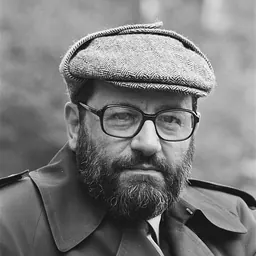
The character Agliè in Umberto Eco's Foucault's Pendulum bears resemblance to Roger Bastide.
Publications
"Le Candomblé de Bahia" (1958) "The African Religions of Brazil: Toward a Sociology of the Interpenetration of Civilizations" (1960) "African Civilizations in the New World", translated in 1971
Don’t just read it —
keep it.
Full-length biographies made to live with: read them, listen on the way to work, watch them tonight.
- E-book
- Audio
- Video
Instant download · yours to keep · every purchase keeps this site free
Important facts
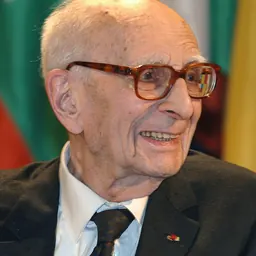
People in Roger Bastide's life
Named in this biography and alive at the same time
Related people
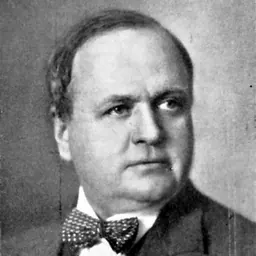
Same field, nearest in time


Contemporaries
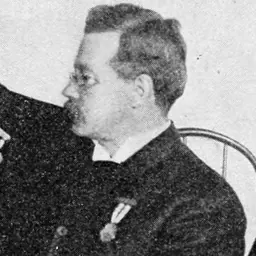
People whose lives overlapped Roger Bastide's




Frequently asked questions
Who was Roger Bastide?
French anthropologist and sociologist (1898–1974)
When was Roger Bastide born?
Roger Bastide was born on 1 April 1898 in Nîmes.
When did Roger Bastide die?
Roger Bastide died on 10 April 1974 in Maisons-Laffitte.
What was Roger Bastide's occupation?
Roger Bastide was an anthropologist, sociologist, university teacher, ethnologist and philosophy teacher.
What nationality was Roger Bastide?
Roger Bastide was French and Brazilian.
Sources & further reading
Cite this page
APA: Biography.guide. (2026). Roger Bastide. https://biography.guide/roger-bastide/
MLA: "Roger Bastide." Biography.guide, https://biography.guide/roger-bastide/.
Chicago: "Roger Bastide." Biography.guide. https://biography.guide/roger-bastide/.
Data last updated: 2026-09-20 · Spot an error? Report a correction.
Page generated 2026-09-27 04:58 UTC