
About Rogelio de la Rosa
Lived 1915 – 1986 (aged 70). Rogelio de la Rosa was a Filipino actor, film actor and politician.
Regidor Lim de la Rosa (November 12, 1916 – November 26, 1986), professionally known as Rogelio de la Rosa, was a Filipino actor and politician. He was often named the greatest Filipino matinee idol of all time. He is also remembered for his statesmanship, and in particular, for his accomplishments as a diplomat. Elected to the Philippine Senate from 1957 to 1963, he was the first Filipino film actor to parlay his fame into a substantial political career, paving the way for future Filipino entertainers-turned-politicians.
Early life and background Regidor Lim de la Rosa was born in the barrio of San Jose Gumi, Lubao, Pampanga, the son of an arnis champion. Lubao was also the hometown of Diosdado Macapagal, six years his senior and a future political opponent and brother-in-law. Macapagal's first wife, Purita, was de la Rosa's sister. He has Spanish and Chinese ancestry.
While in high school, de la Rosa, along with Macapagal
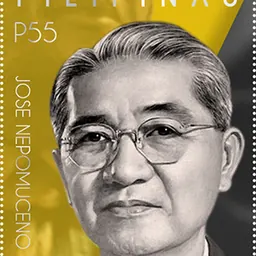
As a teenager, he was cast by his uncle, a film director, in a starring role in the silent film Ligaw na Bulaklak opposite Rosa del Rosario. The film's director, José Nepomuceno, gave him the screen name "Rogelio de la Rosa". However, the young actor did not then engage in a regular film career, opting instead to attend college at the Far Eastern University in Manila. An excellent collegiate athlete and debater in the years from 1932 to 1934. In 1933, de la Rosa won the Claro M. Recto Gold Medal in a national oratorical contest. Rosales proved to be his most durable onscreen partner, and their "love team" is said to be among the most successful in the history of Philippine movies. His success in films remained steady in the 1950s. He had been cast as the first Filipino actor, under the name of Ramon Del Gado, to star in an American-produced movie, The Sword of Avenger. His 1955 role in Higit sa Lahat with Emma Alegre earned him the 'Best Actor' trophy at the 1956 FAMAS awards, as well as the Best Actor Award at the 1956 Southeast Asian Film Festival in Hong Kong.
Political career
As a senator In the 1957 general elections, de la Rosa ran and won a seat in the Philippine Senate under the banner of the Liberal Party. He served for one 6-year term spanning the 4th and 5th Congress. As a Senator, he was active in issues of particular concern within his home province of Pampanga such as fisheries and agriculture, emerging as a strong advocate for nationalization of those industries. Appropriately, de la Rosa was also interested in issues relating to the Filipino film industry, co-authoring a bill that would lead to the establishment of a Board of Censors.
Shortly before election day, de la Rosa withdrew from the election at a studio in DZAQ-TV. According to his official Senate biography, de la Rosa was concerned about the strength of what he perceived as the corrupt political machinery of President Garcia, and was ultimately convinced that his withdrawal from the race was the only way to ensure Garcia's defeat. Whatever the motivation, de la Rosa's gambit proved successful, and Macapagal was easily elected over Garcia. Returning to the Liberal Party, de la Rosa was defeated for re-election to the Senate in the 1963 general elections. He would never again be elected to public office.
Diplomat and later years De la Rosa remained in public service as an acclaimed diplomat. In 1965, he was appointed Philippine Ambassador to Cambodia, an important designation considering that country's proximity to the Philippines. During the administration of Ferdinand Marcos, de la Rosa was also named as Philippine Ambassador to the Netherlands, and to the Soviet bloc countries of Poland, Bulgaria and Czechoslovakia. He was duly admired for his savvy in foreign affairs and language proficiency. He also used his position to promote Filipino art and culture and to assist Filipino artists performing abroad. His last diplomatic post was Philippine Ambassador to Sri Lanka.
Electoral history
Selected filmography
1930: 1932: Ligaw na Bulaklak 1932: Tianak 1932: Ulong Inasnan 1933: Nahuling Pagsisisi 1933: Ang Ganid 1934: Sawing Palad 1934: Krus na Bato 1936: Buhok ni Ester 1936: Diwata ng Karagatan - Jose 1936: Kalupitan ng Tadhana 1936: Awit ng mga Ulila 1936: Anak-Dalita 1936: Lagablab ng Kabataan 1937: Anak ng Pari 1937: Magkapatid 1937: Teniente Rosario 1937: Bituing Marikit 1938: Mga Sugat ng Puso 1938: Makiling 1938: Bukang Liwayway 1938: Ang Magmamani - Luis 1938: Sanggumay 1938: Bahay-Kubo 1939: Magkaisang Landas 1939: Lagot Na Kuwintas 1939: Pasang Krus 1939: Takip-Silim 1939: Inang Mahal 1939: Florante at Laura 1939: Dalisay 1939: Ang Magsasampaguita 1940: Lambingan 1940: Senorita 1940: Nang Mahawi ang Ulap 1940: Gunita
1940: Diwa ng Awit 1940: Colegiala 1940: Magbalik ka, Hirang 1940: Katarungan 1940: Estrellita 1941: Tampuhan 1941: Tarhata 1941: Panambitan 1941: Ang Maestra 1941: Serenata sa Nayon 1942: Caballero 1942: Anong Ganda Mo 1944: Perfidia 1946: Tagumpay 1946: Garrison 13 1946: Ang Prinsipeng Hindi Tumatawa 1946: Dalawang Daigdig 1946: Honeymoon 1946: Victory Joe 1946: Angelus 1947: Ang Lalaki 1947: Ang Himala ng Birhen sa Antipolo 1947: Sarung Banggi - Nanding 1947: Hagibis 1947: Backpay 1948: Ang Vengador 1948: Hampas ng Langit 1948: Sa Tokyo Ikinasal - Carlos 1948: Bulaklak at Paruparo 1949: Kampanang Ginto 1949: Bandilang Basahan 1949: Camelia 1949: Kidlat sa Silangan 1949: Ang Hiwaga ng Tulay na Bato 1949: Ang Lumang Bahay sa Gulod 1949: Milyonarya - Delfin Glorioso
1950: 48 Oras - Ricardo 1950: Doble Cara 1950: Prinsipe Amante - Rodrigo 1950: Tigang na Lupa 1950: Sohrab at Rustum 1950: Ang Kampana ng San Diego 1951: Bayan o Pag-ibig 1951: Prinsipe Amante sa Rubitanya 1951: Haring Cobra - Felipe / Haring Cobra 1952: Dimas: The Sainted Robber - Dimas 1952: Romansa sa Nayon 1952: Babaeng hampaslupa 1952: Irisan 1953: Sa Paanan ng Bundok - Ric 1954: Maala-Ala Mo Kaya? - Celso 1954: Dakilang Pgpapakasakit - Roberto 1954: Jack & Jill - Gardo 1954: Ikaw ang Buhay Ko 1954: Aristokrata 1955: Ang Tangi kong Pag-ibig 1955: El conde de Monte Carlo 1955: Higit sa Lahat - Roberto 1955: Sonny Boy 1955: Iyung-Iyo 1955: Pandanggo ni Neneng 1955: Artista 1956: Lydia 1956: Apat na Kasaysayang Ginto - (First segment -"Ngayon at Kailan Man") 1956: Babaing Mandarambong 1956: Idolo 1956: Pampanggenya 1956: Gintong Pangarap 1957: Veronica 1957: Sino ang Maysala 1961: Dugo at Luha - (final film role)
Don’t just read it —
keep it.
Full-length biographies made to live with: read them, listen on the way to work, watch them tonight.
- E-book
- Audio
- Video
Instant download · yours to keep · every purchase keeps this site free
Important facts
Family & relationships
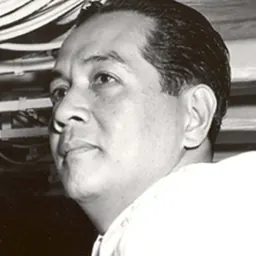
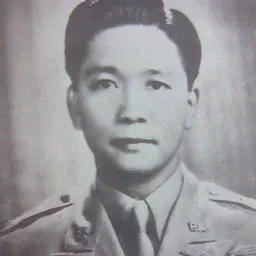
People in Rogelio de la Rosa's life
Named in this biography and alive at the same time



Related people
Same field, nearest in time



Contemporaries
People whose lives overlapped Rogelio de la Rosa's



Frequently asked questions
Who was Rogelio de la Rosa?
Filipino film actor and politician (1915–1986)
When was Rogelio de la Rosa born?
Rogelio de la Rosa was born on 11 November 1915 in Lubao.
When did Rogelio de la Rosa die?
Rogelio de la Rosa died on 10 November 1986 in Manila.
What was Rogelio de la Rosa's occupation?
Rogelio de la Rosa was an actor, film actor and politician.
What nationality was Rogelio de la Rosa?
Rogelio de la Rosa was Filipino.
Sources & further reading
· Wikipedia: Rogelio de la Rosa
Cite this page
APA: Biography.guide. (2026). Rogelio de la Rosa. https://biography.guide/rogelio-de-la-rosa/
MLA: "Rogelio de la Rosa." Biography.guide, https://biography.guide/rogelio-de-la-rosa/.
Chicago: "Rogelio de la Rosa." Biography.guide. https://biography.guide/rogelio-de-la-rosa/.
Data last updated: 2026-09-20 · Spot an error? Report a correction.
Page generated 2026-09-27 05:28 UTC