
About Rochus Misch
Lived 1917 – 2013 (aged 96). Rochus Misch was a German writer, painter, military personnel and bodyguard.
Rochus Misch (29 July 1917 – 5 September 2013) was a German Oberscharführer (sergeant) in the 1st SS Panzer Division Leibstandarte SS Adolf Hitler (LSSAH). He was badly wounded during the Polish campaign during the first month of World War II in Europe. After recovering, from 1940 to April 1945, he served in the Führerbegleitkommando (Führer Escort Command; FBK) as a bodyguard, courier, and telephone operator for German dictator Adolf Hitler.
Misch was one of the last surviving occupants of the Führerbunker.
Early life and education Misch was born on 29 July 1917 in Alt-Schalkowitz near Oppeln (Opole) in the Province of Silesia (now Stare Siołkowice, Poland). His father, a construction worker, died of wounds sustained in World War I. His widowed mother died of pneumonia when he was two and a half, and he grew up with his grandparents. His older brother Bruno died following a swimming accident in 1922.
Over the objections of the school director, his grandfather took him out of school after eight years as he thought Rochus needed to learn a trade. After several years, Misch moved to Hoyerswerda and became an apprentice with the firm of Schmüller & Model. There he trained as a painter. In 1935, after working as a journeyman painter, Misch attended the Masters' School for Fine Arts in Cologne. After six months, he returned to Hoyerswerda to continue his training. Misch met Gerda, his wife-to-be, in July 1938. They later married on New Year's Eve, 1942. They had a daughter, Brigitta Jacob-Engelken, who, after the end of World War II, supported Jewish causes.
Military service In 1937, Misch received a call-up notice for military service. In Offenberg, he joined the SS-Verfügungstruppe (SS-VT), the predecessor to the Waffen-SS, instead of the German Army as the SS-VT did not require Reichsarbeitsdienst (National Labour Service) time. Along with eleven others, he was selected for Hitler's personal bodyguard unit, the Leibstandarte SS Adolf Hitler (LSSAH). In August 1939, he was promoted to the rank of SS-Rottenführer.
World War II For the invasion of Poland in September 1939, his regiment was attached to the XIII Army Corps, a part of the 8th Army. Near Warsaw on 24 September, he was one of four men selected by his company commander, then SS-Hauptsturmführer Wilhelm Mohnke, to negotiate the surrender of Polish troops during the Battle of Modlin. He was picked because of his ability, although very limited, to speak Polish. After the negotiations failed, the Germans headed back to their lines. When they were about 80 metres from the fort, firing began. Several rounds struck Misch, who fell down and lost consciousness. Some German soldiers carried him to an aid station. Later, he was transferred to two different hospitals. Thereafter, he spent six weeks at a convalescent home. For his actions, Misch was awarded the Iron Cross, Second Class. As Misch was the last living member of his Lower Silesian family, Mohnke recommended him for the SS-Begleitkommando des Führers (Führer Escort Command; FBK). This was made up of SS members, including men from the LSSAH, who were not serving on the front lines.
Misch was transferred to the FBK in early May 1940. As a junior member of Hitler's permanent bodyguard, Misch travelled with Hitler throughout the war. When on duty, the FBK members were the only armed men Hitler allowed to be near him. They never had to surrender their weapon and were never searched when they were with Hitler. It did cause Misch some concern that they were armed only with Walther PPK 7.65 pistols.
On 16 January 1945, following the Wehrmacht's defeat in the Battle of the Bulge, Misch and the rest of Hitler's personal staff moved into the Führerbunker and Vorbunker under the Reich Chancellery garden in Berlin. His FBK commanding officer, Franz Schädle, appointed Misch to be the bunker telephone operator. Misch handled all of the direct communication from the bunker. He did not leave it for any significant period of time until the war ended in May 1945. On 22 April 1945, Schädle called him on the phone and told him there was a place reserved for his wife and young daughter on one of the last planes out of Berlin. Misch was temporarily released from duty and drove to pick up his family to take them to the aircraft. However, his wife refused to take their daughter and leave him and her parents in Berlin. Upon returning to the Reich Chancellery, Misch learned Hitler was releasing most of the remaining staff to leave Berlin. By that date, as the Red Army was entering Berlin, propaganda minister Joseph Goebbels and his wife Magda brought their six young children to stay in the Vorbunker. Joseph Goebbels moved into the room next to Misch's telephone exchange in the lower level of the Führerbunker. The Goebbels children would play in the corridor around Misch's post.
On 30 April, the Soviets were less than from the bunker. That afternoon, Hitler and Eva Braun committed suicide less than 40 hours after they were married. Misch followed Otto Günsche and Hitler's chief valet Heinz Linge to the door of Hitler's private room, but only shared what he briefly observed over 50 years later and in two main versions. In 2005, he stated that he saw Hitler's head facedown on the table and contradicted himself about whether he saw blood; he uniquely claimed that Braun's head was leaning against Hitler's leg. In his 2008 autobiography, he wrote that Braun's head was only "inclined towards Hitler" and he could not recall if there was any blood or if the dictator was sitting on the sofa or the armchair. Further, Hitler's head had only "fallen forward slightly", his eyes "open and staring". Misch started to leave to report the events to Schädle, then stopped and returned to the door of Hitler's study. Misch then observed that Hitler's corpse had been laid on the floor and wrapped in a blanket. Several men then picked it up and carried it past him. Misch left and reported the events to Schädle, who instructed him to return to his duty station. After returning to the telephone exchange, Misch later recalled Unterscharführer Retzbach proclaiming "So they're burning the boss now!" Retzbach asked Misch if he was going upstairs to watch the events, but Misch declined to go. Thereafter, Günsche came down and told Misch that the corpses of Hitler and Braun had been burned in the garden of the Reich Chancellery.
Misch was present in the bunker complex when Magda Goebbels poisoned her six children and then committed suicide with her husband Joseph on 1 May 1945. Misch regarded the murder of the Goebbels children as most unsettling; years later he called it the "most dreadful thing" he experienced in the bunker.
Prior to his suicide, Joseph Goebbels finally released Misch from further service; he was free to leave. Misch and mechanic Johannes Hentschel were two of the last people remaining in the bunker. They exchanged letters to their wives in case anything happened to either of them. Misch then went upstairs through the cellars of the Reich Chancellery to where Schädle had his office to report one last time. According to Hentschel, by that time Schädle's shrapnel leg wound had turned gangrenous. Misch told Schädle that Goebbels had released him. Schädle told Misch what route he should take in order to avoid the Soviet encirclement of the Berlin area. Thereafter, Schädle shot himself. Misch fled the bunker in the early morning of 2 May, only hours before the Red Army seized it. He met up with some other soldiers and travelled north through the U-Bahn tunnels. Shortly thereafter, they were taken prisoner by Red Army soldiers. Misch was brought to Lubyanka Prison in Moscow, where he was tortured by Soviet NKVD officers in an attempt to extract information regarding Hitler's last days. Soviet leader Joseph Stalin was extremely interested in learning of Hitler's fate and theories about possible escape. Misch spent eight years in Soviet forced labour camps.
After listening to an 11-minute recording of Hitler in private conversation with Finnish Field Marshal Carl Gustaf Emil Mannerheim, Misch opined: "He is speaking normally, but I'm having problems with the tone; the intonation isn't quite right. Sometimes it seems okay, but at other points not. I have the feeling it's someone mimicking Hitler. It really sounds as if someone is mimicking him."
Misch's memoir, Der letzte Zeuge ("The Last Witness"), was published in German in 2008 and in English as Hitler's Last Witness in 2014. He lived in Berlin in the same house he moved into when he was released by the Soviets He died in Berlin on 5 September 2013, aged 96, and was the last surviving member of Hitler's entourage in the Führerbunker. The last survivor of the bunker itself was nurse Johanna Ruf, who was 15 years old in 1945 and died in mid-2023. The Independent reported that Misch had been the first to see Hitler's body, although Günsche and Linge were with him. Downfall (Der Untergang) Die Letzte Schlacht (The Last Battle)
Don’t just read it —
keep it.
Full-length biographies made to live with: read them, listen on the way to work, watch them tonight.
- E-book
- Audio
- Video
Instant download · yours to keep · every purchase keeps this site free
Important facts
People in Rochus Misch's life
Named in this biography and alive at the same time
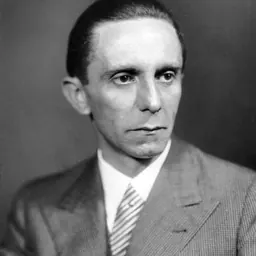




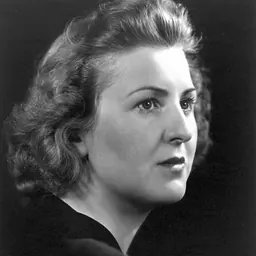
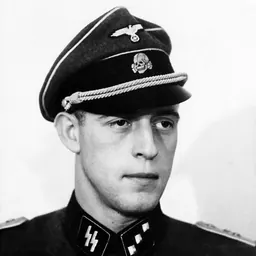
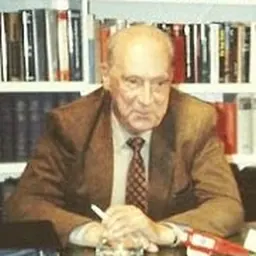
Related people
Same field, nearest in time

Contemporaries
People whose lives overlapped Rochus Misch's

Frequently asked questions
Who was Rochus Misch?
German SS non-commissioned officer (1917–2013)
When was Rochus Misch born?
Rochus Misch was born on 29 July 1917 in Stare Siołkowice.
When did Rochus Misch die?
Rochus Misch died on 5 September 2013 in Berlin.
What was Rochus Misch's occupation?
Rochus Misch was a writer, painter, military personnel and bodyguard.
What nationality was Rochus Misch?
Rochus Misch was German.
Sources & further reading
Cite this page
APA: Biography.guide. (2026). Rochus Misch. https://biography.guide/rochus-misch/
MLA: "Rochus Misch." Biography.guide, https://biography.guide/rochus-misch/.
Chicago: "Rochus Misch." Biography.guide. https://biography.guide/rochus-misch/.
Data last updated: 2026-09-20 · Spot an error? Report a correction.
Page generated 2026-09-27 05:20 UTC