
About Roberts Vaux
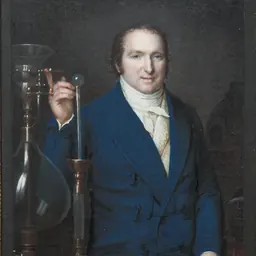
Lived 1786 – 1836 (aged 49). Roberts Vaux was an American lawyer, philanthropist, judge, jurist and biographer.
Roberts Vaux (January 25, 1786 – January 7, 1836) was an American lawyer, jurist, abolitionist, and philanthropist.
Early life He was born in Philadelphia, Pennsylvania, the eldest son of a well-known Quaker family (Richard and Anne Roberts Vaux) and connected by marriage to another such family, the Wistars. He received his education at private schools of Philadelphia.
Career Vaux was admitted to the bar in 1808, and rose rapidly to prominence in his profession, although he only became judge of the court of common pleas of Philadelphia about a year before his death. Embodying the Quaker values of morality and public service, Vaux helped found Pennsylvania's public-school system (and for fourteen years held the first presidency of the board of public schools of Philadelphia), and at one time was a member of more than fifty philanthropic societies.
Vaux became noted for his interest in abolition, as well as Native American issues. He helped found the Pennsylvania Institution for the Deaf and Dumb, the School for the Blind, the Philadelphia Savings Fund Society, the Historical Society of Pennsylvania, and other benevolent societies of the city and state. Vaux also had a part in the creation of the Frankford Asylum for the Insane (now known as Friends Hospital). He was a member of scientific societies in Europe, and of the American Philosophical Society (elected in 1819). He was elected a member of the American Antiquarian Society in 1834.
Early in life, Vaux became interested in prison matters, as an extension of his education concerns. He acquired perhaps his greatest distinction as a penologist. He served as Secretary and Commissioner of the Philadelphia Prison Society. He was one of the commissioners to adapt the law of Pennsylvania to the separate system of imprisonment, and also to build the Eastern State Penitentiary, and labored zealously in the cause of prison reform. He was among those Alexis de Tocqueville dedicated his book on prison reform after his travels across the United States including Philadelphia.
Vaux refused several public posts offered by President Andrew Jackson, among which was the mission to St. Petersburg. He published Eulogium on Benjamin Ridgway Smith (Philadelphia, 1809); Memoirs of the Lives of Benjamin Lay and Ralph Sandiford (1815); Memoirs of the Life of Anthony Benezet (1817; with alterations, York, 1817; French translation, Paris, 1821); and Notices of the Original and Successive Efforts to improve the Discipline of the Prison at Philadelphia (1826).
Family Vaux married Margaret Wistar in 1814. They had two sons, Richard and Thomas, who survived their parents and are buried at Laurel Hill Cemetery in Philadelphia. Richard Vaux (1816–95) became mayor of Philadelphia and a member of the U.S. House of Representatives from Pennsylvania.
Death Vaux died in Philadelphia on January 7, 1836, at age 49, of scarlet fever. He was buried at the Arch Street Friends Meeting House burial ground.
Legacy Vaux is the namesake of the Roberts Vaux Junior High School in Philadelphia, built during the Great Depression as a high school and later converted to a junior high school and private academy. It was added to the National Register of Historic Places in 1988 and closed in June 2013
Don’t just read it —
keep it.
Full-length biographies made to live with: read them, listen on the way to work, watch them tonight.
- E-book
- Audio
- Video
Instant download · yours to keep · every purchase keeps this site free
Important facts
People in Roberts Vaux's life
Named in this biography and alive at the same time

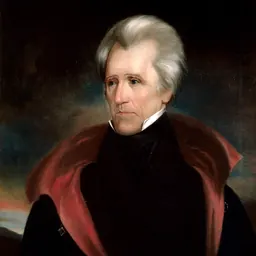
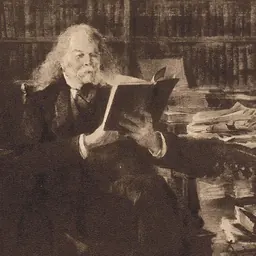
Related people
Same field, nearest in time



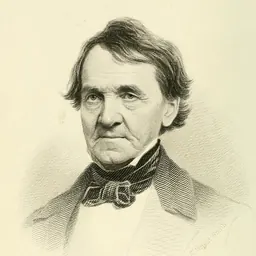

Contemporaries
People whose lives overlapped Roberts Vaux's
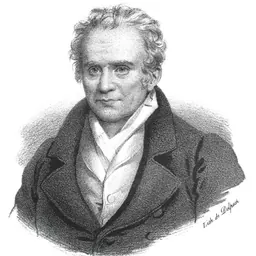
Frequently asked questions
Who was Roberts Vaux?
American judge (1786-1836)
When was Roberts Vaux born?
Roberts Vaux was born on 25 January 1786 in Philadelphia.
When did Roberts Vaux die?
Roberts Vaux died on 7 January 1836 in Philadelphia.
What was Roberts Vaux's occupation?
Roberts Vaux was a lawyer, philanthropist, judge, jurist and biographer.
What nationality was Roberts Vaux?
Roberts Vaux was American.
Sources & further reading
Cite this page
APA: Biography.guide. (2026). Roberts Vaux. https://biography.guide/roberts-vaux/
MLA: "Roberts Vaux." Biography.guide, https://biography.guide/roberts-vaux/.
Chicago: "Roberts Vaux." Biography.guide. https://biography.guide/roberts-vaux/.
Data last updated: 2026-09-20 · Spot an error? Report a correction.
Page generated 2026-09-27 05:33 UTC