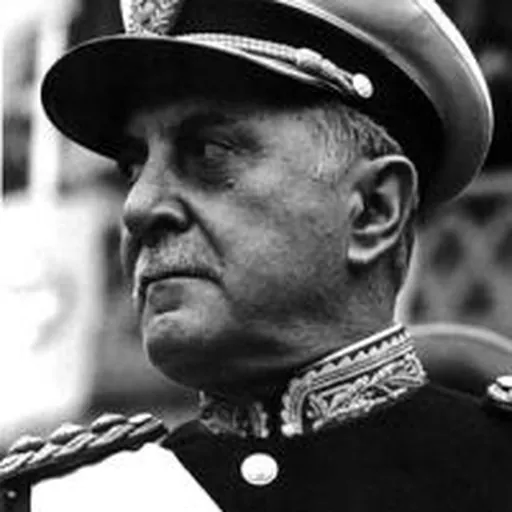
Roberto Eduardo Viola
Military officer, dictator and de facto president of Argentina
About Roberto Eduardo Viola
Lived 1924 – 1994 (aged 69). Roberto Eduardo Viola was an Argentine military officer and politician.
Roberto Eduardo Viola (13 October 1924 – 30 September 1994) was an Argentine military officer who served as the 43rd President of Argentina and was the 2nd president appointed by the National Reorganization Process from 29 March to 11 December 1981 as a military dictator.
Presidency (1981) After Jorge Rafael Videla left office, Viola formally assumed the post of president
Economic policy Viola appointed Lorenzo Sigaut as finance minister, and it became clear that Sigaut were looking for ways to reverse some of the economic policies of Videla's minister José Alfredo Martínez de Hoz, however Sigaut still announced the goal is further liberalization. Notably, Sigaut abandoned the sliding exchange rate mechanism and devalued the peso, after boasting that "they who gamble on the dollar, will lose". Argentines braced for a recession after the excesses of the sweet money years, which destabilized Viola's position.
Viola priorities were economic recovery and greater political freedom for Argentina. He intended to combat the problems of inflation, an overvalued peso, and the balance of payments by continuing the previous administration's policy of encouraging a liberal economy dominated by private enterprises and liberal investment policies. Besides that however Viola criticised neoliberalism.
Viola was also the victim of infighting within the armed forces. After being replaced as Navy chief, Eduardo Massera started looking for a political space to call his own, even enlisting the enforced and unpaid services of political prisoners held in concentration camps by the regime. The mainstream of the Junta's support was strongly opposed to Massera's designs and to any attempt to bring about more "populist" economic policies.
Foreign policy Viola met with Ronald Reagan and Argentine Ambassador Jorge A. Aja Espil at the White House on March 17, 1981.
Argentina-United States relations improved dramatically with the Ronald Reagan administration, which asserted that the previous Carter Administration had weakened US diplomatic relationships with Cold War allies in Argentina and reversed the previous administration's official condemnation of the junta's human rights practices.
The re-establishment of diplomatic ties allowed for CIA collaboration with the Argentine intelligence service in arming and training the Nicaraguan Contras against the Sandinista government. The 601 Intelligence Battalion, for example, trained Contras at Lepaterique base, in Honduras. Argentina also provided security advisors, intelligence training and some material support to forces in Guatemala, El Salvador and Honduras to suppress local rebel groups as part of a U.S.-sponsored program called Operation Charly.
Ousted in a coup
Viola found his maneuvering space greatly reduced, and was ousted by a military coup in December 1981, led by the Commander-in-Chief of the Army, Lieutenant General Leopoldo Galtieri, who soon became president. The official explanation given for the ousting was Viola's alleged health problems. Galtieri swiftly appointed Roberto Alemann as finance minister and presided over the build-up and pursuit of the Falklands War.
Arrest, imprisonment and death
After the collapse of the military regime and the election of Raúl Alfonsín in 1983, Viola was arrested, judged for human rights violations committed by the military junta during the Dirty War, and sentenced to 17 years in prison. His health deteriorated in prison; Viola was pardoned by Carlos Menem in 1990 together with all junta members. He died on 30 September 1994, at age 69.
Don’t just read it —
keep it.
Full-length biographies made to live with: read them, listen on the way to work, watch them tonight.
- E-book
- Audio
- Video
Instant download · yours to keep · every purchase keeps this site free
Important facts
People in Roberto Eduardo Viola's life
Named in this biography and alive at the same time

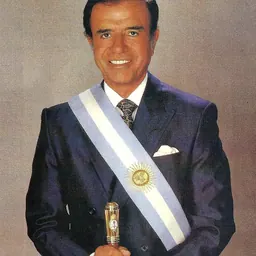

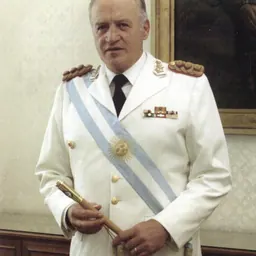
Related people
Same field, nearest in time



Contemporaries
People whose lives overlapped Roberto Eduardo Viola's

Frequently asked questions
Who was Roberto Eduardo Viola?
military officer, dictator and de facto president of Argentina
When was Roberto Eduardo Viola born?
Roberto Eduardo Viola was born on 13 October 1924 in Buenos Aires.
When did Roberto Eduardo Viola die?
Roberto Eduardo Viola died on 30 September 1994 in Buenos Aires.
What was Roberto Eduardo Viola's occupation?
Roberto Eduardo Viola was a military officer and politician.
What nationality was Roberto Eduardo Viola?
Roberto Eduardo Viola was Argentine.
Sources & further reading
· Wikipedia: Roberto Eduardo Viola
· DBpedia: Roberto Eduardo Viola
Cite this page
APA: Biography.guide. (2026). Roberto Eduardo Viola. https://biography.guide/roberto-eduardo-viola/
MLA: "Roberto Eduardo Viola." Biography.guide, https://biography.guide/roberto-eduardo-viola/.
Chicago: "Roberto Eduardo Viola." Biography.guide. https://biography.guide/roberto-eduardo-viola/.
Data last updated: 2026-09-20 · Spot an error? Report a correction.
Portrait: Wikimedia Commons · author & licence
Page generated 2026-09-27 04:57 UTC