
José Alfredo Martínez de Hoz
Argentine businessman and economist
About José Alfredo Martínez de Hoz
Lived 1925 – 2013 (aged 87). José Alfredo Martínez de Hoz was an Argentine economist, lawyer and politician.
José Alfredo Martínez de Hoz (13 August 1925 – 16 March 2013) was an Argentine lawyer, businessman, and economist. He was the Minister of Economy of Argentina during the country's last military dictatorship (1976—1983) (especifically during Jorge Rafael Videla's regime, between 1976 and 1981), and shaped the economic policy of the dictatorship until its end.
Martínez de Hoz was an economic orthodox of businessman origin, who imposed a plan of economic neoliberalism reforms in the 1970s that aroused strong controversies. From 1976 until today, globalization began to appear and some attempts of insertion in the world began. His economic views were based on libertarianism and anti-keynesianism. The spirit of all the reforms implemented during his administration was that of economic liberalization and "economic freedom", and its results and legacy are highly controversial to this day, either being praised or strongly criticized in Argentina depending on the period and side of the general political spectrum.
Minister of Economy under Videla's administration By 1975, Argentina had considerably developed, but was nevertheless in the throes of some of the worst instability since 1930. Argentine public opinion turned to the military, who deposed Isabel Perón's weak regime in a March 1976 coup.
Inheriting a wave of violence and 700% inflation, Jorge Rafael Videla called on Martínez de Hoz as Minister of Economy.
Anxious to restore business confidence, announced a plan to further open Argentina's markets, believing that the country's national industry was inefficient and uncompetitive internationally. He moved to lessen Argentina's trade barriers quickly, which he believed to be a cause of economic isolation. He enjoyed the personal friendship of David Rockefeller, who facilitated Chase Manhattan Bank and International Monetary Fund loans of nearly US$1 billion following his appointment.
He eliminated all price control systems. The black market and shortages disappeared; and he repealed the exchange control regime. A single floating exchange rate was born.
He freed exports (removed existing prohibitions and quotas and export taxes were repealed) and imports (removed existing prohibitions, quotas, and licenses and gradually reduced import tariffs).
He decreed a general freeze on wages, and instituted a value-added tax while rescinding the inheritance tax. This last measure allowed him to avoid paying taxes on the land and investments, valued at several billion dollars at the time, that he inherited from his father. As a result of the changes instituted by Martínez de Hoz, inflation fell sharply; but, many local retailers and home builders became incapable of coping with the fall in demand and declared bankruptcy.
He eliminated political tariffs for public services and subsidized prices for fuels, to begin a look at the economy and the subsidies and overprotections for privileged sectors of the economy.
The Central Bank, like many key economic posts in the Martínez de Hoz era, was led by one of a number of Chicago Boys: Adolfo Diz. Diz enacted much of the Economy Minister's financial deregulation policy, while moving to limit domestic credit. He enacted the Monetary Regulation Account Law of 1977, which raised reserve requirements to 45% of deposits, thereby doubling borrowers' interest rates while eliminating yields on demand deposits.
Total GDP grew 2.2% equivalent annually between 1975 and 1980. Between 1975 and 1979 there was a trade surplus, only in 1980 did the trade deficit appear. During the period, the lowest unemployment rates in the history of the Argentine economy were observed. Particularly from 1979, as a consequence of the second oil shock, the external debt increased strongly.
Years later he explained in his books that his management "had a 'gradualist' character; he set out to implement a structural reform of the economy, and not just overcome a crisis. On April 2, 1976, three programs were announced: liberation and modernization of the economy, modernization of the state and stabilization of prices. They would have to be applied interconnected, although not necessarily simultaneously. The great courses of action were the subsidiary function of the State and the opening of the economy."
Short-term financial speculation flourished, while chronic tax evasion and budget deficits remained high. Frequent wage freeze decrees continued to depress living standards generally and income inequality increased. The period ended in a tenfold devaluation and one of the worst financial crises in Argentine history.
"Sweet money" Again in recession by 1978, the economy continued to be saddled with inflation around 175%. Image-conscious and so, fearful of possible riots, Martínez de Hoz relented and in December, he issued new, more generous wage guidelines. To address his fellow conservatives' fear that this might lead to even higher inflation, he introduced a novel take on the currency crawling peg: fixed, progressively smaller devaluations of the official exchange rate between the Argentine peso and the US dollar set by a monthly timetable, popularly known as the Tablita.
The Tablita invariably set a slower depreciation of the peso value than what local inflation warranted and although inflation did ease somewhat, imported goods and foreign credit soon became much cheaper than those locally available. Imports almost tripled in volume and by 1980, the peso became one of the most overvalued currencies in the world; its high purchasing power abroad soon had many referring to it as sweet money. Record numbers of Argentines now vacationed abroad, often stocking up on appliances; between the suddenly negative trade deficit and tourists' foreign spending, however, this chalked up a then-record US$4 billion annual loss for the national balance sheet in both 1980 and 1981. into the national debt. One of his chief business interests, the insolvent Compañía Italo Argentina de Electricidad, was nationalised at his orders at a reported cost of US$394 million.
The economy was still in relatively high gear and, with rising fiscal revenues, the nation's finances appeared healthy during 1979 and 1980. This money soon found itself in risky gambles at home and abroad and when one bank's Ponzi scheme collapsed in March 1980, Martínez de Hoz responded to the possible panic by luring investors with one-year treasury bills, paying 60% in US dollars. Facing these pressures, the Argentine peso increasingly became the object of short-selling by insiders, including Martínez de Hoz himself.
Legacy It took defeat during the disastrous Malvinas War in June 1982 to usher in more moderate leadership in the junta. In July, the new Central Bank President, Domingo Cavallo, rescinded the hated "1050". Thousands were saved from financial ruin by this change, but the economic damage would remain.
Business confidence was destroyed by the whole calamity and even though Argentina's productive Agricultural sector brought in over US$34 billion in trade surpluses over the next eight years, none of it sufficed to deal with chronic capital flight or the newly monstrous public debt (US$7 billion at the start of the dictatorship, growing to US$43 billion by the time democracy was restored in 1983).
In 2006, a judge declared the pardon unconstitutional and revoked the suspension of the previous judicial process, paving the way to investigate Martínez de Hoz's alleged involvement in the kidnapping and extortion of Federico and Miguel Gutheim (a local textile mill owner and his son) in 1976, as well as the murder of Juan Carlos Casariego (one of his own assistants at the Ministry of Economy).
Martinez de Hoz was arrested on 5 April 2007, following a Supreme Court ruling deeming the 1990 presidential pardons unconstitutional, and was given a preliminary sentence of house arrest (due to his advanced age) on 4 May 2010, pursuant to his indictment in the Gutheim case.
Don’t just read it —
keep it.
Full-length biographies made to live with: read them, listen on the way to work, watch them tonight.
- E-book
- Audio
- Video
Instant download · yours to keep · every purchase keeps this site free
Important facts
People in José Alfredo Martínez de Hoz's life
Named in this biography and alive at the same time


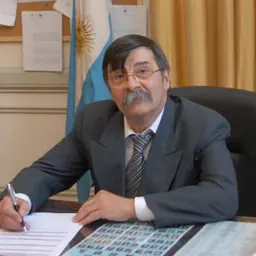


Related people
Same field, nearest in time

Contemporaries
People whose lives overlapped José Alfredo Martínez de Hoz's



Frequently asked questions
Who was José Alfredo Martínez de Hoz?
Argentine businessman and economist (1925-2013)
When was José Alfredo Martínez de Hoz born?
José Alfredo Martínez de Hoz was born on 13 August 1925 in Buenos Aires.
When did José Alfredo Martínez de Hoz die?
José Alfredo Martínez de Hoz died on 16 March 2013 in Buenos Aires.
What was José Alfredo Martínez de Hoz's occupation?
José Alfredo Martínez de Hoz was an economist, lawyer and politician.
What nationality was José Alfredo Martínez de Hoz?
José Alfredo Martínez de Hoz was Argentine.
Sources & further reading
· Wikipedia: José Alfredo Martínez de Hoz
· DBpedia: José Alfredo Martínez de Hoz
Cite this page
APA: Biography.guide. (2026). José Alfredo Martínez de Hoz. https://biography.guide/jose-alfredo-martinez-de-hoz/
MLA: "José Alfredo Martínez de Hoz." Biography.guide, https://biography.guide/jose-alfredo-martinez-de-hoz/.
Chicago: "José Alfredo Martínez de Hoz." Biography.guide. https://biography.guide/jose-alfredo-martinez-de-hoz/.
Data last updated: 2026-09-20 · Spot an error? Report a correction.
Page generated 2026-09-27 05:19 UTC