
Roberto Benedicto
Filipino businessman and crony of Ferdinand Marcos
About Roberto Benedicto
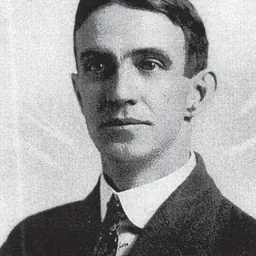
Lived 1917 – 2000 (aged 83). Roberto Benedicto was a Filipino ambassador and architect.
Roberto Salas Benedicto (April 17, 1917 as a crony of President Ferdinand Marcos. Benedicto owned Philippine Exchange Company, the Philippines Daily Express, Banahaw Broadcasting Corporation (BBC), Radio Philippines Network (RPN) and Intercontinental Broadcasting Corporation (IBC). Benedicto was the Philippines' ambassador to Japan from 1972 to 1978, and served as a member of the Cabinet Executive Committee from 1982 to 1986 to represent the political sector and Visayas.
At the prime of his career, Benedicto's business empire consisted of 85 corporations, 106 sugar farms, 14 haciendas, other agricultural lands, 17 radio stations, 16 television stations, two telecommunications networks, seven buildings, 10 vessels and five aircraft. He also owned 14 hectares of real estate in Bacolod City, 13.5 billion shares in Oriental Petroleum, and membership shares in golf and country clubs estimated at almost half a million US dollars.
Association with Ferdinand Marcos Benedicto was Marcos's classmate at the UP Law School, and his Upsilon Sigma Phi fraternity brother. Marcos would eventually give power-of-attorney to Benedicto, allowing him to deal with corporations on the Marcoses' behalf.
When the Marcoses were exiled to the United States in February 1986, the American authorities confiscated papers that they brought with them. The confiscated documents revealed that since the 1970s, Marcos and his associates received commissions of 10 to 15 percent of Overseas Economic Cooperation Fund loans from about fifty Japanese contractors. These revelations became very controversial and became known in Japan as the . The lessons from the Marcos scandal were among the reasons why Japan created its 1992 ODA Charter.
Sugar monopoly
The most-notable expansion in Benedicto's business holdings during the Marcos dictatorship
Marcos's proclamation of martial law allowed Benedicto to take control of the Philippine Exchange Company (Philex), which monopolized local hacienderos' (sugar barons) international trade. Benedicto used Philex to buy cheap sugar from local producers and sell it abroad for large profits. Aided by Marcos's presidential decrees under martial law, Benedicto later seized control of the Philippine Sugar Commission, which accounted for 27% of the Philippines' dollar earnings at the time. In turn, a big segment of the profits from this sugar monopoly was deposited in a "special fund" which was "subject to the disposition of the president for public purposes."
In 1972, news and media outlets were forced to cease operations, and their facilities were taken over by the military. However, Benedicto was allowed to continue his broadcasts, to serve as the voice of the Marcos dictatorship. His newspaper, Philippines Daily Express, was the first to put out an edition after martial law was announced, three days later on September 25. This monopoly secured Benedicto's political ties with Marcos and generated income as the owner of the sole running television and radio stations. Benedicto assigned Enrique Romualdez, a relative of the first lady, as chief editor of the paper to ensure that it held the views of the regime.
In 1982, Marcos issued LOI 640-A, to extend the scope and duration of the earlier order. The new instruction directed government ministries to distribute Benedicto's television sets in the countryside areas "on matters pertaining to peace and order". Due to the tax breaks, Benedicto was able to sell 12-inch black-and-white television sets cheaper than the competitors who had to pay taxes. The Consumer Electronic Products Manufacturers Association (CEPMA) complained that the television sets meant for rural areas were being sold in Manila, greatly affecting their market.
Death Benedicto died on May 15, 2000, in Bacolod City, Philippines.
Don’t just read it —
keep it.
Full-length biographies made to live with: read them, listen on the way to work, watch them tonight.
- E-book
- Audio
- Video
Instant download · yours to keep · every purchase keeps this site free
Important facts
People in Roberto Benedicto's life
Named in this biography and alive at the same time

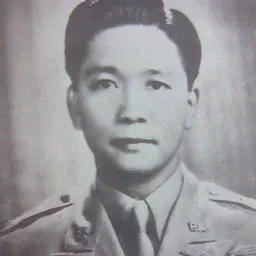
Related people
Same field, nearest in time



Contemporaries
People whose lives overlapped Roberto Benedicto's

Frequently asked questions
Who was Roberto Benedicto?
Filipino businessman and crony of Ferdinand Marcos (1917–2000)
When was Roberto Benedicto born?
Roberto Benedicto was born on 17 April 1917 in La Carlota.
When did Roberto Benedicto die?
Roberto Benedicto died on 15 May 2000 in Bacolod, Philippines.
What was Roberto Benedicto's occupation?
Roberto Benedicto was an ambassador and architect.
What nationality was Roberto Benedicto?
Roberto Benedicto was Filipino.
Sources & further reading
· Wikipedia: Roberto Benedicto
Cite this page
APA: Biography.guide. (2026). Roberto Benedicto. https://biography.guide/roberto-benedicto/
MLA: "Roberto Benedicto." Biography.guide, https://biography.guide/roberto-benedicto/.
Chicago: "Roberto Benedicto." Biography.guide. https://biography.guide/roberto-benedicto/.
Data last updated: 2026-09-20 · Spot an error? Report a correction.
Page generated 2026-09-27 05:29 UTC