
About Robert Whytlaw-Gray
Lived 1877 – 1958 (aged 80). Robert Whytlaw-Gray was a British chemist.
Early life and education Robert Whytlaw-Gray (also Robert Whytlaw Whytlaw-Gray) was born in Hampstead on 14 June 1877, son of Robert James Gray and Mary Gilkieson Gemmell Whytlaw.
His early education was at St Paul’s School, where little science was taught. When he was about 12, Whytlaw-Gray set up a laboratory at home and taught himself chemistry. At eighteen he went to the University of Glasgow to study engineering and it was there that he heard a lecture by William Ramsay which so inspired him that he determined to go to University College London (UCL), to study under him. This he did, from 1896, so successfully that he won the Tufnell Scholarship in chemistry in 1898. The prize is awarded to "the best graduate, under the age of 24, progressing to the Research School" which presumably means Whytlaw-Gray gained a first degree, although there is no formal record of this. In 1903 he joined Anschütz’s lab at the University of Bonn, where he worked on the atomic weight of nitrogen and where he was awarded a PhD in 1906.
Academic career On his return to UCL Whytlaw-Gray was appointed to Ramsay’s staff, and made Assistant Professor in 1908. He worked on the physical properties of radon, resigning his post in 1914.
The following year he started as a temporary science master at Eton. Later Whytlaw-Gray was appointed a civilian chemical adviser to the Chemical Warfare Committee. He started work on aerosols and toxic smokes, assisted by J B Speakman. These researches were of great practical value in the war effort, and continued for many years.
In 1923 he was appointed professor of inorganic chemistry and head of the chemistry department at the University of Leeds in succession to Arthur Smithells. He stayed at Leeds for 22 years. The University conferred on him the title of Emeritus Professor on his retirement and, in 1950, the degree of DSc honoris causa.
Honours Whytlaw-Gray was awarded the OBE in 1920. He was elected a Fellow of the Royal Society (FRS) in 1928. at The Cottage Hospital, Welwyn Garden City. His wife died in 1961.
Don’t just read it —
keep it.
Full-length biographies made to live with: read them, listen on the way to work, watch them tonight.
- E-book
- Audio
- Video
Instant download · yours to keep · every purchase keeps this site free
Important facts
People in Robert Whytlaw-Gray's life
Named in this biography and alive at the same time
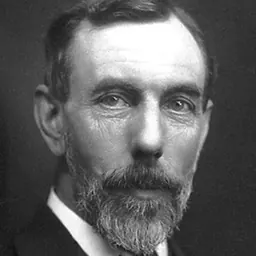



Related people
Same field, nearest in time


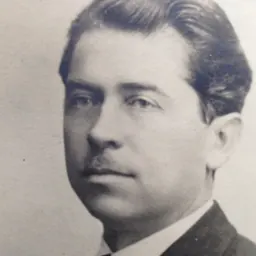
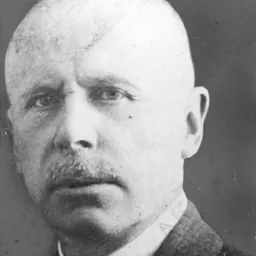

Contemporaries
People whose lives overlapped Robert Whytlaw-Gray's



Frequently asked questions
Who was Robert Whytlaw-Gray?
English chemist
When was Robert Whytlaw-Gray born?
Robert Whytlaw-Gray was born on 14 June 1877 in London.
When did Robert Whytlaw-Gray die?
Robert Whytlaw-Gray died on 29 January 1958 in Welwyn.
What was Robert Whytlaw-Gray's occupation?
Robert Whytlaw-Gray was a chemist.
What nationality was Robert Whytlaw-Gray?
Robert Whytlaw-Gray was British.
Sources & further reading
· Wikipedia: Robert Whytlaw-Gray
· DBpedia: Robert Whytlaw-Gray
Cite this page
APA: Biography.guide. (2026). Robert Whytlaw-Gray. https://biography.guide/robert-whytlaw-gray/
MLA: "Robert Whytlaw-Gray." Biography.guide, https://biography.guide/robert-whytlaw-gray/.
Chicago: "Robert Whytlaw-Gray." Biography.guide. https://biography.guide/robert-whytlaw-gray/.
Data last updated: 2026-09-20 · Spot an error? Report a correction.
Page generated 2026-09-27 04:57 UTC