
About Robert Vyner
Lived 1686 – 1777 (aged 90–91). Robert Vyner was a British politician.
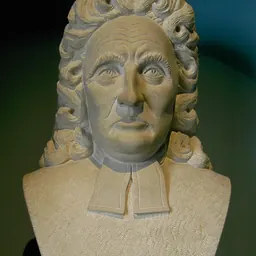
Robert Vyner (1686–1777) of Swakeleys, Middlesex, and Gautby, Lincolnshire, was a British politician who sat in the House of Commons for 27 years between 1710 and 1761.
Early life
Vyner was baptized on 31 October 1686, the only son of Thomas Vyner, of Swakeleys, Middlesex and his wife Anne Leeke, daughter of Sir Francis Leeke, 1st Baronet of Newark, Nottinghamshire. He succeeded his father to Swakeleys in 1707 and inherited his extensive Lincolnshire estates, acquired by his great uncle, Charles II’s banker. He married Margaret Style, daughter of Sir Thomas Style, 2nd Baronet of Wateringbury, Kent.
Career Vyner was elected Member of Parliament for Great Grimsby in a contest at the 1710 general election. His politics were unclear, but the Tory Arthur Moore, who was returned with him he election, wrote that he was sure of his support. Vyner was not an active Member, and little was recorded of him in Parliament. In July 1712 he and Moore presented Grimsby’s address of thanks for the terms of the peace, on behalf of the High Church party. He did not stand in 1713 and next stood in 1721, when he was defeated at Grimsby. He was returned as an independent Whig MP for Lincolnshire at a by-election on 12 February 1724. He was a highly prolific speaker, and became a voluble opponent of successive administrations, acting consistently against them. He was returned again at the 1727 and 1734 general elections. In February 1741, he voted against the motion for Walpole’s removal.
In 1741, Vyner sold the family mansion at Swakeleys to Benjamin Lethieullier and moved to Gautby Hall in Lincolnshire. which was probably designed and built for him by Matthew Brettingham. Gautby parish church was rebuilt in 1754 as a family chapel of the Vyner family. It is a Grade II* listed building, red brick, incorporating some medieval work.
Vyner was returned unopposed for Lincolnshire again at the 1741 and 1747 general elections. He was described as ‘a whimsical man, full of projects of reformation, especially about the army and militia’. Horace Walpole remarked of him in 1751 that ‘the House generally suffered him to be singular in his opinion’.
Later life and legacy Vyner married, as his second wife, Delicia de Pipre of Upper Brook Street, London on 3 June 1758. He died on 10 April 1777 leaving his son Robert Vyner (1717–1799) and two daughters by his first wife. Gautby Hall was occupied by the Vyner family until 1872 and was destroyed in 1874.
Don’t just read it —
keep it.
Full-length biographies made to live with: read them, listen on the way to work, watch them tonight.
- E-book
- Audio
- Video
Instant download · yours to keep · every purchase keeps this site free
Important facts
People in Robert Vyner's life
Named in this biography and alive at the same time
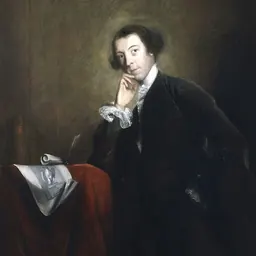


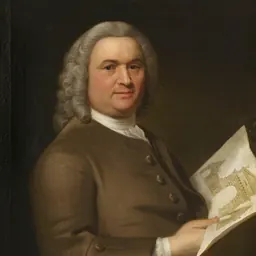

Related people
Same field, nearest in time


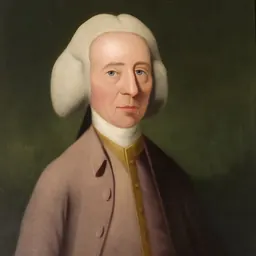

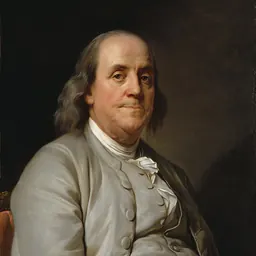
Contemporaries
People whose lives overlapped Robert Vyner's



Frequently asked questions
Who was Robert Vyner?
British Member of Parliament (c.1685-1777)
When was Robert Vyner born?
Robert Vyner was born in 1686.
When did Robert Vyner die?
Robert Vyner died on 10 April 1777.
What was Robert Vyner's occupation?
Robert Vyner was a politician.
What nationality was Robert Vyner?
Robert Vyner was British.
Sources & further reading
· DBpedia: Robert Vyner (1686–1777)
Cite this page
APA: Biography.guide. (2026). Robert Vyner. https://biography.guide/robert-vyner/
MLA: "Robert Vyner." Biography.guide, https://biography.guide/robert-vyner/.
Chicago: "Robert Vyner." Biography.guide. https://biography.guide/robert-vyner/.
Data last updated: 2026-09-20 · Spot an error? Report a correction.
Page generated 2026-09-27 05:08 UTC