
About Robert T. Paine
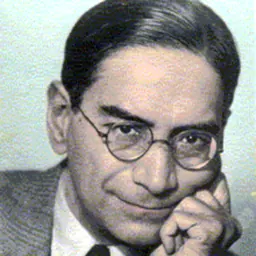
Lived 1933 – 2016 (aged 83). Robert T. Paine was an American zoologist, ecologist and botanist, known for Keystone species.
Robert Treat Paine III (April 13, 1933 – June 13, 2016) was an American ecologist who spent most of his career at the University of Washington. Paine coined the keystone species concept to explain the relationship between Pisaster ochraceus, a species of starfish, and Mytilus californianus, a species of mussel.
Early life and education
Paine was born on April 13, 1933, After graduating from Harvard University in 1954, he served in the U.S. Army, where he was the battalion gardener. Paine later entered graduate school at the University of Michigan, intending to study paleontology. In 1962, Paine joined the University of Washington, where he spent the rest of his career and became well known for his work. As a postdoctoral fellow, he worked on the history and energetics of opisthobranchs (marine gastropods). Much of Paine's work at the University of Washington focused on the organization of marine communities. It was here that much of his research on keystone species occurred.
In a noteworthy 1966 paper, Paine described a rocky intertidal ecosystem in Makah Bay in Washington state, where top predator species help maintain biodiversity. This led to his 1969 paper in which he proposed the keystone species concept. This concept states that an ecosystem may experience a dramatic shift if a keystone species is removed, even though that species was a small part of the ecosystem by measures of biomass or productivity. It has become a very popular concept in conservation biology. Paine also coined the term "trophic cascade" to describe the top-down effects that occur in ecosystems when an important species is introduced or removed. In 2000, he founded the Experimental and Field Ecology Fund to support graduate student research;
Legacy
Paine's research—and the subsequent work of his students—has been very influential in the field of ecology, Paine's research helped popularise field manipulation experiments, sometimes called "kick-it-and-see ecology", at a time when field ecologists tended only to observe natural ecosystems.
Recognition Vice-President, Ecological Society of America, 1977–1978 Elected to The National Academy of Sciences, 1986 International Cosmos Prize, 2013
Don’t just read it —
keep it.
Full-length biographies made to live with: read them, listen on the way to work, watch them tonight.
- E-book
- Audio
- Video
Instant download · yours to keep · every purchase keeps this site free
Important facts
Related people
Same field, nearest in time


Contemporaries
People whose lives overlapped Robert T. Paine's




Frequently asked questions
Who was Robert T. Paine?
American zoologist (1933–2016)
When was Robert T. Paine born?
Robert T. Paine was born on 13 April 1933 in Cambridge.
When did Robert T. Paine die?
Robert T. Paine died on 13 June 2016 in Seattle.
What was Robert T. Paine's occupation?
Robert T. Paine was a zoologist, ecologist and botanist.
What was Robert T. Paine known for?
Robert T. Paine was known for Keystone species.
What nationality was Robert T. Paine?
Robert T. Paine was American.
Sources & further reading
· DBpedia: Robert T. Paine (zoologist)
Cite this page
APA: Biography.guide. (2026). Robert T. Paine. https://biography.guide/robert-t-paine/
MLA: "Robert T. Paine." Biography.guide, https://biography.guide/robert-t-paine/.
Chicago: "Robert T. Paine." Biography.guide. https://biography.guide/robert-t-paine/.
Data last updated: 2026-09-20 · Spot an error? Report a correction.
Page generated 2026-09-27 05:03 UTC