
Robert Smalls
American politician and former slave
About Robert Smalls
Lived 1839 – 1915 (aged 75). Robert Smalls was an American politician, military officer, maritime pilot and businessperson.
Robert Smalls (April 5, 1839 – February 23, 1915) was an American politician who was born into slavery in Beaufort, South Carolina. During the American Civil War, the still enslaved Smalls commandeered a Confederate transport ship in Charleston Harbor and sailed it from the Confederate-controlled waters of the harbor to the U.S. blockade that surrounded it. He then piloted the ship to the Union-controlled enclave in the Beaufort–Port Royal–Hilton Head area, where it became a Union warship. In the process, he freed himself, his crew, and their families. His example and persuasion helped convince President Abraham Lincoln to accept black soldiers into the Union Army.
After the Civil War, Smalls returned to Beaufort and became a politician, winning election as a Republican to the South Carolina Legislature and the United States House of Representatives during the Reconstruction era. He authored state legislation providing for South Carolina to have the first free and compulsory public school system in the United States. He was a founder of the Republican Party of South Carolina and the last member of that party to represent South Carolina's 5th congressional district until the election of Mick Mulvaney in 2010.
Early life Robert Smalls was born on April 5, 1839, in Beaufort, South Carolina, to Lydia Polite, a woman enslaved by Henry McKee. She gave birth to him in a cabin behind McKee's house, at 511 Prince Street in Beaufort, South Carolina. He grew up in the city under the influence of the Lowcountry Gullah culture of his mother. His mother lived as a servant in the house, but she had grown up working in the fields. Smalls was favored by McKee over his other slaves, so his mother worried that he might grow up not understanding the plight of enslaved field workers, and she asked for him to be made to work in the fields and to witness whippings.
When he was 12, at the request of his mother, Smalls's master sent him to Charleston to hire out as a laborer for sixteen dollars a week, of which he was allowed to keep one dollar, the rest of the wage being paid to his master. Smalls first worked in a hotel, then became a street lamplighter. In his teen years, his love of the sea led him to find work on Charleston's docks and wharves. Smalls worked as a longshoreman, rigger and sailmaker, and he eventually worked his way up to become a wheelman, more or less a helmsman, though enslaved people were not permitted that title. As a result, he was very knowledgeable about Charleston Harbor.
At age 17, Smalls married Hannah Jones, an enslaved hotel maid, in Charleston on December 24, 1856. She was five years older than he was, and she already had two daughters. Their own first child, Elizabeth Lydia Smalls, was born in February 1858. Three years later, they had a son, Robert Jr., who died at age two. From Charleston harbor, Smalls and the Planters crew could see the line of federal blockade ships in the outer harbor, seven miles away. Smalls appeared content and had the confidence of the Planters crew and owners, but, at some time in April 1862, he began to plan an escape. He discussed the matter with all of the other enslaved people in the crew except one, whom he did not trust. There, the ship picked up four large guns to transport to a fort in Charleston harbor. Back in Charleston, the crew loaded of ammunition and of firewood onto the Planter. (Afterward, the three Confederate officers were court-martialed and two convicted, but the verdicts were later overturned. The other women were less steadfast. They cried and screamed when they learned what they had stumbled into, and the men struggled to quiet them.... Later, once the shock had worn off, those women admitted that they were glad for a chance at freedom....
At some point, three crew members pretended to escort the family members back home, but they circled around and hid aboard another steamer docked at the North Atlantic wharf. At about 3:00 a.m. on May 13, Smalls and seven of the eight enslaved crewmen made their previously planned escape to the Union blockade ships. Smalls put on the captain's uniform and wore a straw hat similar to the captain's. The Planter sailed past Fort Sumter at about 4:30 a.m.
As the nearly-free slaves approached Fort Sumter, their apprehension grew. It was the most heavily armed of the Confederate forts and tended to be manned by the most suspicious soldiers. One of the men aboard later said, “When we drew near the fort every man but Robert Smalls felt his knees giving way and the women began crying and praying again." Smalls's share of the prize money came to . Immediately after the capture, Smalls was invited to travel to New York to help raise money for formerly enslaved people, but Du Pont vetoed the proposal, and Smalls began to serve the Union Navy, especially with his detailed knowledge of mines laid near Charleston. However, with the encouragement of Major General David Hunter, the Union commander at Port Royal, Smalls went to Washington, D.C., in August 1862 with Rev. Mansfield French, a Methodist minister who had helped found Wilberforce University in Ohio and had been sent by the American Missionary Association to help formerly enslaved people at Port Royal. They wanted to persuade Lincoln and Secretary of War Edwin Stanton to permit African-American men to fight for the Union. Although Lincoln had previously rescinded orders by Generals Hunter, Fremont and Sherman to mobilize African-American troops, Smalls was made pilot of the under Captain Alexander Rhind. In June of that year, Smalls was piloting the Crusader on Edisto in Wadmalaw Sound when the Planter returned to service, and an infantry regiment engaged in the Battle of Simmon's Bluff at the head of the Edisto River. He continued to pilot the Crusader and the Planter. While enslaved, he had assisted in laying mines (then called "torpedoes") along the coast and river. Now, as a pilot, he helped find and remove them and serviced the blockade between Charleston and Beaufort. He was also present when the Planter was fired upon at several fights at Adam's Run on the Dawho River and at battles at Rockville, at John's Island, and at the Second Battle of Pocotaligo. He continued to pilot the Planter, serving a humanitarian mission of taking food and supplies to freedmen who had lost their homes and livelihoods during the war. On September 30, the Planter entered the service of the Freedmen's Bureau.
Commission and prize money Smalls's position in the Union Army and Navy has been disputed, and his reward for the capture of the Planter has been criticized. During his life, articles about Smalls state that, when he was assigned to pilot the Planter, the Navy did not allow him to hold the rank of pilot because he was not a graduate of a naval academy, a requirement at that time. To assure that he received proper pay for a captain, he was commissioned second lieutenant of the 1st South Carolina Colored Infantry Regiment (later re-designated as the 33rd U.S. Colored Infantry) and detailed to act as pilot. Many sources also state that General Gillmore promoted Smalls to captain in December 1863 after he saved the Planter when it was under attack near Secessionville. Later sources state that Smalls did receive a commission either in the Army or the Navy, but that he likely was officially a civilian throughout the war.
Later in his life, when Smalls sought a Navy pension, he learned that he had not been officially commissioned. He claimed that he had received an official commission from Gillmore but had lost it. In 1883, a bill passed committee to put him on the Navy retired list, but in the end it was halted, allegedly due to Smalls being African American. In 1897, a special act of Congress granted Smalls a pension of $30 per month, equal to the pension for a Navy captain. Except for one white director (newspaper editor, legislator and county treasurer Timothy Hurley), the railroad's board of directors was entirely African American. Richard H. Cain was its first president. Author Bernard E. Powers describes it as "the most impressive commercial venture by members of Charleston's black elite." Smalls owned and helped publish a newspaper, the Beaufort Southern Standard, starting in 1872. On August 22, 1912, Smalls wrote to U.S. Senator Knute Nelson: "I never lose sight of the fact that had it not been for the Republican Party, I never would have been an office-holder of any kind—from 1862 to the present." In words that became famous, he described his party as "the party of Lincoln...which unshackled the necks of four million human beings." He wrote this line on September 12, 1912, in a letter expressing his anxiety over the looming presidential election. In that letter, he concluded: "I ask that every colored man in the North who has a vote to cast would cast that vote for the regular Republican Party and thus bury the Democratic Party so deep that there will not be seen even a bubble coming from the spot where the burial took place."
State politics Smalls was a delegate at the 1868 South Carolina Constitutional Convention, where he worked to make free, compulsory schooling available to all South Carolina children. He was elected vice-president of the South Carolina Republican Party at its 1872 state convention.
In 1873, Smalls was appointed lieutenant-colonel of the Third Regiment, South Carolina State Militia. He was later promoted to brigadier-general of the Second Brigade, South Carolina Militia, and to major-general of the Second Division, South Carolina State Militia. He held this position until 1877, when Democrats took control of the state government. Together with five other African-American politicians, he strongly opposed the dominant Democratic delegates as they implacably wrote disfranchisement of the state's African-American citizens into the proposed constitution. Seeking to publicize this blatantly discriminatory clause, they wrote an article for the New York World. However, they were outnumbered at the state convention, and the new constitution was adopted. For many decades, this state constitution survived legal challenges, resulting in both the exclusion of African Americans from political participation and the crippling of the Republican Party throughout South Carolina.
In the late 1890s, Smalls began to suffer from diabetes. He turned down an offer of a colonelcy of an African-American U.S. military regiment in the Spanish–American War and an appointment to the position of minister to Liberia.
Local politics Though Smalls was not officially involved with politics on the local level, he had some influence. In 1913, in one of his final actions as community leader, he played an important role in stopping a lynch mob from killing two black suspects in the murder of a white man. He pressured the mayor, saying that blacks that he had sent throughout the city would burn the town if the mob was not stopped. The mayor and sheriff stopped the mob. Smalls and his family were affiliated with the Baptist Church and attended Berean Baptist Church when living in Washington, D.C.
Hannah Smalls died on July 28, 1883. On April 9, 1890, Robert Smalls married Annie E. Wigg, a Charleston schoolteacher, who bore him one son, William Robert Smalls (1892–1970). Annie Smalls died on November 5, 1895.
Robert Smalls died of malaria and diabetes on February 23, 1915, at the age of 75.
Honors and legacy
Since 2023, the state of South Carolina has celebrated Robert Smalls Day every May 13. Fort Robert Smalls was named in his honor; it was built by free blacks in 1863 on McGuire's Hill on the South Side of Pittsburgh during the Civil War. It survived until the 1940s. The Robert Smalls House in Beaufort has been designated a National Historic Landmark. A monument and statue are dedicated to his memory where he is interred at Tabernacle Baptist Church in Beaufort. The Robert Smalls School in Cheraw, South Carolina is named for him. The Robert Smalls Leadership Academy (formerly the Robert Smalls Middle School) in Beaufort County, South Carolina is named in his honor. During World War II, Camp Robert Smalls was established as a sub-facility of the Great Lakes Naval Training Center to train black sailors (the Navy was segregated at that time). The Verdier House museum in Beaufort has an exhibit on Smalls. In 2004, the United States named a ship for Smalls, the , a Kuroda-class logistics support vessel operated by the U.S. Army. It was the first Army ship named after an African American. Charleston held commemorative ceremonies in 2012 on the 150th anniversary of Smalls' escape on the Planter, with special programs on May 12 and 13. Robert Smalls Parkway is a five-mile section of South Carolina Highway 170 that crosses Port Royal Island and leads into Beaufort. A statue of Smalls is in the U.S. National Museum of African American History and Culture. Waterfront Park in Charleston contains a small pedestal with a plaque explaining Smalls' contributions to the area. A proposal was put forward to create a statue of Smalls to be installed at the South Carolina State House. Governor Henry McMaster held a ceremonial signing of the bill on August 29, 2024. The Robert Smalls Monument Commission held its first meeting on that day, to proceed with planning the monument. Current members of the Commission include South Carolina Representatives Wendell Gilliard, Jermaine Johnson, Brandon Cox, Patrick Haddon and Sylleste Davis; South Carolina Senators on the Commission include Tom Davis, Margie Bright Matthews, Shane Massey, Chip Campsen and Darrell Jackson. In 2019, Amazon announced that it was developing a biopic with director Charles Burnett. In 2021, it was announced that Malcolm Mays was rewriting the script. A biopic of Smalls is being developed by Legion M, Wolper Corporation and Bill Duke, entitled "Defiant". On March 1, 2023, the Navy renamed USS Chancellorsville to after Smalls, based on a recommendation from The Naming Commission. The story of Smalls was featured in the Drunk History episode, "Charleston" (Season 2, Episode 5).
Don’t just read it —
keep it.
Full-length biographies made to live with: read them, listen on the way to work, watch them tonight.
- E-book
- Audio
- Video
Instant download · yours to keep · every purchase keeps this site free
Important facts
People in Robert Smalls's life
Named in this biography and alive at the same time




Related people
Same field, nearest in time

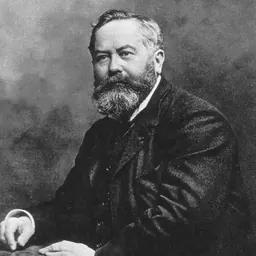



Contemporaries
People whose lives overlapped Robert Smalls's

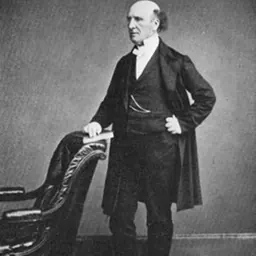
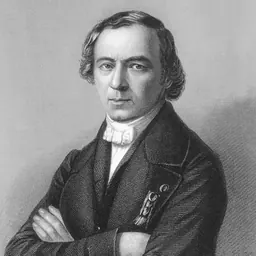

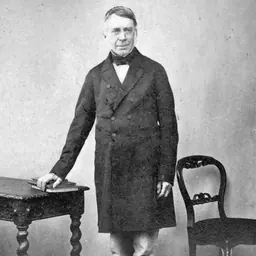
Frequently asked questions
Who was Robert Smalls?
American politician and former slave (1839-1915)
When was Robert Smalls born?
Robert Smalls was born on 5 April 1839 in Beaufort.
When did Robert Smalls die?
Robert Smalls died on 23 February 1915 in Beaufort.
What was Robert Smalls's occupation?
Robert Smalls was a politician, military officer, maritime pilot and businessperson.
What nationality was Robert Smalls?
Robert Smalls was American.
Sources & further reading
Cite this page
APA: Biography.guide. (2026). Robert Smalls. https://biography.guide/robert-smalls/
MLA: "Robert Smalls." Biography.guide, https://biography.guide/robert-smalls/.
Chicago: "Robert Smalls." Biography.guide. https://biography.guide/robert-smalls/.
Data last updated: 2026-09-20 · Spot an error? Report a correction.
Page generated 2026-09-27 05:18 UTC